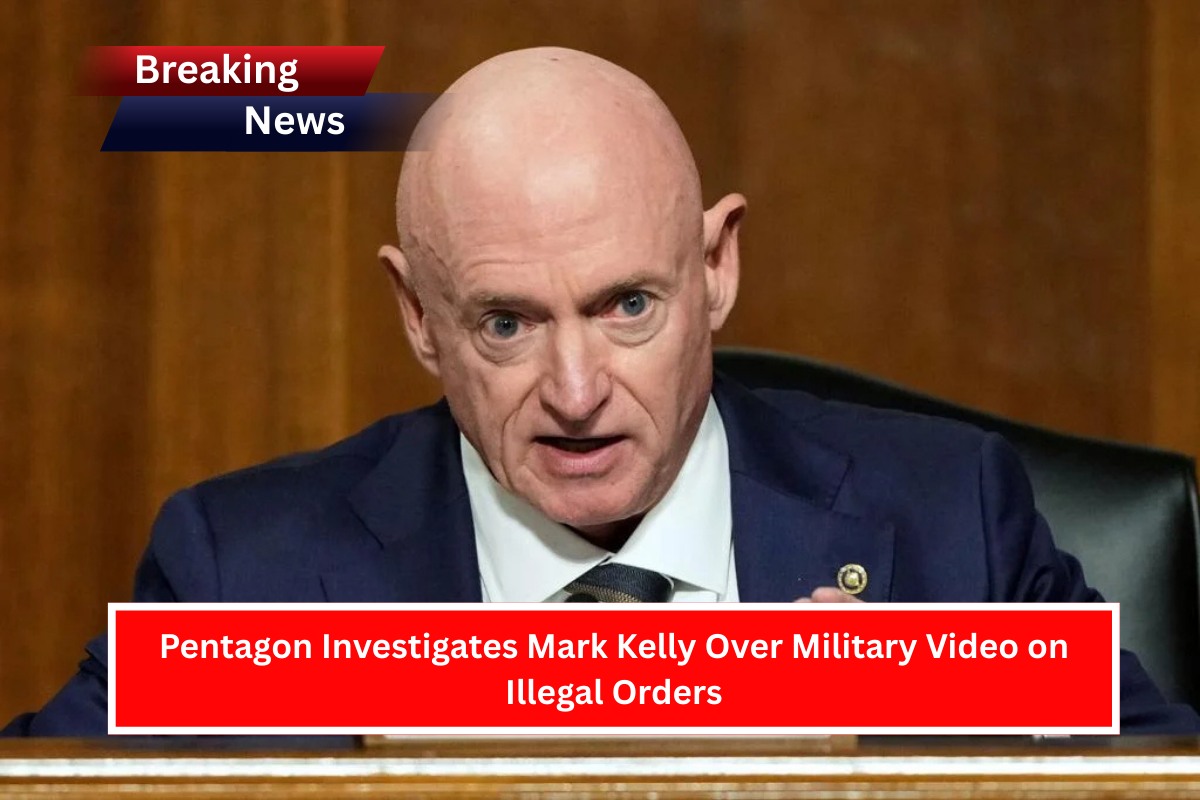
The recent controversy surrounding Senator Mark Kelly has stirred up a major political and military debate in the US. A video message from Kelly and other lawmakers encouraging troops to reject illegal orders has led to an official investigation by the Pentagon. With rising political tensions and legal questions over military loyalty, this situation brings important issues to the surface — about the role of the armed forces, the rights of lawmakers, and the meaning of following orders in a democracy.
Why is Senator Mark Kelly Under Investigation?
Senator Mark Kelly, a former Navy pilot and retired captain, is being investigated by the Pentagon for his role in a video that urged members of the military to disobey “illegal orders.” He wasn’t alone — five other Democratic lawmakers who previously served in the military or intelligence community also appeared in the same video.
However, Kelly is the only one who is formally retired from military service, which makes him still subject to military law. This is because under US law, retired military personnel can be recalled to active duty for court-martial or disciplinary action.
The Pentagon claims that Kelly’s words might have affected “loyalty, morale, and discipline” within the armed forces. Defense Secretary Pete Hegseth said Kelly’s comments “brought discredit upon the armed forces.”
What Was Said in the Video?
In the video, Kelly and the other lawmakers encouraged military members to stay true to their oath to the Constitution. They did not mention any specific order, but the message was clear: if you receive an illegal order, you have the right to refuse it.
Here’s what some of them said:
- Kelly: “You can refuse illegal orders.”
- Others: “We need you to stand up for our laws… our Constitution.”
This message came at a time when the Trump administration had given controversial orders, such as using the military to blow up suspected drug boats or deploy troops in US cities.
Is This a Legal or Political Matter?
This issue sits at the crossroads of law and politics. While troops are expected to follow legal orders, they are also trained not to follow unlawful ones. This principle is based on history — most notably the Nuremberg Trials after World War II, where Nazi officers failed to defend themselves by claiming they were “just following orders.”
However, some legal experts believe this investigation goes beyond military law. Since Kelly is a sitting US Senator, he has special protections under the US Constitution to prevent political interference from the executive branch — which includes the military.
According to Professor Anthony Kreis, the investigation could be seen as a threat to legislative independence. He argues that punishing a senator in this way could open the door to misuse of military power for political purposes.
Reactions from Lawmakers and Legal Experts
Senator Kelly has denied any wrongdoing and called the investigation a form of bullying. He says he stands by his oath to the Constitution and won’t be silenced by intimidation.
Other Democratic leaders have also supported Kelly:
- Chuck Schumer: Accused Trump of using the Pentagon as a weapon.
- Ruben Gallego: “In America, we swear an oath to the Constitution, not wannabe kings.”
Legal experts like Stephen Vladeck have noted that retired service members have recently faced courts-martial even for things they did after retiring. However, using that law against a current lawmaker is highly unusual and raises serious constitutional questions.
What This Means for the Military and the Nation
This entire issue highlights the delicate balance between military obedience and moral responsibility. Troops are taught to follow orders, but they are also responsible for rejecting illegal ones — even if it’s risky or unclear at the time.
At the same time, it raises concerns about how the military should interact with elected officials. In a democracy, lawmakers must be free to speak out, especially when it comes to protecting constitutional values.
Whether or not this investigation moves forward, the message is loud and clear — the relationship between the military, the law, and political leadership is being tested like never before.