
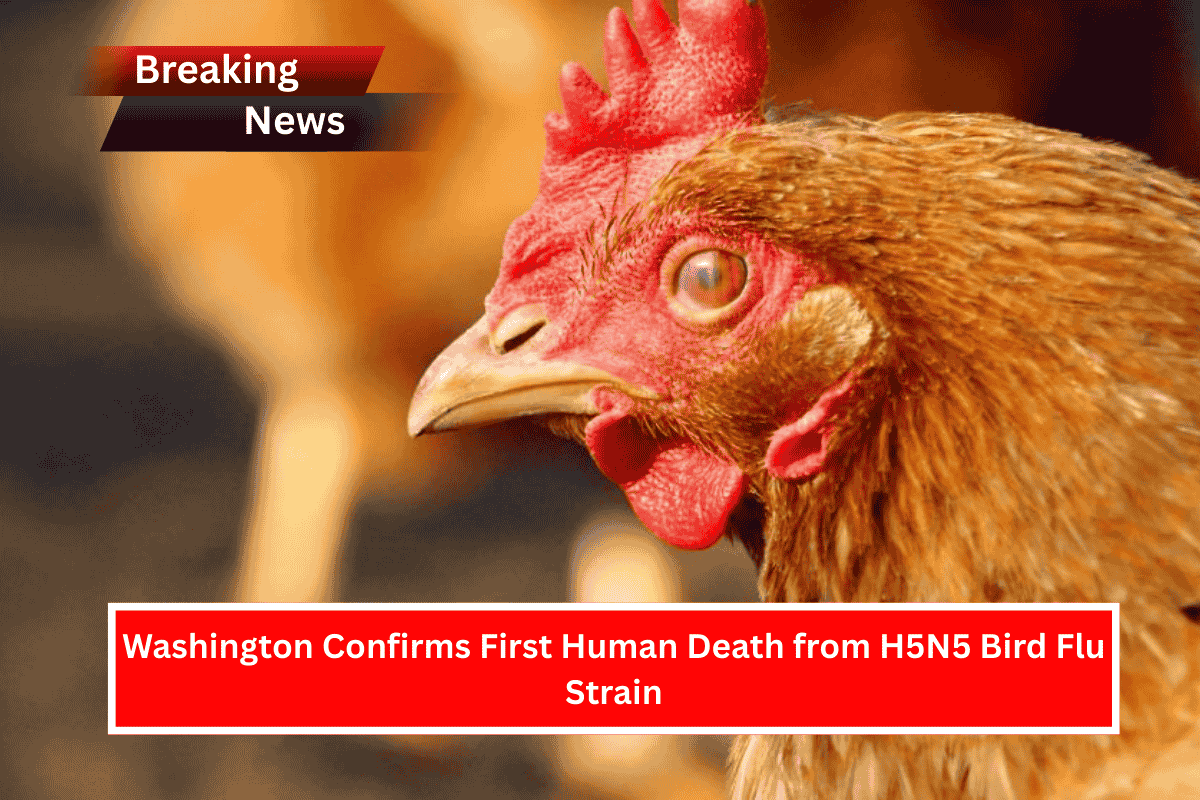
A rare case of bird flu has led to the death of a person in Washington state, marking the first human case of H5N5 avian influenza in the U.S. Health authorities are treating this case seriously, although they still say the risk to the general public remains low. Here’s everything you need to know about this unusual and concerning event.
First Human Death from H5N5 Bird Flu Reported in Washington
An older adult from Washington who had existing health problems has sadly died after being infected with the H5N5 strain of bird flu. This person had been admitted to the hospital in early November and passed away recently, making this the first time this specific strain has been found in a human in the country.
How Did the Person Get Infected?
According to health officials, the individual took care of a backyard flock of birds, which included poultry. Two birds had died a few weeks before the patient got sick. Wild birds also had access to the property, which made direct or indirect contact with infected birds the most likely source of the virus.
Key facts about the infection source:
- The person kept a mixed flock of birds at home.
- Wild birds could freely enter the area.
- Some birds in the flock had already died, possibly from infection.
- These birds are believed to have passed the virus to the individual.
What Makes H5N5 Different from Other Bird Flu Strains?
You may have heard more about H5N1, the bird flu strain that has been spreading globally among animals and, in rare cases, humans. While H5N5 is different, experts say it behaves similarly — meaning it can spread through contact with infected birds or contaminated environments but doesn’t usually pass from human to human.
Public Health Risk Remains Low, Say Officials
Despite this tragic death, health experts are reassuring the public that the chance of a larger outbreak is still very low. Here’s what they’re doing:
- Over 100 healthcare workers and close contacts are being monitored for any symptoms.
- So far, no other cases of H5N5 bird flu have been found.
- Surveillance is ongoing in both human contacts and birds that may have been exposed.
Bird Flu Cases in the U.S. Are Rising in Animals
Since 2024, at least 70 people in the U.S. have tested positive for some form of bird flu, mostly after contact with infected poultry or dairy cattle. These cases were mostly mild, but the death in Washington shows that some strains can be more dangerous, especially for people who are older or have weak immune systems.
What You Should Know to Stay Safe
If you’re someone who:
- Keeps backyard birds
- Works with poultry or dairy animals
- Lives near areas with high bird activity
Then take these precautions:
- Avoid touching sick or dead birds.
- Wear protective gear (like gloves and masks) when handling birds.
- Keep wild birds away from your domestic flock.
- Wash hands thoroughly after any contact with birds or their droppings.