
Coastal style is one of those home design trends that never really goes out of fashion. It brings the easygoing feeling of a beach vacation indoors without requiring seashells on every shelf or a room full of nautical decorations. The best coastal home ideas combine natural textures, soft colors, comfortable furniture, and plenty of light to create a home that feels fresh, relaxed, and welcoming.
Whether you live near the coast or in the middle of the country, you can bring this breezy aesthetic into your home. From a coastal living room to a beach-inspired bedroom, small changes can make an ordinary space feel lighter and more connected to nature.
What Is Coastal Home Style?
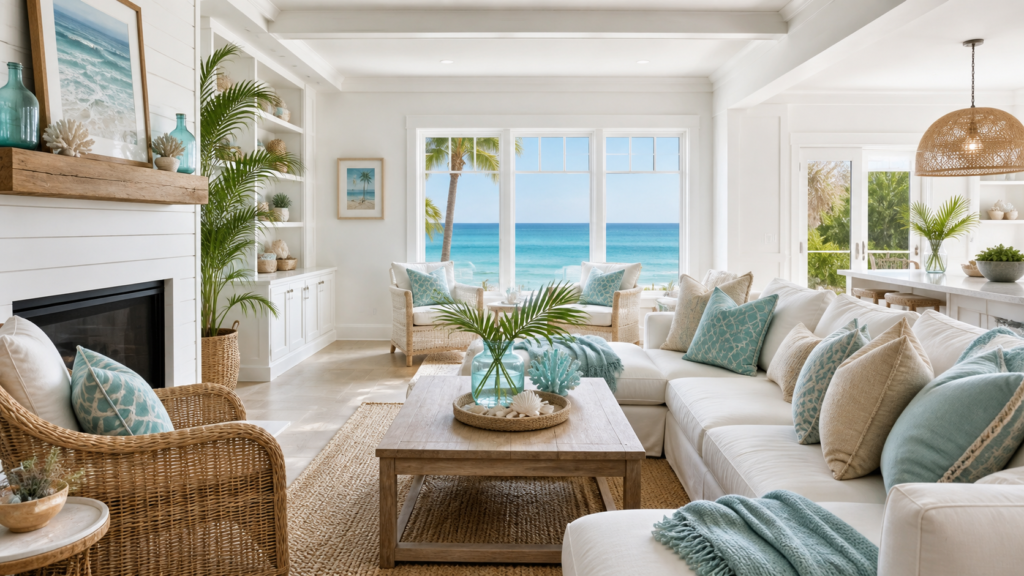
Coastal home style is an interior design approach inspired by the colors, textures, and relaxed atmosphere of seaside living. It typically features light neutrals, soft blues, natural wood, woven materials, linen fabrics, and plenty of natural light.
Unlike heavily themed nautical interiors, modern coastal design is subtle. The goal is to capture the feeling of the coast, rather than recreate a beach inside your house.
A successful coastal interior usually feels:
- Bright and airy
- Relaxed rather than formal
- Comfortable and lived-in
- Inspired by natural materials
- Soft and uncluttered
- Timeless enough to evolve with your home
This makes coastal decor particularly appealing for homes in Florida, California, South Carolina, North Carolina, and other U.S. areas where indoor-outdoor living is part of everyday life.
1. Start With a Soft Coastal Color Palette
Color is one of the easiest ways to introduce coastal style. Begin with a neutral foundation of warm white, ivory, cream, sand, beige, or light taupe.
Then layer in subtle coastal shades such as:
- Soft blue
- Sea glass green
- Dusty aqua
- Muted navy
- Sandy beige
- Pale gray
- Soft sage
You do not need to paint every wall blue. In fact, keeping the walls neutral often creates a more sophisticated look.
Use blue or green through pillows, artwork, rugs, curtains, or accent chairs. These smaller touches can be changed easily when you want to refresh the room.
2. Bring in Plenty of Natural Light
Natural light is central to coastal interiors. Keep windows as open and unobstructed as possible to allow sunlight to spread throughout the room.
Lightweight linen or cotton curtains can soften the windows while maintaining an airy appearance. Choose white, cream, or sandy neutral fabrics rather than heavy dark curtains.
If your home has smaller windows, strategically placed mirrors can help reflect available light and make the room feel more spacious.
For homes with large windows or sliding glass doors, keep furniture arranged so the natural views remain visible.
3. Choose Natural Wood Furniture
Wood adds warmth to coastal interiors and prevents an all-white room from feeling cold.
Look for furniture in light or medium natural finishes, including oak, ash, pine, or reclaimed wood. A weathered finish can create a casual beach-house feeling, while smooth light wood gives the space a more modern appearance.
A coastal living room might feature a light wood coffee table, woven accent chairs, and a neutral sofa. In the dining room, a simple wooden table paired with upholstered or woven chairs can create a relaxed gathering space.
The key is to let the natural grain remain visible rather than choosing overly glossy finishes.
4. Layer Woven Textures
Texture is what gives coastal rooms their personality. Rattan, wicker, jute, seagrass, cane, and woven cotton are all excellent choices.
Try adding a rattan pendant light over a dining table or kitchen island. A woven basket can hold blankets in the living room, while a jute rug can define a seating area.
You can also introduce woven textures through:
- Bar stools
- Headboards
- Pendant lights
- Storage baskets
- Accent chairs
- Planters
- Decorative trays
These materials add visual warmth while keeping the room connected to natural elements.
5. Keep the Living Room Comfortable
A coastal living room should feel like somewhere you can actually relax.
Choose a comfortable sofa in cream, ivory, beige, or light gray. Add a combination of textured pillows in neutral shades and muted coastal colors.
Instead of matching every piece of furniture, mix materials and silhouettes. A linen sofa, wooden coffee table, woven chair, and textured rug can create a more collected look.
Add a soft throw over the arm of the sofa for an effortless, lived-in finish.
6. Create a Relaxed Coastal Bedroom
The bedroom is an ideal place to use coastal design because the style naturally creates a calm atmosphere.
Start with white or neutral bedding and layer it with soft blue, beige, or sea-glass accents. Linen duvet covers and cotton blankets work especially well because they look relaxed rather than overly polished.
A natural wood or woven headboard can become the focal point. Add bedside lamps with ceramic, rattan, or linen shades for warm evening light.
Keep the artwork simple. A large abstract ocean-inspired print, landscape photograph, or botanical illustration can provide just enough visual interest.
7. Use Coastal-Inspired Artwork
Artwork can communicate the coastal theme without relying on obvious beach decorations.
Consider abstract pieces inspired by ocean colors, coastal landscapes, shells, dunes, or botanical forms. Black-and-white photography of beaches or boats can also add sophistication.
For a modern coastal home, oversized artwork often looks better than filling every wall with small beach-themed prints.
A single large piece above the sofa or bed can create a strong focal point while maintaining the clean feeling of the room.
8. Add Coastal Details Without Overdoing Them
A common mistake with coastal decorating is using too many obvious nautical elements.
You do not need anchors, ship wheels, rope decorations, and seashells everywhere.
Instead, choose a few subtle references to the coast. A bowl of natural shells, a piece of driftwood, a blue ceramic vase, or a woven tray can be enough.
The goal is for guests to notice the coastal influence without feeling like they have walked into a souvenir shop.
9. Bring Greenery Indoors
Plants add life and help reinforce the natural feeling of coastal design.
Choose plants with interesting shapes and fresh green foliage. Depending on your home’s light conditions, options might include palms, fiddle-leaf figs, snake plants, pothos, or smaller tropical varieties.
Place larger plants near windows or empty corners. Smaller plants can sit on shelves, consoles, or side tables.
Natural greenery works beautifully against white walls and light wood furniture, adding contrast without making the room feel heavy.
10. Give the Kitchen a Coastal Refresh
You do not need a complete kitchen renovation to create a coastal kitchen.
Start with light cabinetry or natural wood finishes. White cabinets paired with brushed metal hardware and a pale countertop can create a clean beach-house feeling.
Open shelving can display simple ceramic dishes, woven baskets, wooden cutting boards, and glassware.
For a subtle color accent, consider muted blue or sage-green lower cabinets. These colors add character while remaining timeless.
A woven pendant light above the island can provide another layer of coastal texture.
11. Make the Bathroom Feel Like a Coastal Retreat
Bathrooms can easily take on a spa-like coastal atmosphere.
Use white or light neutral tile, natural wood accents, woven storage, and soft blue accessories. A rainfall shower, freestanding tub, or simple walk-in shower can enhance the relaxing mood when the layout allows.
Add fluffy white towels, a small plant, and a few natural accessories.
For a more modern coastal bathroom, combine warm wood with white stone and matte metal fixtures rather than relying heavily on traditional nautical decor.
12. Use Rugs to Ground the Space
Coastal interiors can sometimes feel visually flat because of their light color palette. Rugs help introduce pattern and texture.
Jute and natural-fiber rugs are classic choices. For something softer, look for cotton or wool rugs featuring subtle stripes, geometric patterns, or faded blue tones.
A large rug can anchor the furniture in an open-concept living room and make the space feel more cohesive.
Choose durable materials in high-traffic areas, especially if your home regularly sees children, pets, or sandy feet.
13. Embrace Indoor-Outdoor Living
For homes in warmer U.S. climates, coastal design naturally lends itself to indoor-outdoor living.
If you have a patio, porch, balcony, or backyard, create visual continuity by using similar colors and materials indoors and outside.
For example, a neutral indoor living room can flow into an outdoor seating area featuring light cushions, woven furniture, potted greenery, and warm outdoor lighting.
Large glass doors or windows can strengthen the connection between the interior and exterior spaces.
14. Add Stripes in Small Doses
Stripes are a classic coastal pattern, but they work best when used thoughtfully.
A striped rug, lumbar pillow, throw, or upholstered chair can introduce the pattern without making the room feel overly nautical.
Blue-and-white stripes are traditional, while beige-and-cream or gray-and-white combinations offer a softer, more contemporary interpretation.
Mix stripes with solids and organic patterns rather than using them everywhere.
15. Choose Materials That Feel Natural
One of the most important coastal decorating principles is choosing materials that feel relaxed and authentic.
Think linen, cotton, rattan, cane, jute, seagrass, stone, ceramic, and natural wood.
These materials create visual depth even when the color palette is simple.
They also help a coastal home feel comfortable rather than overly decorated. A linen sofa, woven basket, wooden stool, and ceramic vase can create plenty of interest without requiring a lot of accessories.
16. Keep Clutter Under Control
Coastal style works best when rooms feel open and breathable.
That does not mean everything needs to be minimalist. Instead, choose fewer pieces and give each one enough space to be appreciated.
Use baskets and cabinets to hide everyday clutter. Keep countertops relatively clear and avoid filling shelves with too many decorative objects.
A tidy room allows natural light, texture, and architectural details to become part of the design.
17. Make Coastal Style Personal
Your home should not look like a staged beach rental. The most successful coastal interiors include personal pieces.
Display family photographs, favorite books, handmade ceramics, travel finds, artwork, or furniture with sentimental value.
You can also mix coastal elements with other design styles. Coastal farmhouse, modern coastal, coastal traditional, and California coastal interiors all offer different interpretations of the same relaxed aesthetic.
Choose the version that fits your home’s architecture and your lifestyle.
Final Thoughts
The best coastal home ideas are not about filling your house with beach-themed decorations. They are about creating a relaxed environment through light colors, natural materials, comfortable furniture, organic textures, and a strong connection to nature.
Start small with linen textiles, woven accents, light wood, greenery, and subtle shades of blue. Then build from there. Whether you live in a coastal city or far from the ocean, these elements can make your home feel brighter, calmer, and more inviting.
A thoughtful coastal home should feel like a place where you can slow down, open the windows, enjoy the light, and settle in comfortably. That effortless feeling is what makes coastal style so enduring.