
An empty corner can make even a beautifully decorated room feel unfinished. Instead of leaving those awkward walls blank, turn them into a creative focal point with a corner wall gallery. By extending artwork, photographs, mirrors, or decorative objects across two adjoining walls, you can give an overlooked area more personality without taking up valuable floor space.
Corner gallery walls work especially well in living rooms, bedrooms, stairways, hallways, home offices, and entryways. The secret is not simply adding as many frames as possible. A successful arrangement needs balance, repetition, breathing room, and a visual connection between the two walls. Planning the arrangement before hanging anything can also prevent uneven spacing and unnecessary holes in the wall.
If you’re looking for corner wall gallery ideas that feel stylish, personal, and easy to adapt, these ten approaches offer plenty of inspiration.
1. Create a Minimalist Black-and-White Corner Gallery
For a clean and sophisticated look, use black-and-white photographs or monochrome artwork in simple black, white, or natural frames. This style works beautifully in modern living rooms and contemporary apartments.
Start with one larger piece on the main wall and build outward with smaller prints. Rather than creating a perfectly random arrangement, repeat the same frame finish or artwork colors throughout the display.
Black-and-white artwork is particularly useful when your furniture already has strong colors or patterns. The gallery adds visual interest without competing with the rest of the room.
For a polished result, keep the spacing between frames relatively consistent and allow some empty wall space around the outer edges. The goal is to make the collection feel intentional rather than crowded.
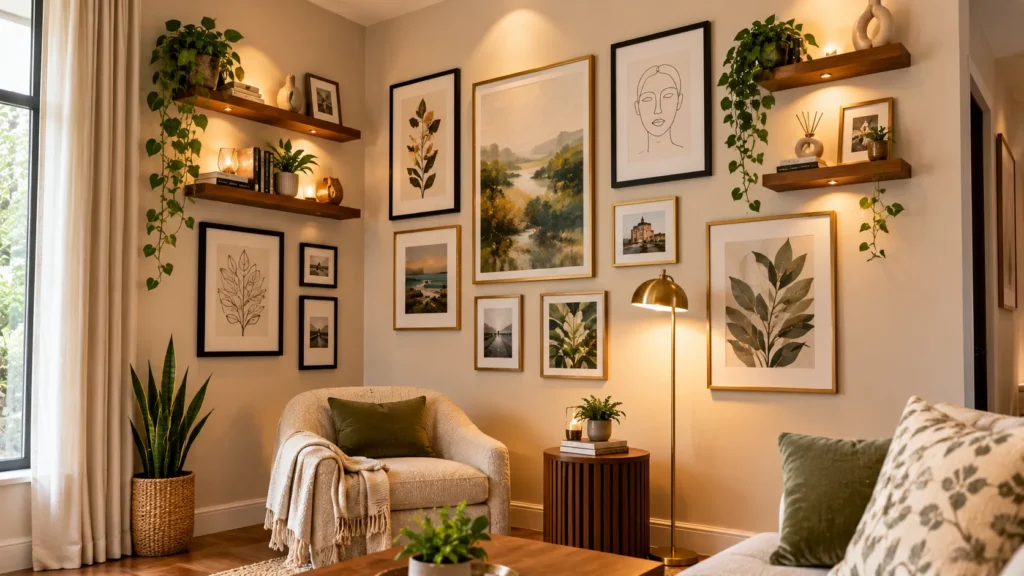
2. Use Warm Wood Frames for a Cozy Natural Look
Wooden frames can instantly make a corner gallery feel warmer and more relaxed. Oak, walnut, light ash, and medium-toned wood work especially well with beige, cream, tan, olive, and earthy interiors.
Mix botanical prints, abstract artwork, landscape photography, and small personal photographs to create a collected look. You don’t necessarily need identical frames. Similar wood tones can provide enough visual consistency.
This approach is ideal for homes inspired by Scandinavian, organic modern, contemporary, or quiet-natural interiors.
You can make the arrangement even more interesting by placing a small wooden bench, console, or accent chair beneath the gallery. This gives the artwork a visual anchor and helps connect the wall decoration to the furniture.
3. Turn Family Photos Into a Personal Corner Gallery
A gallery wall doesn’t have to be made entirely from artwork. Family photographs can transform an ordinary corner into one of the most meaningful spaces in your home.
Choose photographs from vacations, celebrations, family portraits, or everyday moments. For a more cohesive appearance, use photographs with similar editing or convert them all to black and white.
A symmetrical grid is a good choice if you prefer an organized appearance. For a more relaxed home, mix horizontal and vertical photographs in different frame sizes.
This idea works particularly well in hallways and staircases because people naturally move through these spaces and have time to look at the photographs.
4. Mix Artwork With Mirrors for an Eclectic Gallery
If you want something more decorative, combine framed artwork with one or two mirrors. A mirror can break up a collection of rectangular frames while adding another shape to the composition.
Try combining a round mirror with abstract artwork, botanical prints, and smaller decorative frames. The contrast between reflective glass, paper, wood, and metal creates more depth.
The mirror doesn’t need to sit directly in the center. In an eclectic arrangement, placing it slightly off-center can create a more relaxed composition.
For smaller homes or apartments, mirrors can also help reflect natural or artificial light, making the corner feel brighter.
5. Design a Soft Neutral Gallery in the Bedroom
Bedrooms benefit from quieter artwork and softer colors. Create a calming corner gallery using cream, beige, taupe, muted brown, dusty blue, or soft green artwork.
Landscape prints, abstract shapes, botanical illustrations, and subtle line drawings are excellent choices for a bedroom.
Keep the frames relatively understated so the gallery doesn’t become visually overwhelming. If the bedroom already has patterned bedding or colorful furniture, choose artwork that repeats one or two existing colors.
A small corner gallery beside a dresser, reading chair, or bedroom doorway can make an unused section feel intentionally decorated.
6. Add Vintage-Inspired Gold Frames
For a more elegant appearance, try antique-style gold frames. Ornate frames can give a modern home character while creating an interesting contrast against simple furniture.
You can fill the frames with vintage botanical illustrations, classical-inspired prints, old maps, portraits, or muted artwork.
Don’t worry about making every frame identical. Slight differences in frame thickness and ornamentation can actually make the display feel more authentic.
To keep the look from becoming too formal, pair the gold frames with modern furniture, neutral walls, and contemporary lighting.
7. Combine a Gallery Wall With Floating Shelves
A corner gallery doesn’t have to consist only of hanging frames. Floating shelves can introduce another layer of dimension.
Hang several pieces of artwork around the shelves and use the shelves to display small plants, books, ceramics, candles, or decorative objects. This combination is especially useful when you want your wall to feel collected rather than strictly framed.
Keep larger objects toward the center or lower portions of the arrangement and smaller accessories toward the edges. This creates a natural visual hierarchy.
Floating shelves are also a practical choice when you like changing your décor throughout the year because accessories can be replaced without rearranging the entire gallery.
8. Transform a Staircase Corner Into an Art Display
Staircases are often overlooked when homeowners plan wall décor. Their vertical architecture makes them an excellent location for a gallery wall.
Instead of placing every frame in a straight horizontal line, follow the visual movement of the staircase. Start with larger artwork near the main viewing area and gradually introduce smaller pieces as the arrangement moves upward.
Family photographs work particularly well here, but you can also use artwork, typography, travel photography, or mixed media.
Before hanging anything, map the arrangement with paper templates. Planning is especially important around staircases because uneven frame placement becomes more noticeable as the eye follows the stairs.
9. Bring Energy With Colorful Modern Artwork
If your home has neutral furniture and walls, a colorful corner gallery can become the room’s statement feature.
Look for artwork containing shades that already appear elsewhere in the room. For example, blue artwork can connect with a blue accent chair, while terracotta artwork can complement warm wood furniture.
You can combine abstract paintings, graphic prints, photography, and small colorful objects. The key is to repeat colors rather than introducing completely unrelated shades.
A colorful gallery is especially effective in living rooms, creative home offices, dining areas, and children’s spaces where a little visual energy can make the room feel more lively.
10. Layer Sculptural and Textured Wall Décor
For a gallery wall that feels more three-dimensional, move beyond traditional framed prints. Add woven wall art, sculptural pieces, textured panels, ceramic plates, or dimensional decorative objects.
This layered approach can make an empty corner feel warmer and more sophisticated. Textural wall pieces are also useful when you want to soften the hard lines created by a 90-degree corner.
Natural materials such as woven fibers, wood, linen, ceramic, and stone-inspired finishes can work beautifully with neutral interiors. Current design coverage is also highlighting tactile, artisanal pieces and layered materials as ways to give interiors more personality and depth.
How to Make a Corner Gallery Wall Look Professional
The biggest difference between a polished gallery and a cluttered one usually comes down to planning. Before putting holes in the wall, arrange your frames on the floor or create paper templates in their actual sizes. This allows you to experiment with different compositions before committing to one layout.
Pay attention to spacing as well. Consistent gaps help different frame sizes feel connected. You can mix shapes, colors, and artwork styles, but repeat at least one visual element—such as frame color, artwork palette, subject matter, or material—to create cohesion.
Most importantly, treat the two walls as one composition. Rather than decorating one wall and then starting over on the other, allow the artwork to visually continue around the corner. This creates the distinctive wrapped effect that makes corner gallery walls so interesting.
Final Thoughts
A corner wall gallery is an easy way to turn an overlooked area into a memorable feature of your home. Whether you prefer minimalist black-and-white artwork, sentimental family photographs, vintage gold frames, colorful modern prints, or layered textured décor, there is a style that can work with almost any interior.
The best corner wall gallery decor ideas don’t simply fill an empty wall—they tell a story about the people and style of the home. Start with one piece you genuinely love, build around it thoughtfully, and leave enough breathing room for every element to stand out.
With the right combination of artwork, frames, texture, and spacing, even the smallest awkward corner can become a stylish and personal part of your home.