
Warm minimalist home design combines the clean simplicity of minimalism with the comfort of natural materials, soft textures, and inviting neutral colors. Instead of filling a home with furniture and decorations, this style focuses on fewer, better pieces that make a room feel calm, sophisticated, and lived-in. The result is a home that looks modern and expensive without feeling cold, empty, or overly formal.
If you love uncluttered rooms but still want your home to feel warm and welcoming, warm minimalism offers the perfect balance. Think creamy whites, beige, taupe, natural wood, linen, stone, soft lighting, and carefully selected decor. These elements work together to create spaces that feel peaceful while maintaining a polished designer look.
What Is Warm Minimalist Interior Design?
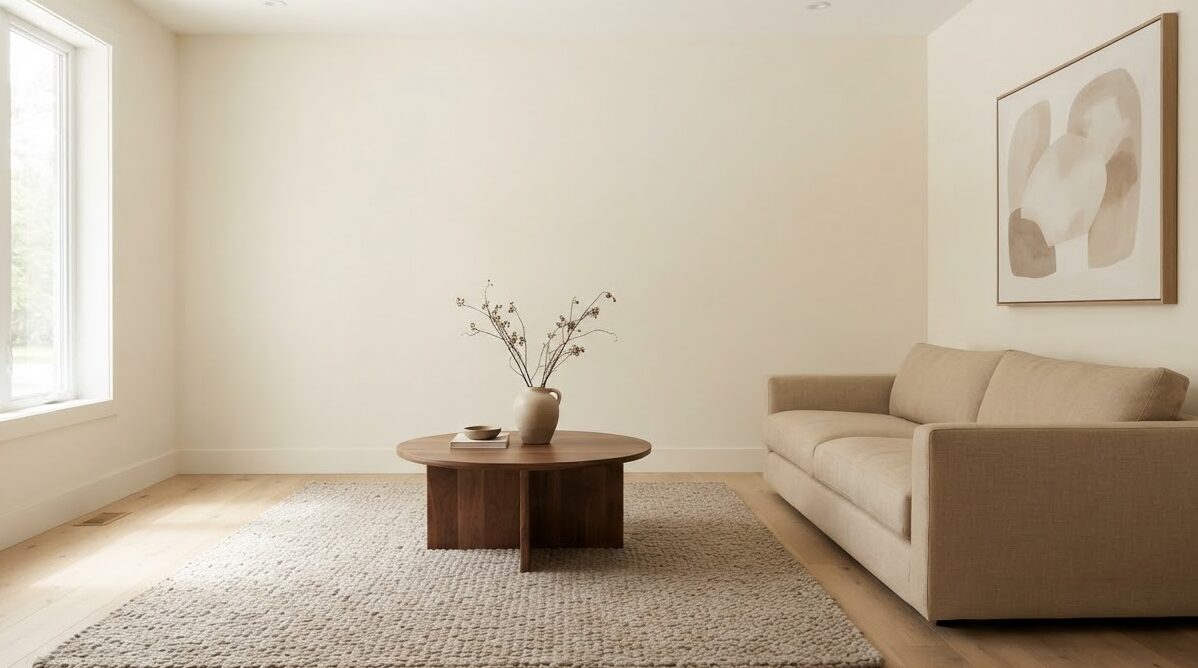
Warm minimalism is an interior design style that combines minimalist principles with cozy, natural details.
Traditional minimalism often emphasizes clean lines, simple forms, and a limited color palette. Warm minimalism keeps those qualities but introduces softer materials and earthy tones to make the space more comfortable.
Common elements include:
- Warm white and cream walls
- Beige, taupe, and soft brown tones
- Natural wood furniture
- Linen and cotton fabrics
- Stone and ceramic accessories
- Soft rugs
- Simple artwork
- Warm ambient lighting
- Minimal clutter
- Organic shapes
The goal is not to have an empty home. Instead, every piece should have a purpose while contributing to the overall atmosphere.
1. Start With a Warm Neutral Color Palette
Color is one of the easiest ways to create a warm minimalist home.
Instead of bright white, consider warmer shades such as ivory, cream, oatmeal, beige, sand, greige, or soft taupe.
These colors create a relaxed background that allows furniture and textures to stand out without making the room feel busy.
You can create depth by layering several similar shades. For example, pair cream walls with a beige sofa, taupe rug, light wood furniture, and off-white curtains.
The result feels sophisticated without relying on bold colors.
2. Choose Natural Wood Furniture
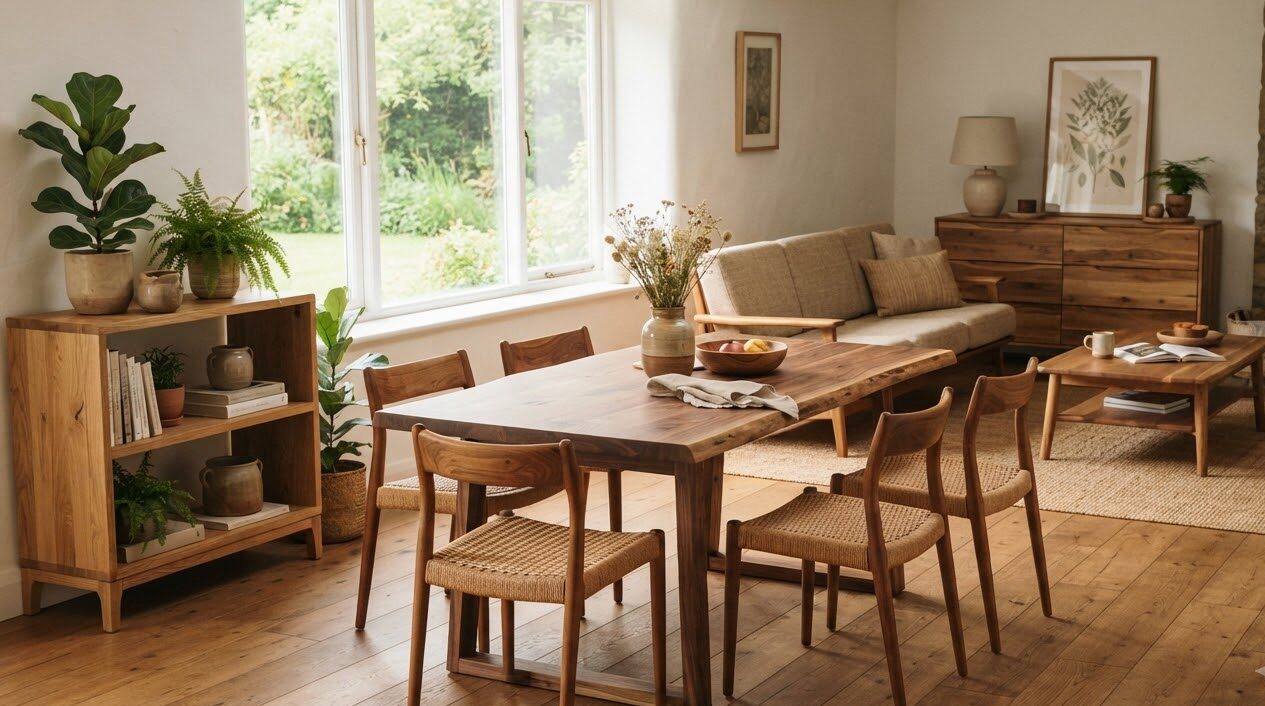
Natural wood is one of the most important materials in warm minimalist interiors.
Wood immediately adds warmth and texture to neutral spaces. Choose furniture with simple silhouettes rather than heavily decorated or ornate designs.
Great options include:
- Light oak coffee tables
- Wooden dining tables
- Simple wood bed frames
- Floating shelves
- Minimal nightstands
- Wooden benches
- Natural wood cabinets
You do not need every piece to match. Combining slightly different wood tones can make the room feel more natural and collected.
3. Layer Soft Textures
A neutral room can feel flat if everything has the same texture.
The solution is layering.
Combine different materials such as linen, wool, cotton, boucle, jute, ceramic, wood, and stone.
For example, a minimalist living room could feature a linen sofa, textured throw blanket, wool rug, wooden coffee table, and ceramic vase.
Even though the colors remain simple, the different textures make the room feel rich and comfortable.
4. Use Soft, Comfortable Furniture
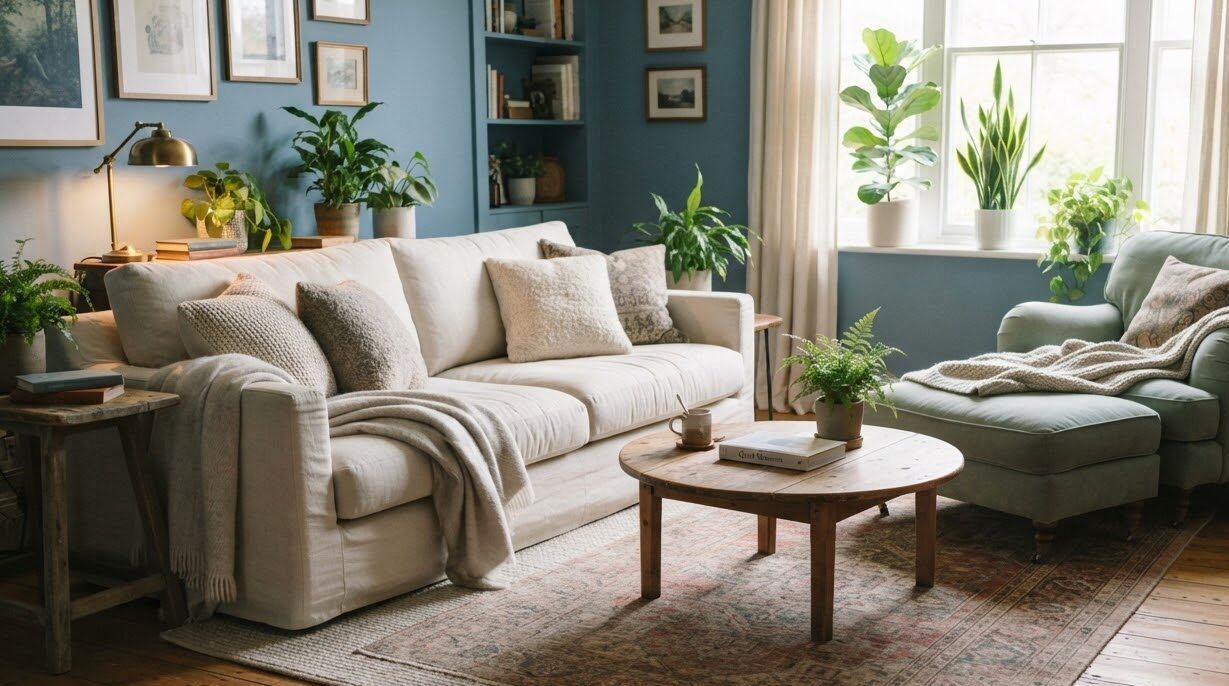
Warm minimalism does not mean uncomfortable furniture.
Choose sofas and chairs with clean lines but soft shapes. Rounded edges can make a minimalist room feel more inviting than furniture with extremely sharp angles.
A large, comfortable sofa in cream, beige, or light taupe can become the main focal point of the living room.
Add a few pillows in natural fabrics rather than filling the sofa with dozens of decorative cushions.
The goal is effortless comfort.
5. Add a Large Neutral Rug
A rug can instantly make a minimalist room feel warmer.
Choose a large rug in a neutral shade with subtle texture or a simple pattern.
A properly sized rug can visually connect furniture and make a seating area feel more intentional.
Popular choices include:
- Wool rugs
- Jute rugs
- Flatweave rugs
- Vintage-inspired neutral rugs
- Textured cream rugs
Avoid choosing a rug that is too small. In many living rooms, a larger rug creates a more luxurious appearance.
6. Use Warm Lighting
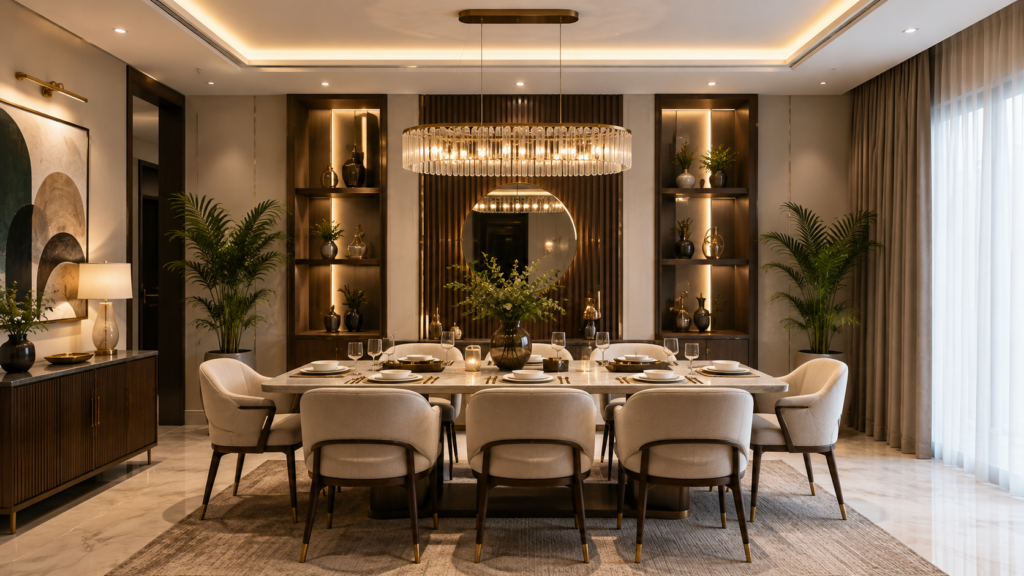
Lighting can completely change the mood of a minimalist interior.
Avoid relying only on bright overhead lighting. Instead, create layers using table lamps, floor lamps, wall sconces, pendant lights, and accent lighting.
Warm-toned bulbs can make cream and beige interiors feel especially cozy in the evening.
Consider placing a table lamp on a console, a floor lamp beside the sofa, and small accent lights in darker corners.
This creates a soft glow throughout the room.
7. Keep Decor Simple and Intentional
One of the biggest mistakes in minimalist decorating is confusing minimalism with having no personality.
Your home should still reflect you.
Instead of displaying dozens of small objects, choose a few meaningful pieces.
For example:
- One oversized piece of artwork
- A sculptural vase
- A stack of beautiful books
- A handmade ceramic bowl
- A large plant
- A simple candle
- A decorative stone object
Give each piece enough space to stand out.
Negative space is an important part of the expensive look associated with high-end interiors.
8. Add Organic Shapes
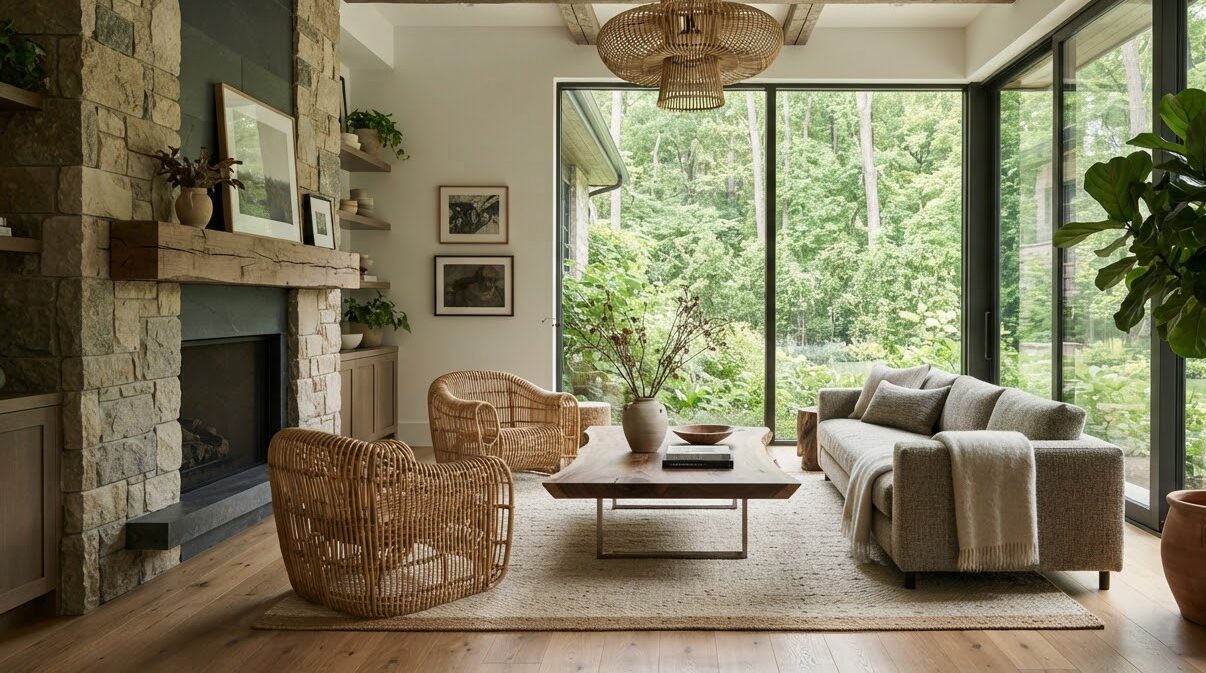
Curved and organic shapes can soften the straight lines commonly associated with modern minimalism.
Try incorporating:
- Rounded coffee tables
- Curved sofas
- Arched mirrors
- Organic-shaped rugs
- Sculptural chairs
- Rounded ceramic vases
These shapes make the room feel less rigid while maintaining a sophisticated appearance.
9. Bring Nature Indoors
Plants are an easy way to add life to a minimalist home.
Choose plants with simple forms rather than filling every surface with greenery.
A large olive tree, fiddle-leaf fig, snake plant, or simple branch arrangement can create a beautiful focal point.
Natural greenery works especially well with beige, cream, brown, and wood tones.
If you prefer low-maintenance decor, dried branches or understated dried grasses can also add an organic touch.
10. Create a Cozy Minimalist Living Room
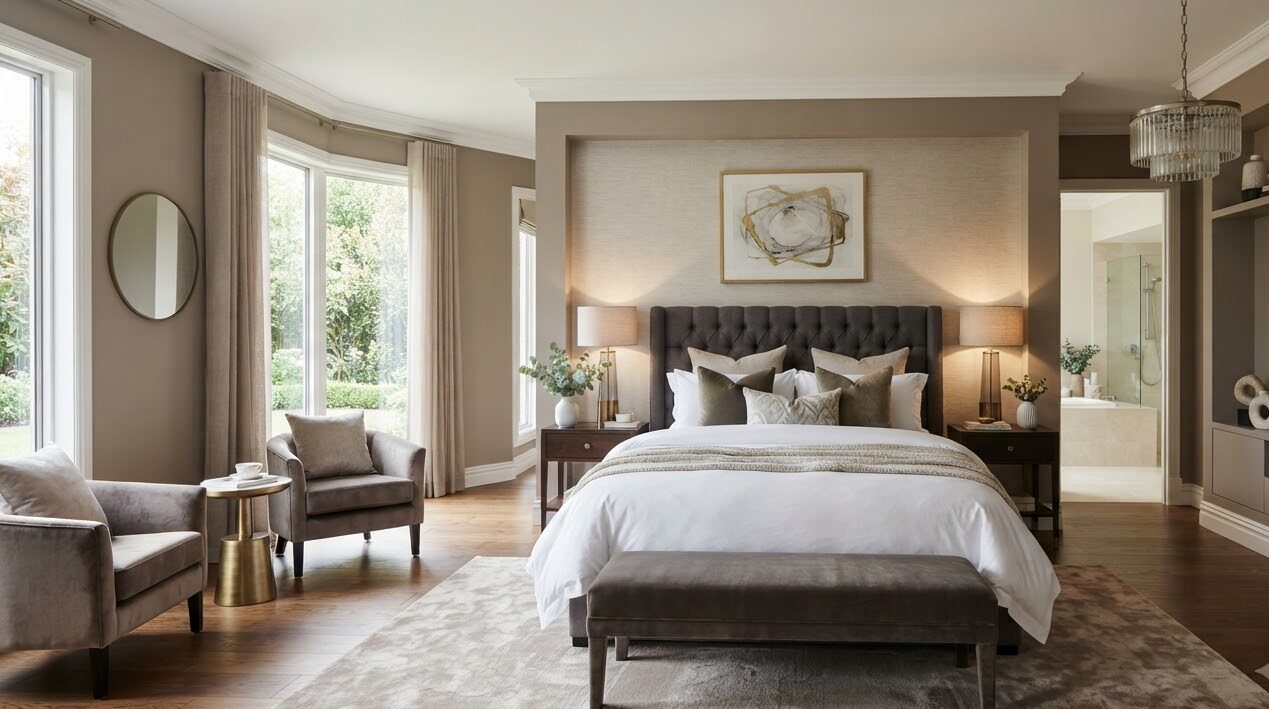
The living room is often the best place to embrace warm minimalism.
Start with a neutral sofa and a large textured rug. Add a simple wooden coffee table and one or two accent chairs.
Keep the walls relatively simple. One large artwork can often make a stronger statement than a gallery wall filled with small pieces.
Complete the room with soft curtains, a few pillows, a throw blanket, and warm lighting.
The result should feel comfortable enough for everyday life but polished enough to look professionally designed.
Final Thoughts
Warm minimalist interior design proves that simplicity and comfort can exist together. By combining warm neutrals, natural wood, soft textiles, organic shapes, thoughtful lighting, and carefully selected decor, you can create a home that feels modern without becoming cold.
The most important principle is to choose intentionally. You do not need more furniture or more decoration to make a home look expensive. Instead, focus on proportion, texture, quality, lighting, and visual balance.
Start small by changing your color palette, adding natural textures, clearing clutter, or introducing warmer lighting. Over time, these simple changes can transform your home into a peaceful, sophisticated, and inviting space.