
PVC wall panels paired with warm lighting are becoming a popular way to create interiors that feel polished, comfortable, and quietly luxurious. The combination works especially well in modern homes because it adds architectural character without requiring a complicated renovation. Textured panels can bring depth to an otherwise plain wall, while warm LED lighting softens the room and creates an inviting atmosphere.
From living rooms and bedrooms to hallways and entertainment areas, PVC wall panels offer plenty of room for creative design. When the panel texture, furniture, colors, and lighting temperature are balanced correctly, even a simple wall can become a sophisticated focal point.
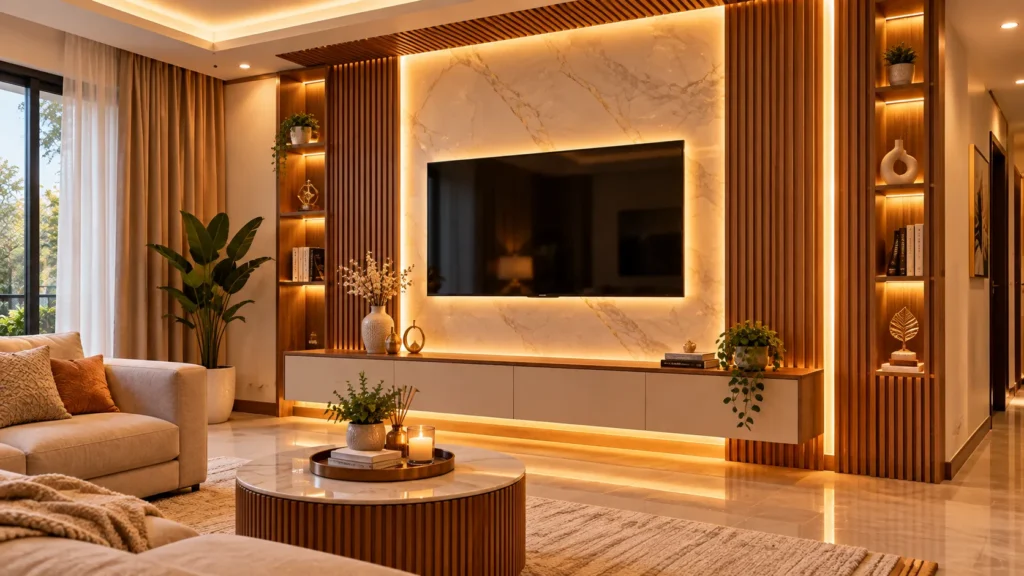
What Are PVC Wall Panels?
PVC wall panels are decorative wall coverings made from polyvinyl chloride. They are available in numerous finishes, including wood-look textures, marble patterns, fluted designs, geometric surfaces, stone-inspired finishes, and contemporary 3D patterns.
Unlike traditional wall treatments that may require extensive preparation, many PVC panels are designed for relatively straightforward installation. Their lightweight construction also makes them practical for accent walls and decorative applications.
For homeowners looking for a modern interior with a luxury appearance, PVC panels can provide the visual effect of more expensive wall materials while offering a wide range of design possibilities.
Why Combine PVC Wall Panels With Warm Lighting?
The real appeal comes from combining texture with illumination. PVC panels create shadows and visual depth, while warm lighting highlights those details and gives the room a softer appearance.
Warm-white lighting, typically around 2700K to 3000K, creates a relaxed and welcoming mood. It can make wood-look panels appear richer, bring out the details in fluted surfaces, and add a subtle glow around architectural features.
This combination is particularly effective in spaces where you want luxury without making the room feel cold or overly formal.
1. Create a Fluted PVC Accent Wall
Fluted wall panels are an excellent choice for contemporary interiors. Their repeated vertical grooves create a clean architectural pattern and can make a wall appear taller.
Install warm LED strips along the ceiling line or behind selected sections of the paneling. The light gently washes over the grooves, creating layers of light and shadow.
Pair a warm oak or walnut-style panel with a neutral sofa, cream upholstery, and brushed-metal accents for a comfortable modern living room.
2. Add a Warmly Lit TV Wall
A television wall can easily become the main architectural feature of a living room. Instead of leaving the wall completely flat, use PVC panels as a textured backdrop.
A dark walnut, charcoal, or stone-effect panel can frame the television beautifully. Add concealed warm LED lighting behind the TV panel or around its perimeter for a soft floating effect.
Keep the surrounding furniture simple. A low-profile media console, neutral rug, and streamlined sofa allow the illuminated wall to remain the visual centerpiece.
3. Use Wood-Look PVC Panels for a Cozy Bedroom
Bedrooms benefit from warmer materials and softer lighting. Wood-look PVC wall panels can create a cozy backdrop behind the bed without overwhelming the space.
Choose natural shades such as oak, walnut, beige wood, or muted brown. Install warm lighting behind the headboard or along the edges of the wall treatment.
For a luxury bedroom, combine the panel wall with layered bedding, upholstered furniture, linen curtains, and understated metallic details. The result feels sophisticated while remaining comfortable enough for everyday living.
4. Highlight a Bedroom Headboard Wall
Instead of purchasing a large decorative headboard, PVC panels can become the architectural backdrop behind the bed.
Vertical panels can emphasize ceiling height, while wider horizontal patterns can make the wall feel broader. Add concealed LED strips behind the headboard or along both sides of the panel installation.
Warm lighting also works particularly well with darker wall colors. Deep brown, taupe, charcoal, and muted greige panels can look dramatically different once softly illuminated.
5. Try Marble-Effect PVC Panels With Golden Lighting
For a more glamorous interior, marble-effect PVC panels can be paired with warm lighting and subtle gold accents.
Use white, cream, or soft beige marble patterns on a feature wall. Then add warm LED illumination beneath shelving, around wall edges, or behind decorative panels.
The combination of marble-like veining, warm illumination, and brushed brass details can give a living room or entryway a refined hotel-inspired appearance without covering every surface in decorative material.
6. Design a Cozy Entryway Feature Wall
The entryway sets the tone for the rest of the home. PVC wall panels can turn a narrow or ordinary foyer into a visually interesting space.
Consider a vertical fluted panel behind a slim console table. Add a large round mirror above the console and install warm lighting around the mirror or beneath the console.
Neutral walls, natural wood furniture, a textured runner, and warm illumination can create an inviting entrance that feels intentional rather than cluttered.
7. Add Backlighting to Geometric PVC Panels
Geometric PVC panels are ideal when you want a more contemporary appearance. Their raised shapes naturally create shadows, making them even more dramatic under indirect lighting.
Rather than placing a bright fixture directly in front of the wall, use concealed LED strips behind selected sections. This produces a soft halo effect that emphasizes the geometry.
For modern homes, combine geometric panels with clean-lined furniture and a restrained color palette.
8. Use Dark PVC Panels for a Moody Luxury Look
Luxury interiors do not always need bright walls. Dark PVC panels can create an intimate, sophisticated atmosphere when paired with carefully controlled warm lighting.
Try charcoal, espresso, deep walnut, or dark stone finishes. Then introduce warm LED lighting around the ceiling, behind wall-mounted furniture, or beneath shelving.
Because dark walls absorb more visual light, avoid relying on a single small fixture. Layer ambient, accent, and task lighting to keep the room functional.
9. Combine PVC Panels With Floating Furniture
Floating furniture can make illuminated wall panels look even more contemporary. A wall-mounted TV console, floating bedside table, or suspended vanity leaves some of the panel surface visible below the furniture.
Add concealed LED strips underneath the floating unit. The light creates a subtle glow that visually separates the furniture from the floor and reinforces the modern design.
This approach is particularly useful for smaller rooms because keeping the floor visually open can make the space feel less crowded.
10. Create a Soft Hotel-Inspired Living Room
If your goal is a sophisticated hotel-style interior, focus on layering rather than excessive decoration.
Start with a neutral PVC feature wall, such as warm beige, walnut, or soft stone. Add concealed warm lighting, a comfortable sofa, textured cushions, and a large area rug.
Use a few carefully selected accents—such as a sculptural coffee table, oversized artwork, or metallic lamp—to complete the room.
The key is consistency. The panel finish and lighting should complement the furniture rather than compete with it.
Choosing the Right Warm Lighting
Lighting temperature can significantly change how PVC panels appear.
For bedrooms and relaxing living spaces, warm-white lighting around 2700K to 3000K generally creates a comfortable atmosphere. If the room needs to support reading, working, or detailed tasks, combine decorative warm lighting with brighter task lighting.
LED strips are particularly useful because they can be concealed behind furniture, inside recessed details, under shelves, or along architectural edges.
Avoid placing LED strips where the individual diodes are directly visible. Concealed or diffused lighting produces a much more refined result.
How to Choose PVC Panel Colors
The panel color should work with the room’s existing palette.
Warm neutrals: Beige, cream, taupe, and light oak create a relaxed luxury aesthetic.
Natural wood tones: Walnut, oak, and teak-inspired finishes add warmth and visual richness.
Dark shades: Charcoal, espresso, and deep brown create a dramatic contemporary appearance.
Light marble: White and cream marble-effect panels work well with brass, gold, black, and natural wood accents.
Before installation, consider how both daylight and artificial lighting affect the panel. A color that looks subtle during the afternoon can appear considerably deeper under warm evening illumination.
PVC Wall Panels for Different Areas of the Home
PVC panels are versatile enough for multiple interior applications. In living rooms, they work well as TV or sofa feature walls. In bedrooms, they can frame the bed. In entryways, they can create a decorative backdrop for mirrors and consoles.
They can also be used in dining areas, home offices, entertainment rooms, and selected hallway sections.
However, not every PVC panel is suitable for every environment. Always check the manufacturer’s specifications for moisture resistance, heat exposure, cleaning requirements, and intended application before installation.
Installation and Maintenance Considerations
A successful PVC wall design depends on a properly prepared surface. Walls should generally be clean, dry, and sufficiently even before panels are installed.
Depending on the product, panels may be attached using adhesive, mounting systems, or other installation methods recommended by the manufacturer.
Maintenance is usually straightforward. Many PVC surfaces can be wiped with a soft, damp cloth, although cleaning products should always be checked against the manufacturer’s instructions.
For lighting, make sure electrical work and concealed LED installations are handled safely. Professional installation is especially important when new wiring, recessed lighting, or multiple electrical connections are involved.
Final Thoughts
PVC wall panels with warm lighting offer an accessible way to introduce texture, depth, and a luxurious atmosphere into modern interiors. The design works because each element serves a purpose: the panels provide architectural interest, while warm illumination reveals their texture and creates a welcoming mood.
Whether you choose fluted wood-look panels in a bedroom, marble-effect surfaces in a living room, or dark geometric panels in an entertainment space, the most successful designs balance texture with simplicity.
Instead of covering every wall, consider using PVC panels strategically on one important feature wall. Add concealed warm lighting, complementary furniture, natural textures, and a restrained color palette. This approach can make the interior feel more sophisticated without sacrificing the comfort that makes a house feel like home.