
A living room can look expensive without actually being expensive. The difference is rarely about buying the most luxurious sofa or filling the room with designer accessories. It comes down to proportion, lighting, texture, color, materials, and restraint.
In 2026, sophisticated living room design is moving away from cold, showroom-like minimalism and toward spaces that feel warmer, more personal, layered, and intentionally collected. Designers are emphasizing natural materials, vintage pieces, warm neutrals, sculptural lighting, mixed furniture, and comfortable layouts.
The good news is that many of these luxury living room ideas work just as well in a small apartment as they do in a large American suburban home, townhouse, or modern Indian apartment. You don’t need a huge renovation. Sometimes, changing a rug, raising the curtain rod, improving the lighting, or removing visual clutter can completely change how the room feels.
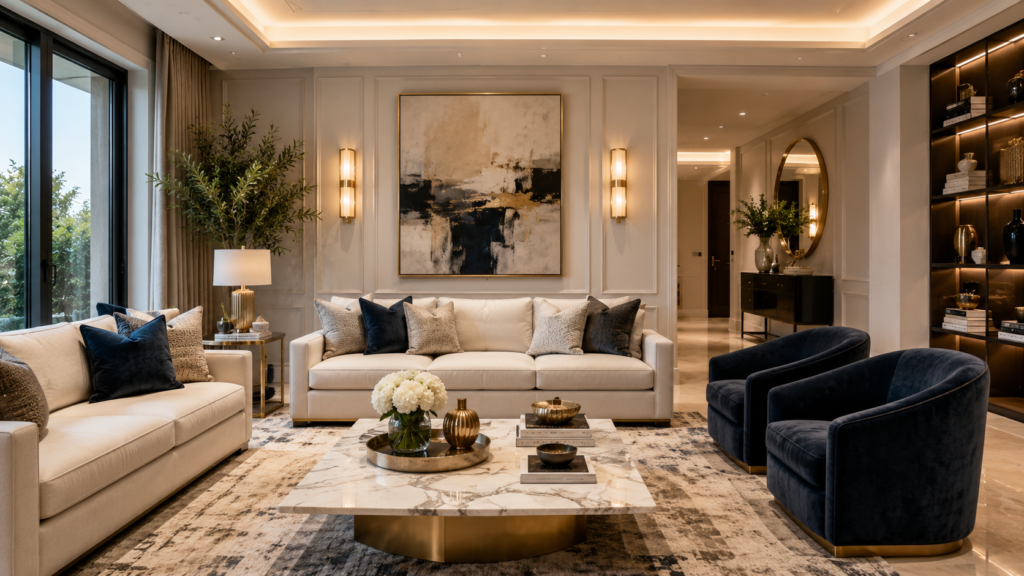
1. Start With a Sophisticated Color Palette
One of the easiest ways to make a living room look expensive is to create a cohesive color palette.
Instead of combining too many unrelated colors, choose three or four shades that work naturally together. Warm white, ivory, taupe, beige, mushroom, camel, walnut, olive, and soft brown are particularly useful for creating an elegant atmosphere.
Current interior design trends are favoring warmer neutrals over the cool gray palettes that dominated many interiors in previous years.
You don’t have to make everything beige. Add depth with darker accents such as espresso brown, charcoal, bronze, or deep green.
A simple formula is:
60% main color + 30% secondary color + 10% accent color.
For example, imagine creamy walls, a warm beige sofa, walnut furniture, and a few dark bronze accents. The result feels calm, balanced, and much more intentional.
2. Choose One Beautiful Statement Sofa
Your sofa is usually the largest piece of furniture in the living room, so it has a major influence on the overall appearance.
Instead of purchasing a large matching furniture set, consider investing in one sofa with a strong silhouette and comfortable upholstery.
Curved edges, low profiles, textured fabrics, and relaxed proportions are especially effective for contemporary luxury interiors. The current direction is toward comfort and personality rather than furniture that looks overly formal or staged.
For a timeless look, consider:
- Cream or warm beige upholstery
- Textured linen
- Bouclé
- Soft velvet
- Camel-colored fabric
- Deep olive
- Warm gray-brown
If your budget doesn’t allow for a new sofa, don’t underestimate the effect of upgrading the cushions and adding a quality throw.
3. Get the Rug Size Right
A surprisingly common living room mistake is choosing a rug that is too small.
A tiny rug floating underneath the coffee table can make even beautiful furniture look disconnected. A properly sized rug visually ties the seating arrangement together and gives the room a more finished appearance.
Whenever possible, place at least the front legs of your sofa and chairs on the rug.
For larger living rooms, an 8×10 or 9×12-foot rug can often create a much more substantial look than a small accent rug. Designers continue to emphasize proper rug proportions because scale has a major effect on how polished a room feels.
Choose subtle patterns, vintage-inspired designs, wool textures, or understated geometric patterns rather than something that competes with every other element in the room.
4. Layer Your Lighting
Nothing makes a living room feel luxurious quite like good lighting.
One ceiling fixture alone rarely creates an inviting atmosphere. Instead, layer several sources of light at different heights.
Try combining:
- A ceiling fixture
- Floor lamps
- Table lamps
- Wall sconces
- Accent lighting
- Natural daylight
Sculptural and oversized lighting is becoming an increasingly important feature in 2026 living room design, functioning as both illumination and artwork.
Choose warm bulbs rather than extremely cool white lighting for living spaces. At night, the goal is to create pools of soft illumination rather than brightly lighting every corner.
5. Hang Curtains Higher and Wider
This is one of the easiest upgrades with a surprisingly dramatic result.
Instead of mounting the curtain rod directly above the window frame, position it closer to the ceiling. Extend the rod beyond the sides of the window so the curtains frame the entire area.
Floor-length curtains can make the ceiling appear taller and the windows feel larger.
For an elegant look, choose linen-look, cotton, velvet, or textured curtains in a shade close to your walls.
Double-layered window treatments are also gaining attention because they add softness, warmth, privacy, and visual depth.
6. Add Natural Materials
Luxury isn’t always about shine.
In fact, natural materials can make a room feel considerably more sophisticated because they introduce texture and variation.
Consider incorporating:
- Natural wood
- Travertine
- Marble
- Linen
- Wool
- Rattan
- Stone
- Aged or brushed metal
- Handmade ceramics
Warm minimalism works particularly well because it combines restraint with tactile materials rather than relying on an empty white room.
A walnut coffee table, woven basket, linen curtains, stone tray, and wool rug can create more visual richness than dozens of decorative objects.
7. Mix Furniture Instead of Buying a Matching Set
Matching furniture sets can make a room feel predictable.
A more collected living room combines different shapes, materials, and periods while keeping the overall palette consistent.
Try pairing:
Modern sofa + vintage side table + sculptural chair + traditional rug
or
Contemporary sofa + antique cabinet + modern coffee table + classic artwork.
Mixing old and new is increasingly popular because it gives rooms character and prevents them from looking like furniture showrooms.
The key is coordination. Different pieces should share at least one common element, such as color, material, scale, or shape.
8. Make Your Coffee Table Look Curated
A coffee table doesn’t need to be covered with decorations.
In fact, too many small accessories can make the room feel cluttered.
Instead, create one simple arrangement using three or four elements:
- A beautiful coffee-table book
- A ceramic bowl
- A small vase
- A candle
- A sculptural object
Use different heights to create visual interest.
A large book underneath a small vase, for example, creates a simple layered arrangement that looks intentional without feeling overdecorated.
9. Use Large-Scale Art
Small artwork scattered across a large wall can sometimes make the room feel unfinished.
One substantial piece of artwork can have a much stronger effect.
Look for:
- Abstract artwork
- Large photography
- Vintage paintings
- Oversized botanical prints
- Textured canvas
- Black-and-white artwork
The goal isn’t necessarily to buy expensive original art. The frame, size, placement, and relationship to the furniture often matter more.
For a sophisticated look, select artwork that repeats one or two colors already present in the room.
10. Create a Statement Wall Without Overdoing It
A statement wall can add architectural interest, but it doesn’t have to rely on a dramatic paint color.
Consider:
- Limewash
- Textured plaster
- Wood paneling
- Fluted details
- Built-in shelving
- Large artwork
- Stone or stone-look finishes
However, designers are increasingly cautioning against decorative feature walls that feel disconnected from the rest of the room. Symmetrical built-ins and integrated architectural elements can produce a more intentional result.
For a modern living room, a beautifully designed TV wall with concealed storage can provide both style and function.
11. Bring in Something Vintage
A room filled exclusively with new furniture can sometimes lack personality.
Adding one vintage or antique element immediately introduces history.
It could be:
- An antique side table
- Vintage mirror
- Old wooden chest
- Traditional rug
- Ceramic vase
- Vintage artwork
- Secondhand accent chair
You don’t need an entire vintage interior. One or two distinctive pieces can make a contemporary living room feel collected over time.
Current design conversations are placing greater emphasis on individuality, meaningful objects, and pieces with history rather than interiors built entirely around predictable trends.
12. Add Texture Instead of More Color
If your living room feels boring but you don’t want bold colors, add texture.
Layer:
linen + wool + wood + stone + velvet + woven materials.
For example, a neutral sofa can become much more interesting with a chunky throw, textured pillows, a wool rug, a wooden coffee table, and a ceramic lamp.
This is one reason warm minimalist interiors can feel luxurious without looking cluttered. Texture creates depth while allowing the color palette to remain calm.
13. Keep the Room Visually Edited
One of the most overlooked living room decorating ideas is simply removing things.
Luxury often comes from what you choose not to display.
Clear unnecessary items from:
- Coffee tables
- TV consoles
- Open shelving
- Side tables
- Window ledges
Leave some empty space around your best pieces.
That breathing room allows furniture and artwork to become focal points rather than competing for attention.
14. Add Greenery Carefully
Plants can make a living room feel more alive, particularly when the rest of the design is neutral.
Choose plants that suit your lighting conditions and place them where they look intentional rather than filling every empty corner.
A large indoor plant beside a sofa, a small plant on a console, or fresh branches in a tall vase can be enough.
The goal is to introduce natural texture without turning the living room into a jungle.
15. Design for Comfort, Not Just Appearance
An expensive-looking living room should still feel comfortable.
A room that looks beautiful but has uncomfortable furniture, awkward pathways, harsh lighting, or nowhere to put a drink won’t feel luxurious for long.
The latest design direction emphasizes living spaces that are genuinely usable, relaxed, and personal rather than staged for photographs.
Arrange furniture around conversation rather than automatically pushing every piece against the wall.
Make sure there is enough walking space between major furniture pieces and that seating faces toward one another when possible.
How to Make a Small Living Room Look More Expensive
You don’t need a large home to create a luxury living room.
For a small apartment or compact living room, focus on scale and simplicity.
Choose furniture that fits the room rather than oversized pieces. Use one appropriately sized rug, floor-length curtains, a large mirror, warm lighting, and a restrained color palette.
A wall-mounted TV, concealed storage, slim furniture, and multifunctional pieces can also reduce visual clutter.
Instead of decorating every surface, choose a few pieces that make a strong impression.
Affordable Luxury Living Room Ideas
You can create an expensive-looking living room without spending a fortune.
Start with the changes that have the biggest visual impact:
- Declutter the room.
- Replace mismatched light bulbs with warm lighting.
- Upgrade inexpensive cushion covers.
- Add full-length curtains.
- Choose a correctly sized rug.
- Introduce one large artwork.
- Add natural wood or woven textures.
- Replace several tiny decorations with one substantial object.
- Mix vintage and modern pieces.
- Keep the color palette consistent.
Modern luxury is increasingly associated with balance, restraint, quality-looking materials, and intentional styling rather than simply spending more money.
Final Thoughts
The most beautiful living room ideas that make a home feel expensive aren’t necessarily the ones with the highest price tags. They are the ideas that create balance, depth, comfort, and personality.
Start with the foundation: a cohesive color palette, properly scaled furniture, a generous rug, layered lighting, and beautiful window treatments. Then add natural textures, artwork, vintage pieces, greenery, and a few meaningful accessories.
For 2026, the strongest living room interiors are moving toward warmth, individuality, natural materials, comfortable layouts, and collected character.
Whether you’re decorating a spacious American family room, a city apartment, a townhouse, or a modern Indian home, the same principle applies: choose fewer things, choose them thoughtfully, and give each piece enough room to shine.