
Choosing the right living room flooring can completely change the way your home looks and feels. The floor covers a large part of the room, so its color, texture, pattern, and material can influence everything from the furniture arrangement to the overall atmosphere. More importantly, living room flooring needs to handle everyday life—foot traffic, furniture, children, pets, spills, and regular cleaning.
There is no single flooring option that works perfectly for every home. A quiet formal sitting room may benefit from luxurious carpet or natural wood, while a busy open-plan family room may need a surface that is easier to clean and more resistant to everyday wear. Homebuilding also recommends considering how the room is actually used before choosing a material, rather than selecting flooring based on appearance alone.
From timeless wood and elegant engineered flooring to practical LVT, porcelain tile, and cozy carpet, here are 10 living room flooring ideas that combine style, comfort, and long-term practicality.
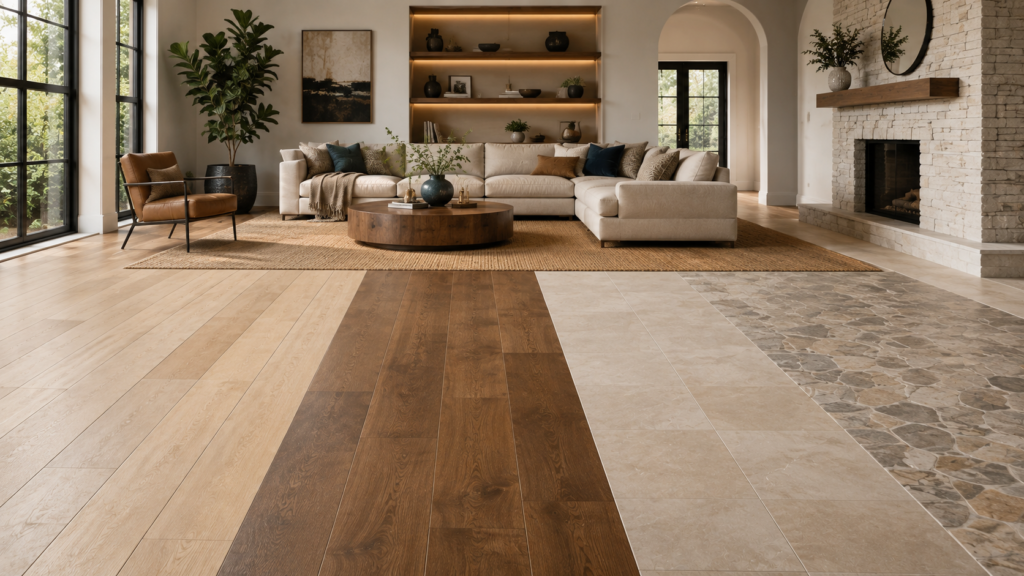
1. Warm Engineered Wood Flooring
Engineered wood is one of the most versatile choices for a stylish living room. It provides the authentic warmth and natural character of timber while offering a practical construction for modern homes.
Oak, walnut, natural ash, and warm honey finishes can create very different moods. Pale oak makes a room feel bright and contemporary, while darker wood creates a richer and more sophisticated atmosphere.
One of the biggest advantages is its ability to work with different decorating styles. Pair it with modern furniture for a clean contemporary look, or combine it with traditional sofas and vintage accessories for a more timeless interior.
Engineered wood can also be a useful option where underfloor heating is planned, provided the specific product is suitable for the system.
2. Classic Solid Wood Flooring
For homeowners who love authentic materials, solid wood flooring remains a timeless option. Natural boards bring texture, warmth, and character that can make even a simple living room feel more refined.
The beauty of solid wood is that it can develop character over time. Small marks and changes in tone can become part of the personality of the room rather than making the floor look outdated.
Choose wider boards for a relaxed modern appearance, or narrower boards for a more traditional feel. Natural oak is particularly versatile because it works beautifully with neutral, earthy, colorful, and minimalist interiors.
If you are renovating an older property, restoring original floorboards can be an especially attractive solution. Existing timber can often become a major design feature rather than something that needs to be covered.
3. Luxury Vinyl Flooring for Busy Homes
Luxury vinyl tile, commonly called LVT, is a strong choice when practicality is just as important as appearance. Modern LVT can replicate the appearance of wood, stone, and other materials while offering an easy-care surface.
It is particularly useful for busy family living rooms, open-plan spaces, and homes where cleaning convenience matters. Homebuilding notes that LVT can be soft underfoot, sound-absorbing, and compatible with underfloor heating when the selected product allows it.
For a sophisticated look, consider wood-effect LVT in warm oak or walnut tones. If you prefer a contemporary interior, stone-effect designs can provide a sleek foundation for modern furniture.
Another benefit is design continuity. The same flooring can sometimes be carried from a living room into an adjoining kitchen or dining area, creating a more seamless open-plan appearance.
4. Stylish Laminate Flooring
Laminate flooring is ideal if you want the appearance of wood without the price associated with some natural flooring options. Today’s laminate comes in a wide range of realistic colors, textures, plank sizes, and finishes.
Wood-effect laminate can imitate everything from pale Scandinavian oak to deep walnut. Textured surfaces can make the flooring feel more convincing, while wide planks can give a room a contemporary appearance.
Laminate is also relatively easy to maintain and can be a practical option for households looking for durable flooring on a budget.
For the best long-term result, choose a high-quality product appropriate for the amount of traffic your living room receives and follow the manufacturer’s cleaning recommendations.
5. Large-Format Porcelain Tiles
Porcelain tiles can give a living room a clean, sophisticated appearance while offering excellent practicality. Large-format tiles are particularly effective in contemporary interiors because fewer visible grout lines can create a more continuous visual effect.
Wood-effect porcelain is another interesting option. It can provide the appearance of timber while giving you the hard-wearing qualities associated with porcelain.
One clever design idea is to continue matching porcelain flooring from the living room onto an outdoor patio. This can visually connect indoor and outdoor areas and make the space feel larger. Homebuilding highlights this approach as a way of creating a stronger connection between the interior and exterior.
For homes in warmer climates, tile can also create a naturally cooler-feeling surface underfoot.
6. Cozy Wall-to-Wall Carpet
If comfort is your priority, carpet remains difficult to beat. It immediately adds softness, warmth, texture, and acoustic comfort to a living room.
A plush neutral carpet can make a large room feel more inviting, while a darker shade can create a cozy atmosphere in a smaller space. Carpet also helps absorb sound, making it particularly appealing for family rooms and television areas.
For busy homes, however, consider the practical side before choosing a very pale or deep-pile carpet. Families with children or pets may prefer durable, easier-to-clean carpet varieties.
Wool is another popular choice because of its durability, warmth, and luxurious feel.
7. Herringbone Wood Flooring
Herringbone flooring is an excellent way to make the floor itself a design feature. Instead of laying planks in a straightforward direction, the boards are arranged in a distinctive zigzag pattern.
This pattern adds movement and architectural interest without requiring a dramatic wall color or elaborate furniture.
Herringbone works especially well in classic, transitional, modern-classic, and luxury interiors. Choose natural oak for a soft, timeless appearance or a darker wood tone for a more dramatic room.
In open-plan interiors, a patterned wood floor can also help visually define the living area while maintaining a connection with the rest of the home. Homebuilding highlights engineered wood laid in a herringbone pattern as an effective way to create a warmer living zone within a larger open-plan space.
8. Concrete Flooring for a Modern Look
Polished or finished concrete can give a living room a distinctive contemporary character. It works particularly well with minimalist interiors, industrial-inspired spaces, and modern homes featuring clean architectural lines.
Concrete has a strong visual presence, so balance it with softer elements such as upholstered furniture, textured curtains, rugs, cushions, and natural wood.
It can also be useful for visually separating zones in an open-plan home. For example, a harder concrete surface can define a kitchen or dining area while wood flooring creates a warmer living room zone.
Because concrete can feel visually and physically hard, rugs are an easy way to introduce warmth and comfort.
9. Wide-Plank Wood-Effect Flooring
Wide planks are one of the easiest ways to make a living room feel contemporary and spacious. Whether you choose real wood, laminate, vinyl, or tile, a wide-plank format creates a calm and uncluttered visual effect.
This style works especially well in minimalist and modern interiors because the larger boards allow the furniture and architectural details to remain the focus.
Light wood-effect flooring is particularly useful in rooms that need a brighter appearance. Warm beige, honey, natural oak, and soft greige shades can complement neutral sofas and natural-texture accessories.
Wide planks also have a timeless quality. Homebuilding notes that wide wood-effect planks remain a classic flooring layout across wood, laminate, and tile options.
10. Hard Flooring Paired With a Statement Rug
You do not always have to choose between practical hard flooring and the comfort of carpet. Combining wood, laminate, LVT, or another hard surface with a large area rug can give you the advantages of both.
The hard flooring provides an easy-to-clean foundation, while the rug adds softness, color, pattern, and warmth.
A large rug placed beneath the sofa and coffee table can visually anchor the seating area. Choose natural fibers for an earthy look, a geometric pattern for a contemporary room, or a subtle neutral design for a more elegant interior.
This approach also makes future decorating changes easier. You can replace the rug when you want a new look without replacing the entire floor. Homebuilding similarly recommends combining hard flooring such as LVT, laminate, or engineered wood with rugs as a practical way to add comfort.
How to Choose the Best Living Room Flooring
Before choosing a flooring material, think about how your living room is used every day. A formal room used occasionally can accommodate more delicate finishes, while a family room with children, pets, and heavy foot traffic needs durability and easy maintenance.
Consider these factors:
Traffic: Busy rooms need flooring that can handle frequent use.
Maintenance: Think about how easily the surface can be vacuumed, swept, mopped, or cleaned after spills.
Comfort: Carpet and some vinyl products provide a softer feel, while tile, stone, and concrete create a harder surface.
Room size: Light colors and wide boards can make smaller rooms feel more open, while darker flooring can create a cozy atmosphere.
Natural light: Consider how sunlight changes throughout the day before choosing a very light or dark floor.
Interior style: Your flooring should complement your furniture, walls, doors, and architectural features rather than compete with them.
Open-plan layout: Using the same flooring across connected spaces can create continuity, while contrasting materials can deliberately create separate zones.
Create a Living Room Floor That Lasts
The best living room flooring is not necessarily the most expensive option. It is the material that fits your lifestyle, design preferences, maintenance expectations, and budget.
For timeless warmth, engineered or solid wood remains a strong choice. For busy households, LVT and quality laminate offer attractive practical alternatives. Porcelain can deliver a sleek, durable finish, while carpet creates unmatched softness and acoustic comfort. If you want a distinctive contemporary statement, concrete or patterned flooring can completely transform the character of the room.
Most importantly, choose flooring as part of the entire interior rather than as an isolated feature. When the floor works with your furniture, lighting, wall colors, rugs, and room layout, it becomes the foundation of a living room that feels stylish today and remains appealing for years to come.