
Your bedroom should feel like the easiest room in the house to unwind in—a place where the lights are softer, the bedding feels inviting, and everything around you encourages you to slow down. You do not need a huge bedroom, an expensive renovation, or a perfectly matched furniture set to create that feeling.
The most successful cozy bedroom ideas are usually about layering simple details: warm colors, comfortable bedding, soft lighting, natural materials, practical storage, and a few personal touches that make the space feel like yours.
Interior designers are increasingly treating the bedroom as more than a place to sleep. Current bedroom design focuses on creating spaces that support relaxation through layered lighting, tactile fabrics, natural materials, and less visual clutter.
If you are refreshing a primary bedroom, decorating a small apartment bedroom, or simply looking for affordable bedroom decor ideas, these cozy bedroom ideas can help you create a retreat that feels comfortable, stylish, and genuinely relaxing.
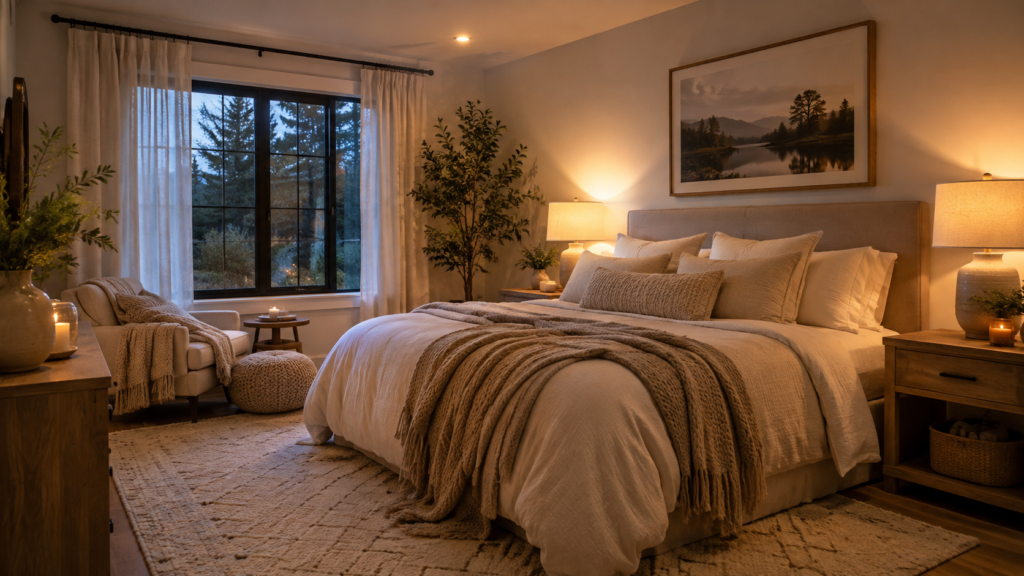
1. Start With a Warm, Calming Color Palette
Color sets the mood before you add a single decorative accessory.
For a cozy bedroom, consider shades such as warm white, creamy beige, taupe, soft brown, muted sage green, dusty blue, terracotta, or warm gray. These colors create a softer atmosphere than stark white or highly saturated shades.
You do not have to make the entire room neutral. A deep olive wall, warm brown headboard, muted blue bedding, or terracotta accent pillow can add personality without making the room feel busy.
For a modern bedroom, try pairing:
- Warm white walls with natural wood
- Sage green with cream bedding
- Beige with chocolate brown accents
- Dusty blue with warm oak
- Charcoal with ivory and tan
- Soft blush with natural linen
The goal is not simply to choose “calm” colors. It is to create a palette that feels comfortable to you.
2. Make the Bed the Cozy Focal Point
The bed is naturally the star of the bedroom, so give it the attention it deserves.
Instead of using one flat comforter and a couple of pillows, create layers. Start with comfortable sheets, add a duvet or quilt, then finish with a folded blanket or throw at the foot of the bed.
Interior designers frequently use layered bedding to make bedrooms feel warmer and more inviting. Natural fabrics such as cotton and linen can add softness without making the room look overly decorated.
For an especially inviting bed, combine different textures rather than using everything in exactly the same fabric.
Try:
Cotton sheets + linen duvet + quilt + chunky throw + textured pillows
That combination creates visual depth while keeping the bed comfortable and practical.
3. Add Soft Lighting at Different Levels
Lighting can completely change how a bedroom feels.
A bright overhead fixture may be useful when cleaning or getting dressed, but it is rarely the most relaxing option at night. Instead, create several layers of light.
Consider adding:
- Bedside table lamps
- Wall sconces
- A dimmable ceiling fixture
- A floor lamp
- Small accent lights
- Reading lights
Designers often recommend using multiple light sources at different heights to create depth and a softer atmosphere.
Warm, adjustable lighting is particularly useful because you can make the room brighter when getting ready and much softer when winding down.
If you rent your home, simply changing the lampshades or adding attractive bedside lamps can make a surprisingly noticeable difference.
4. Bring Natural Materials Into the Bedroom
Natural materials instantly make a bedroom feel more grounded.
Wood, linen, cotton, wool, rattan, cane, stone, and woven fibers can all add warmth. You do not need to completely redesign the room to introduce them.
A wooden nightstand, woven basket, linen curtains, wool rug, or rattan bench can be enough.
This approach works particularly well for organic modern bedrooms, Scandinavian-inspired spaces, Japandi bedrooms, and relaxed coastal interiors.
Natural materials also prevent a neutral bedroom from looking flat. Instead of adding lots of decorations, let texture provide the interest.
5. Choose a Rug That Feels Good Underfoot
A bedroom rug is one of those small changes that can make the entire space feel more comfortable.
Stepping onto a cold floor first thing in the morning is not exactly the feeling you want from a cozy retreat. A soft area rug beside or underneath the bed adds warmth and visual softness.
For a larger bedroom, an area rug positioned beneath the bed can anchor the furniture. In a smaller room, runners or smaller rugs beside the bed may work better.
Choose a texture that complements the rest of your bedroom. A chunky woven rug works beautifully with casual decor, while a low-pile wool rug can create a more polished look.
6. Keep the Nightstand Simple
A nightstand does not need to become a storage area for everything you own.
For a relaxing bedroom, keep only the things you actually use. A small lamp, book, glass of water, decorative tray, or vase may be enough.
This also makes cleaning easier.
Current bedroom design advice increasingly emphasizes reducing visual clutter and using practical storage to keep surfaces organized.
If your nightstand constantly becomes cluttered with chargers, glasses, skincare products, and miscellaneous items, add a small drawer organizer or concealed charging station.
The result is simple but powerful: the bedroom immediately feels calmer.
7. Use Curtains to Soften the Room
Window treatments are often overlooked when decorating a bedroom.
Soft curtains can make the room feel warmer while also helping control natural light. For a luxurious appearance, hang curtains higher and wider than the window frame when the layout allows.
Layering sheer curtains with heavier panels can give you flexibility throughout the day.
This is especially useful in bedrooms where you want morning light but prefer more privacy at night. Designers also use fabric window treatments to visually soften bedroom walls and make windows appear larger.
For a cozy look, consider linen-look curtains, soft cotton panels, or textured neutral fabrics.
8. Create a Small Reading Corner
If you have enough space, turn an unused bedroom corner into a personal retreat.
You do not need an elaborate seating area. A comfortable armchair, small side table, floor lamp, and soft throw can create a lovely reading nook.
In a larger primary bedroom, a bench at the foot of the bed can provide both seating and visual balance.
If your bedroom is small, choose furniture carefully. Oversized pieces can make the room feel crowded, while furniture that is too small can make the space feel disconnected. Proportion is one of the important considerations designers emphasize when arranging bedroom furniture.
9. Add Personality With Artwork
A cozy bedroom should not feel like a generic hotel room.
Choose artwork that means something to you. It could be an abstract print, landscape painting, vintage photograph, botanical artwork, or a collection of smaller framed pieces.
Instead of filling every wall, select one or two areas to decorate intentionally.
A large piece above the headboard can create a strong focal point, while smaller artwork on an adjacent wall can add personality without overwhelming the space.
For a relaxed bedroom, look for artwork with colors that already appear in your bedding, rug, or curtains.
10. Introduce Greenery
A little greenery can make a bedroom feel fresh and connected to nature.
A small plant on a dresser, a tall plant in an empty corner, or a simple branch arrangement can add life without requiring major decorating changes.
If your bedroom does not receive much natural light, choose plants suited to those conditions—or use realistic faux greenery.
The important thing is moderation. A cozy bedroom does not need to become an indoor jungle.
11. Try a Moody Bedroom
Cozy does not always mean pale and bright.
Dark bedroom colors can create a dramatic, intimate atmosphere. Deep olive, charcoal, navy, chocolate brown, and muted burgundy can all work beautifully when balanced with warm lighting and lighter textiles.
A moody bedroom works especially well when you layer materials. Think dark walls, natural wood, cream bedding, brass accents, and soft lamps.
The contrast between darker colors and tactile fabrics can make the room feel sophisticated rather than gloomy. Designers also recommend using contrasting textures and materials to create depth and a more immersive bedroom atmosphere.
12. Make a Small Bedroom Feel Bigger and Cozier
Small bedrooms require a little more planning, but they can actually feel incredibly intimate.
Choose furniture that fits the scale of the room and avoid blocking walkways. Use vertical space with wall-mounted lighting or shelves instead of filling the floor with extra furniture.
Under-bed storage, storage benches, baskets, and nightstands with drawers can help keep everyday clutter out of sight.
A large mirror can also reflect light and make a compact room feel more open.
Most importantly, resist the temptation to fill every empty corner. Negative space is useful in a small bedroom because it keeps the room from feeling crowded.
13. Create a Hotel-Inspired Bedroom at Home
If you love the feeling of a boutique hotel, focus on details rather than expensive furniture.
Crisp bedding, symmetrical nightstands, attractive lamps, coordinated colors, plush towels, simple artwork, and concealed clutter can instantly make a bedroom feel more polished.
Layered lighting is especially important. Designers recommend combining bedside lighting, overhead lighting, and ambient sources rather than relying on a single ceiling fixture.
You can also add a small bench at the foot of the bed, a tray for essentials, and a comfortable throw blanket for that finished, hospitality-inspired look.
14. Keep Technology From Taking Over
A relaxing bedroom can be beautiful without being filled with glowing screens.
The emerging “analog bedroom” approach focuses on creating space for reading, tactile materials, softer lighting, and real-world activities instead of constant digital stimulation.
If possible, hide charging cables, keep televisions visually discreet, and create a small spot for books.
Even one simple change—such as replacing late-night scrolling with reading—can make the bedroom feel more intentional.
15. Add the Little Details That Make It Yours
Finally, add details that make the room feel personal.
Maybe it is your favorite candle, a framed vacation photograph, a vintage lamp, a handmade ceramic vase, a stack of books, or a blanket passed down through your family.
These details are what separate a beautifully decorated bedroom from a bedroom that actually feels like home.
A relaxing retreat does not have to follow a strict design style. Your bedroom can be modern, traditional, coastal, bohemian, minimalist, farmhouse, or eclectic. What matters is that the colors, textures, lighting, and furniture work together to create a space where you genuinely enjoy spending time.
Final Thoughts
Creating a cozy bedroom does not require a complete renovation. Often, the biggest transformation comes from a handful of thoughtful changes: layered bedding, warm lighting, soft rugs, calming colors, natural materials, organized surfaces, and personal touches.
Whether you are decorating a spacious primary bedroom in a suburban American home, updating a small apartment bedroom in New York or Los Angeles, or refreshing a guest bedroom for family visits, the same principle applies: design the room around comfort first and style second.
The most beautiful relaxing bedrooms are not necessarily the most expensive ones. They are the spaces that feel welcoming when you walk through the door, peaceful when the lights go down, and completely your own.