If you want homemade pizza with a soft, chewy center and a beautifully crisp, golden edge, the secret starts with the dough. A good pizza dough does not need complicated ingredients or special equipment. With the right flour, proper hydration, enough kneading, and a little patience while the dough rises, you can make pizzeria-style pizza right in your kitchen.
This easy pizza dough recipe is designed for home cooks in the U.S. It makes enough dough for 2 medium pizzas, and you can use it for classic cheese pizza, pepperoni pizza, veggie pizza, or almost any topping combination you love.
Why You’ll Love This Pizza Dough Recipe
This recipe is simple enough for beginners but produces excellent results every time.
- Soft and chewy inside with crisp edges
- Uses simple pantry ingredients
- Makes enough for two medium pizzas
- Works in a regular home oven
- Can be prepared ahead of time
- Freezer-friendly
- Great for thin, classic, or slightly thicker crusts
Ingredients You’ll Need
For 2 medium pizzas, gather the following:
| Ingredient | Amount |
|---|---|
| All-purpose or bread flour | 3 1/2 cups (about 440 g) |
| Warm water | 1 1/2 cups (360 ml) |
| Active dry yeast | 2 1/4 teaspoons (1 packet) |
| Granulated sugar | 1 teaspoon |
| Fine salt | 2 teaspoons |
| Olive oil | 2 tablespoons |
What Type of Flour Is Best?
Bread flour is an excellent choice if you want a particularly chewy crust because its higher protein content helps develop gluten.
All-purpose flour is also a great option and is easier to find in most American kitchens. It produces a slightly softer, more tender crust.
If you’re making pizza for the first time, don’t worry about buying specialty flour. Regular all-purpose flour works very well.
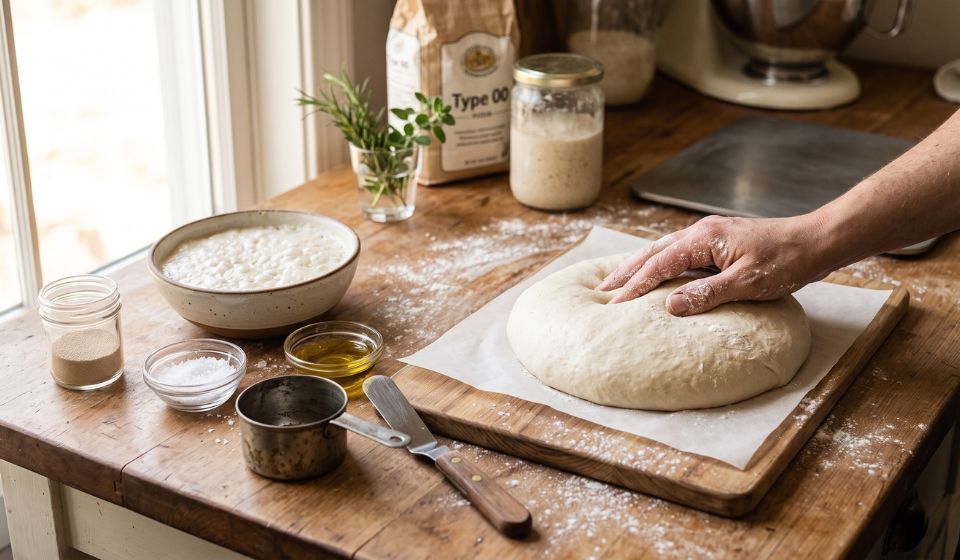
Step 1: Activate the Yeast
Pour the warm water into a large mixing bowl. The water should feel warm but not hot, roughly 100°F to 110°F.
Add the sugar and active dry yeast. Stir gently and let the mixture sit for about 5 to 10 minutes.
You should see some bubbles or a light layer of foam on the surface. This indicates that the yeast is active.
If nothing happens after 10 minutes, your yeast may be old or inactive. It is better to start again with fresh yeast rather than continue with a dough that may not rise properly.
Step 2: Add the Flour and Salt
Add about 3 cups of the flour to the yeast mixture. Sprinkle in the salt and add the olive oil.
Use a wooden spoon, sturdy spatula, or your hands to mix everything together.
Gradually add the remaining flour, about 1/4 cup at a time. Stop adding flour once the dough comes together into a soft, slightly sticky ball.
Avoid adding too much flour. A dough that feels extremely dry can produce a tough, dense pizza crust.
Step 3: Knead the Dough
Transfer the dough to a lightly floured work surface.
Knead it for approximately 8 to 10 minutes by hand.
Push the dough away from you with the heel of your hand, fold it back toward you, rotate it slightly, and repeat.
As you knead, the dough should become smoother and more elastic.
A properly kneaded dough should feel soft and spring back slightly when gently pressed with your finger.
If the dough is extremely sticky, add flour one tablespoon at a time. Try not to add large amounts of flour because this can make the finished crust heavy.
Step 4: Let the Dough Rise
Lightly coat a large bowl with olive oil.
Place the dough inside and turn it once so the surface is lightly coated with oil.
Cover the bowl with plastic wrap, a reusable bowl cover, or a clean kitchen towel.
Place the bowl somewhere warm and let the dough rise for approximately 1 to 1 1/2 hours, or until it has roughly doubled in size.
The exact rising time depends on the temperature of your kitchen. A warmer kitchen will usually make the dough rise faster, while a cooler kitchen may require more time.
Step 5: Divide the Dough
Once the dough has doubled, gently press it down to remove excess air.
Turn it onto a lightly floured surface and divide it into two equal portions.
Shape each portion into a smooth ball by pulling the edges toward the bottom and gently rolling the dough against the work surface.
Cover the dough balls and let them rest for another 15 to 20 minutes.
This short resting period relaxes the gluten, making the dough much easier to stretch.
Step 6: Prepare Your Oven
For the best homemade pizza, your oven needs to be very hot.
Preheat your oven to 500°F, or as high as your oven safely allows.
If you’re using a pizza stone or pizza steel, place it in the oven while it preheats. Give it at least 30 to 45 minutes to become thoroughly hot.
If you don’t have a pizza stone or steel, a heavy baking sheet can work. Place the baking sheet upside down so the pizza can slide on and off more easily.
Step 7: Shape the Pizza Dough
Take one dough ball and place it on a lightly floured surface.
Gently flatten the center with your fingertips while leaving a slightly thicker border around the outside for the crust.
Continue stretching the dough until it is approximately 12 inches wide.
For a more traditional crust, avoid using a rolling pin. Rolling can push too much air out of the dough and make the edges less fluffy.
Instead, gently stretch the dough with your hands.
If the dough keeps shrinking back, let it rest for another 5 to 10 minutes before trying again.
Step 8: Add Your Toppings
Transfer the stretched dough to a piece of parchment paper, lightly floured pizza peel, or another surface suitable for transferring it to the oven.
Spread a thin layer of pizza sauce over the dough, leaving about 1 inch around the edge.
Add shredded mozzarella cheese and your favorite toppings.
For a classic American-style pizza, you can use:
- Mozzarella cheese
- Pepperoni
- Italian sausage
- Mushrooms
- Bell peppers
- Onions
- Black olives
- Fresh basil
Try not to overload the pizza with toppings. Too many toppings can make the center wet and prevent the crust from becoming crisp.
Step 9: Bake the Pizza
Carefully transfer the pizza onto your preheated pizza stone, steel, or baking sheet.
Bake at 500°F for approximately 8 to 12 minutes.
The exact time depends on your oven and the thickness of your dough.
The pizza is ready when:
- The crust is puffed and golden brown
- The cheese is melted and bubbling
- The bottom is crisp and lightly browned
- The edges have developed some darker golden spots
For an extra-crisp and deeply browned top, you can turn on the broiler for the final 30 to 60 seconds, but watch the pizza closely because it can burn quickly.
Step 10: Cool and Slice
Remove the pizza from the oven and let it rest for about 2 to 3 minutes.
Add fresh basil, grated Parmesan, red pepper flakes, or a small drizzle of olive oil if desired.
Use a pizza cutter or sharp knife to slice it and serve while hot.
Nutrition Information
The following is an approximate estimate per serving, assuming the dough is divided into 8 servings and does not include sauce, cheese, or toppings.
| Nutrient | Approximate Amount |
| Calories | 245 |
| Carbohydrates | 45 g |
| Protein | 7 g |
| Fat | 5 g |
| Saturated Fat | 0.7 g |
| Fiber | 2 g |
| Sodium | 585 mg |
Nutrition values can vary depending on the flour brand and exact ingredients used.
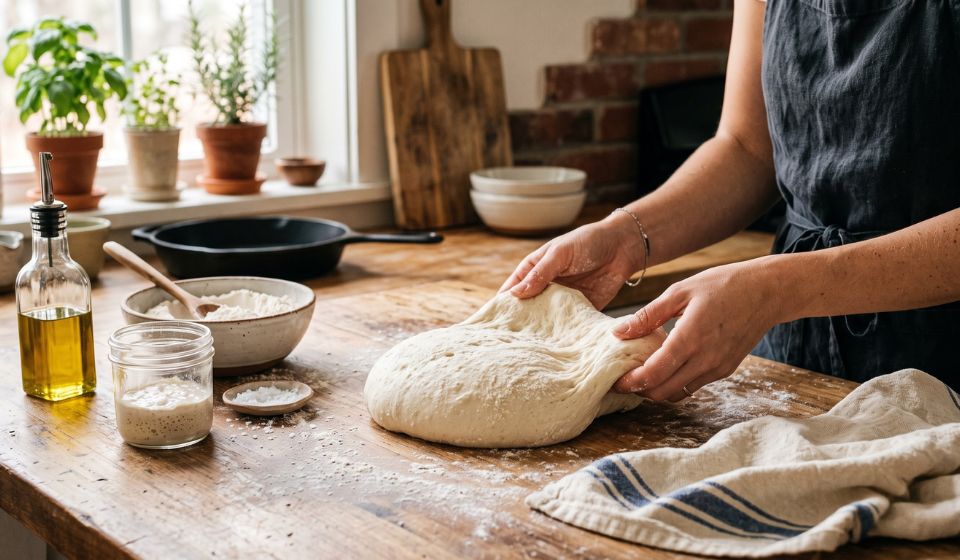
Tips for Soft and Chewy Pizza Dough
Use a Kitchen Scale
Measuring flour by weight is one of the easiest ways to improve your pizza dough.
Flour can become compressed when measured with cups, which may cause you to accidentally add too much. For consistent results, aim for approximately 440 grams of flour.
Don’t Add Too Much Flour
The dough should be soft and slightly tacky rather than completely dry.
Adding excessive flour is one of the most common reasons homemade pizza crust becomes dense and tough.
Give the Dough Enough Time to Rise
Don’t rush the fermentation.
The dough needs time for the yeast to produce gas and for the gluten structure to develop. If your kitchen is cool, simply allow the dough more time to rise.
Use a Very Hot Oven
Restaurant pizza ovens operate at extremely high temperatures, which is difficult to reproduce at home.
Setting your home oven to 500°F and thoroughly preheating a pizza stone or steel helps create a much better crust.
Don’t Overload the Pizza
A thin layer of sauce, a moderate amount of cheese, and a reasonable amount of toppings usually produce a better pizza than piling everything onto the dough.
Too many wet ingredients can prevent the middle from cooking properly.
How to Make Pizza Dough Ahead of Time
For even better flavor, you can prepare this dough ahead of time and let it slowly ferment in the refrigerator.
After kneading, place the dough in an airtight container or covered bowl and refrigerate it for 24 to 72 hours.
When you’re ready to make pizza, remove the dough from the refrigerator approximately 1 to 2 hours before baking.
Allow it to come closer to room temperature before stretching.
Slow fermentation gives the dough more time to develop flavor and can produce a wonderfully chewy crust.
How to Freeze Pizza Dough
Pizza dough freezes well, making this recipe convenient for busy weeknights.
After the first rise, divide the dough into two portions and shape each into a ball.
Lightly coat each dough ball with olive oil and place it in a freezer-safe bag or airtight container.
Freeze for up to about 3 months for best quality.
When you’re ready to use it, transfer the dough to the refrigerator and let it thaw overnight.
Then let it sit at room temperature for approximately 1 to 2 hours before shaping and baking.
Common Pizza Dough Problems
Why Is My Pizza Dough Too Sticky?
A little stickiness is normal. If the dough is difficult to handle, lightly flour your hands and work surface.
Add additional flour gradually rather than dumping a large amount into the dough.
Why Didn’t My Dough Rise?
Several things can prevent dough from rising. Your yeast may be expired, the water may have been too hot or too cold, or your kitchen may simply be too cool.
Give the dough additional time in a warm, draft-free location.
Why Is My Pizza Crust Tough?
Too much flour, overworking the dough, or insufficient resting time can contribute to a tough crust.
Try measuring your flour by weight and allowing the dough to rest before shaping.
Why Is the Middle of My Pizza Soggy?
A soggy center is often caused by too many toppings, excessive sauce, or an oven that isn’t hot enough.
Use less sauce, avoid overloading the pizza, and make sure your oven and pizza stone or steel are thoroughly preheated.
Can I Make This Dough Without a Stand Mixer?
Absolutely. This recipe is easy to make by hand.
Kneading for 8 to 10 minutes develops enough gluten to give the dough its desirable structure and chewiness.
Easy Topping Ideas
Once you have the dough ready, you can customize it in countless ways.
For a classic Margherita pizza, use tomato sauce, fresh mozzarella, fresh basil, and olive oil.
For pepperoni pizza, add mozzarella and sliced pepperoni before baking.
For a supreme-style pizza, try pepperoni, sausage, mushrooms, onions, and bell peppers.
For a white pizza, skip the tomato sauce and use ricotta, mozzarella, Parmesan, garlic, and a drizzle of olive oil.
For a vegetable pizza, combine mozzarella with mushrooms, spinach, bell peppers, onions, and olives.
Final Thoughts
Making homemade pizza dough is easier than it may seem. With flour, water, yeast, salt, and a little olive oil, you can create a soft and chewy base for your favorite pizza.
The most important things to remember are to avoid adding too much flour, knead the dough properly, give it enough time to rise, and bake it in a very hot oven.
Once you master this basic dough, you can experiment with different fermentation times, crust thicknesses, sauces, cheeses, and toppings. Whether you’re making Friday-night pizza for the family or preparing dough ahead for a weekend gathering, this recipe gives you a dependable homemade foundation for delicious pizza every time.