
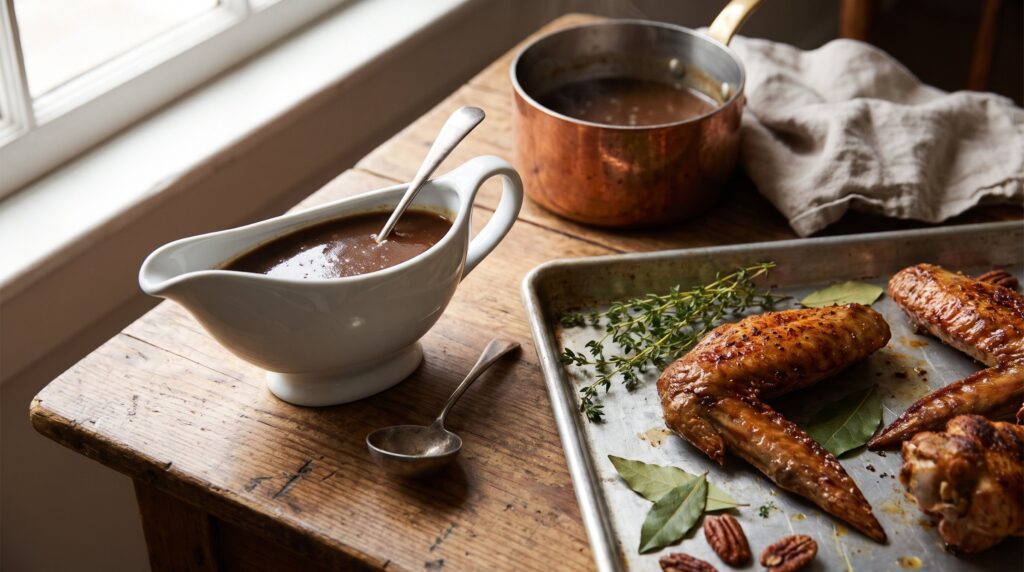
Thanksgiving is November 26, and the one dish that usually gets made in a panic at the last minute is the gravy. The fix: roast a pound of turkey wings this weekend, turn them into a rich gravy, and put it in the freezer, so on Thursday all you do is reheat and whisk.
Photo: AI illustration.
Why roasted wings work better than waiting for drippings
Classic gravy depends on pan drippings, and those only exist after the turkey comes out of the oven, right when the stuffing, rolls and sides all need the stovetop too. Roasted turkey wings, legs or necks give you the same browned, roasted flavor days ahead. Food Network Kitchen’s make-ahead turkey gravy is built on exactly this idea: roast about a pound of turkey pieces, simmer them in stock to enrich it, then thicken it with a dark roux.
This trick matters even more in Texas, where a lot of families smoke or fry the bird. A fried turkey leaves you with a pot of hot oil, not drippings, and a smoked turkey’s drippings can be too smoky or too scarce to build a full batch of gravy. Making it ahead from wings solves both problems.
How to do it
Prep: 15 minutes · Cook: about 1 hour 15 minutes · Makes: about 4 cups
- 1 pound turkey wings, legs or neck pieces, cut into smaller pieces
- Kosher salt and black pepper
- 8 cups turkey stock or low-sodium chicken broth
- 5 sprigs fresh thyme and 2 bay leaves
- 1 stick (8 tablespoons) unsalted butter
- 1/2 cup all-purpose flour
- Heat the oven to 400°F. Season the turkey pieces lightly with salt and pepper and roast on a rimmed baking sheet until browned and cooked through, about 30 minutes. Poultry is cooked when it reaches 165°F.
- Move the turkey to a saucepan and scrape in every browned bit from the pan. Add the stock, thyme and bay leaves, bring to a simmer and cook 30 minutes. Strain and keep the broth warm.
- Melt the butter in the empty saucepan, whisk in the flour and cook, whisking, until the roux is smooth and deep golden brown.
- Slowly whisk in the warm broth. Keep whisking until it simmers, then cook about 5 minutes more, until it coats the back of a spoon. Season to taste.
- Cool, pour into a labeled freezer bag or airtight container and freeze.
How far ahead, and how to reheat safely
Food Network Kitchen’s recipe says the gravy keeps up to 2 days in the fridge or up to 2 weeks in the freezer for best quality, which lines up neatly with a batch made this weekend. If you’d rather not freeze, make it on the Monday or Tuesday of Thanksgiving week. The USDA’s general rule for leftovers is 3 to 4 days in the refrigerator, so don’t push a fridge batch any further than that.
When it’s time to serve, you can reheat it straight from frozen in a saucepan; the USDA Food Safety and Inspection Service says frozen leftovers can be reheated without thawing first, and that sauces, soups and gravies should be brought to a rolling boil. Whisk hard as it heats so lumps don’t form.
Make it taste like this year’s bird
Once the turkey is resting on Thursday, you can still use whatever is in the roasting pan. Pour off the fat, deglaze the pan with a splash of the hot gravy, scrape up the browned bits and whisk them back into the pot. If you’re smoking your turkey, add only a spoonful or two of drippings at a time and taste as you go, since smoke flavor builds fast. For more on getting the bird itself right, see our list of mistakes that ruin smoked turkey.
A few easy ways to change it up: swap a cup of the broth for dry white wine or apple cider, or stir in black pepper and a little fresh sage to match a sausage-and-sage dressing. Gravy made this weekend is one fewer pot on the stove when the oven is full on Thanksgiving Day.