
You have probably owned a shirt that everyone complimented, and another one — same style, same fit, different color — that made you look tired in every photo. That gap is not fabric quality. It is contrast between the color and your skin..
Choosing colors that work with your complexion is the cheapest style upgrade there is. No new wardrobe, no gym plan, no filter. Just better color decisions. This guide breaks down exactly what colors to wear for your skin tone, how to test your undertone in under a minute, and which shades to keep away from your face..
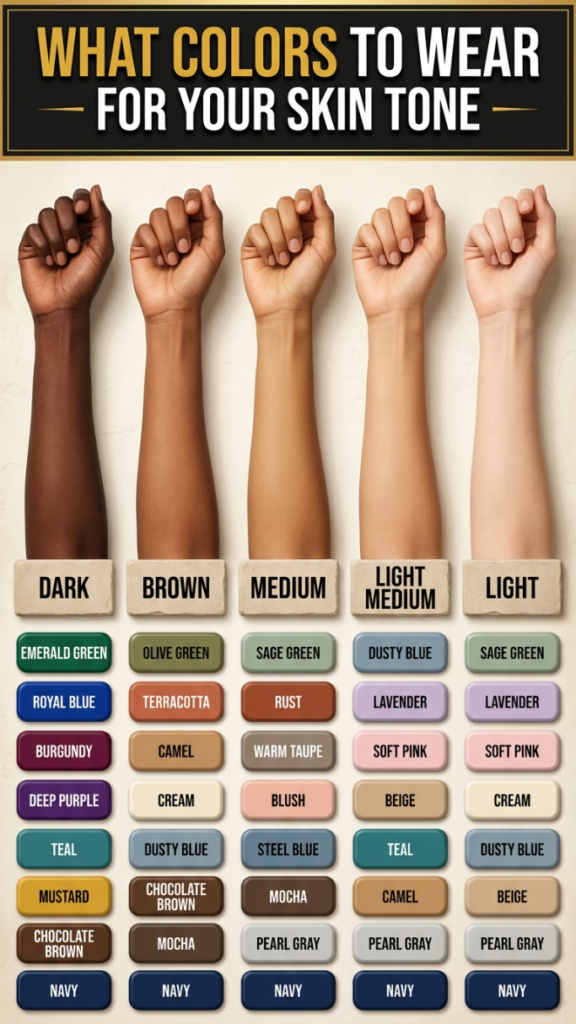
Quick Answer: Best Colors for Every Skin Tone
| Skin Tone | Colors That Work Best | Colors to Limit |
|---|---|---|
| Dark | Emerald green, royal blue, burgundy, deep purple, teal, mustard, chocolate brown, navy | Dull charcoal, muddy olive-brown |
| Brown / Deep Tan | Olive green, terracotta, camel, cream, dusty blue, chocolate brown, mocha, navy | Neon brights, washed-out pastels |
| Medium | Sage green, rust, warm taupe, blush, steel blue, mocha, pearl gray, navy | Bright orange, harsh white |
| Light Medium | Dusty blue, lavender, soft pink, beige, teal, camel, pearl gray, navy | Mustard yellow, neon green |
| Light / Fair | Sage green, lavender, soft pink, cream, dusty blue, beige, pearl gray, navy | Pure black near face, bright yellow, neon |
Save that chart. The rest of this article explains why it works, so you can shop without needing it.
Skin Tone vs Undertone: The Difference That Actually Matters
Most people match clothes to how light or dark their skin is. That is only half the equation.
Skin tone is surface depth — fair, light medium, medium, brown, dark. It decides how much contrast a color creates against you.
Undertone is the permanent color sitting underneath your skin. It never changes, even when you tan or lose a tan. It decides whether a color looks harmonious or clashing.
There are three undertones:
- Warm — golden, peachy or yellow base
- Cool — pink, red or bluish base
- Neutral — a balanced mix of both
Two people with identical skin depth can suit completely different palettes because their undertones differ. That is why a “best colors for brown skin” list on its own is never enough.
How to Find Your Undertone in 60 Seconds
Run these four tests in natural daylight, not under yellow indoor bulbs.
1. The Vein Test
Look at the veins on the inside of your wrist.
- Green or olive veins → warm undertone
- Blue or purple veins → cool undertone
- A mix of both, or hard to tell → neutral undertone
2. The Jewelry Test
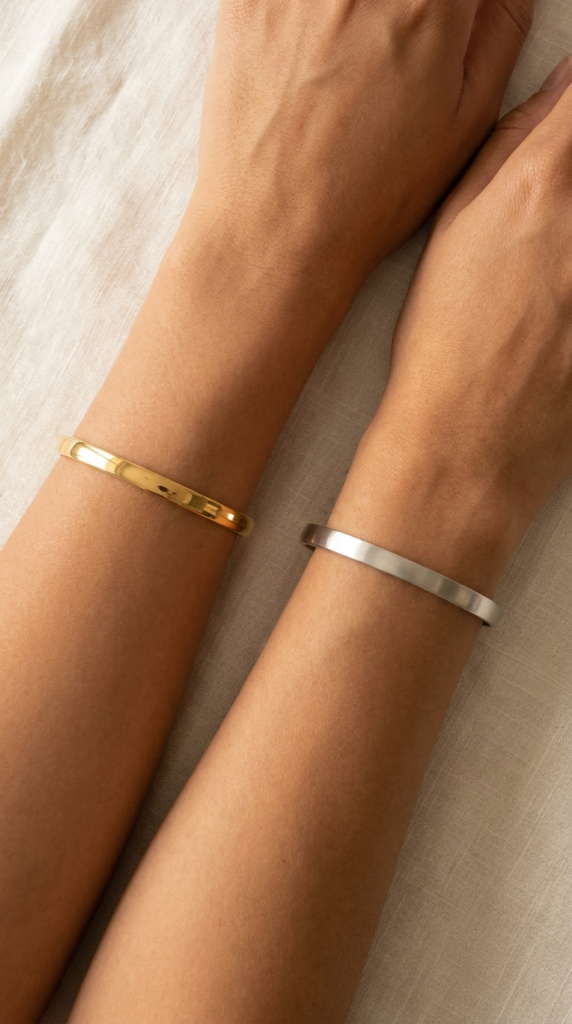
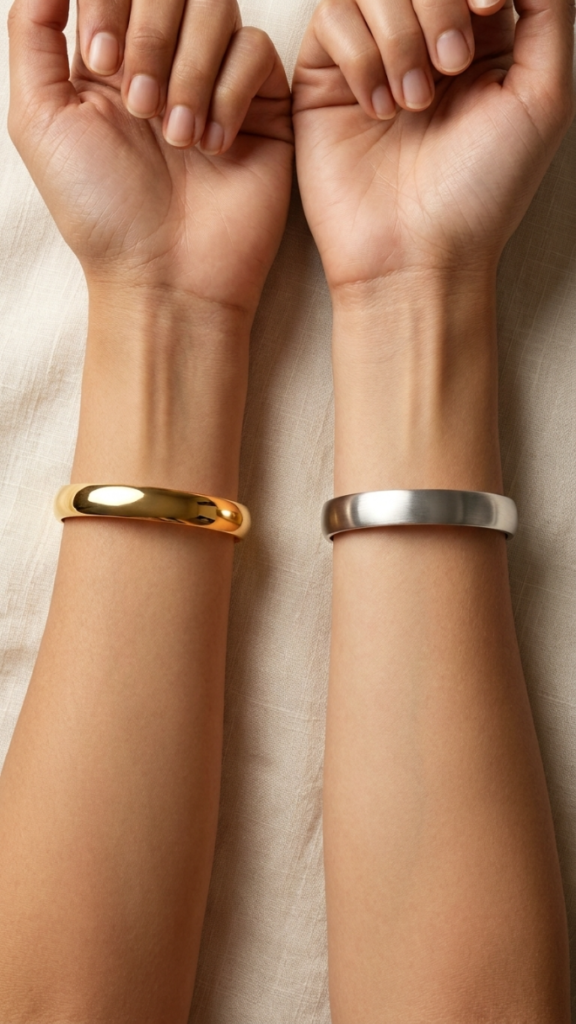
Hold gold against one wrist and silver against the other.
- Gold makes your skin glow → warm
- Silver looks cleaner and brighter → cool
- Both look good → neutral
This is the fastest test and the most reliable for most people.
3. The White Fabric Test
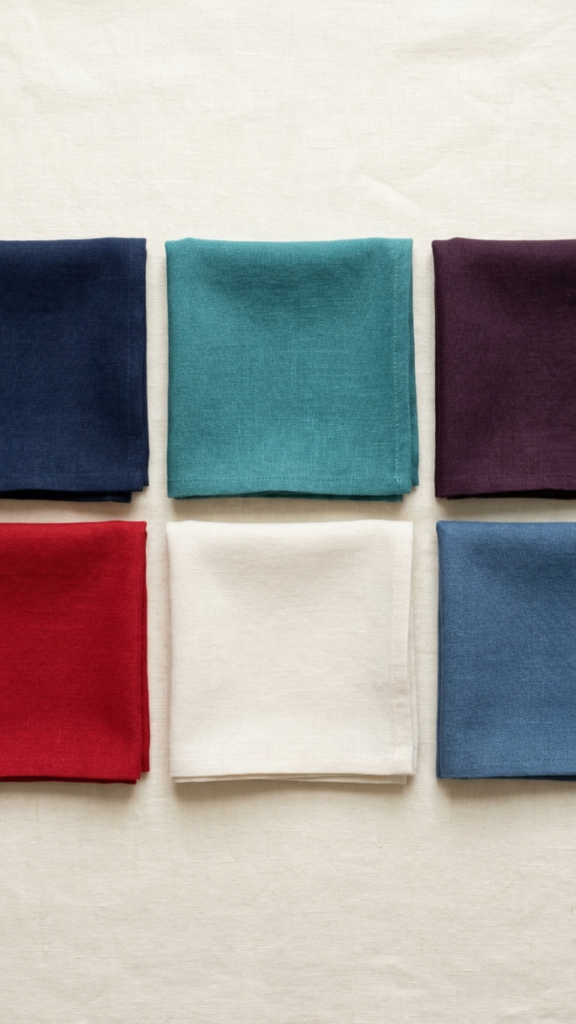
Hold a pure bright white shirt near your face, then an off-white or cream one.
- Cream flatters you → warm
- Bright white flatters you → cool
- Both fine → neutral
4. The Sun Test
Think about how your skin reacts to sun exposure.
- Tans easily, rarely burns → usually warm
- Burns first, then tans or stays red → usually cool
If three out of four tests agree, that is your undertone. Ignore the outlier.
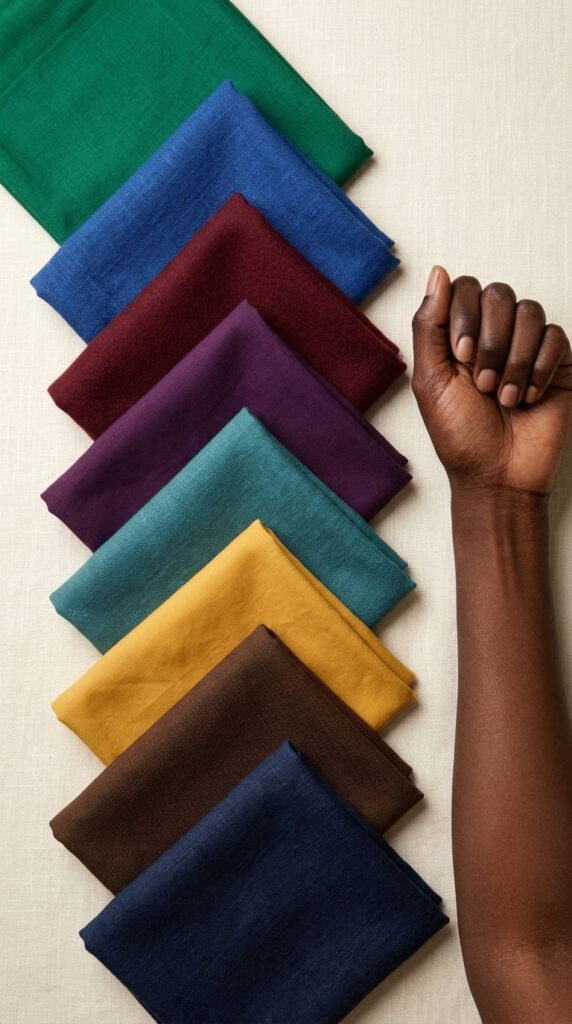
What Colors to Wear for Dark Skin
Deep skin tones hold saturated color better than any other complexion. Rich, high-pigment shades sit against dark skin with strong contrast and read as intentional and expensive.
Best colors: emerald green, royal blue, burgundy, deep purple, teal, mustard, chocolate brown, navy.
Jewel tones are the headline here. Emerald and royal blue create luminous contrast. Burgundy and deep purple add depth without going flat. Mustard is the surprise winner — the gold in it echoes warm undertones beautifully.
Also excellent: bright white, hot pink, gold, cobalt, crisp red.
Go easy on: muddy mid-browns that sit too close to your skin depth, dull charcoal, and dusty greyed-out pastels. They flatten instead of contrast.
Styling tip: dark skin is the one tone that can wear both bright white and true black at full strength. Use that. A white shirt against deep skin is one of the highest-impact combinations in menswear and womenswear alike.
What Colors to Wear for Brown Skin
Brown and deep tan complexions usually carry warm or neutral-warm undertones, which makes earth tones an easy win.
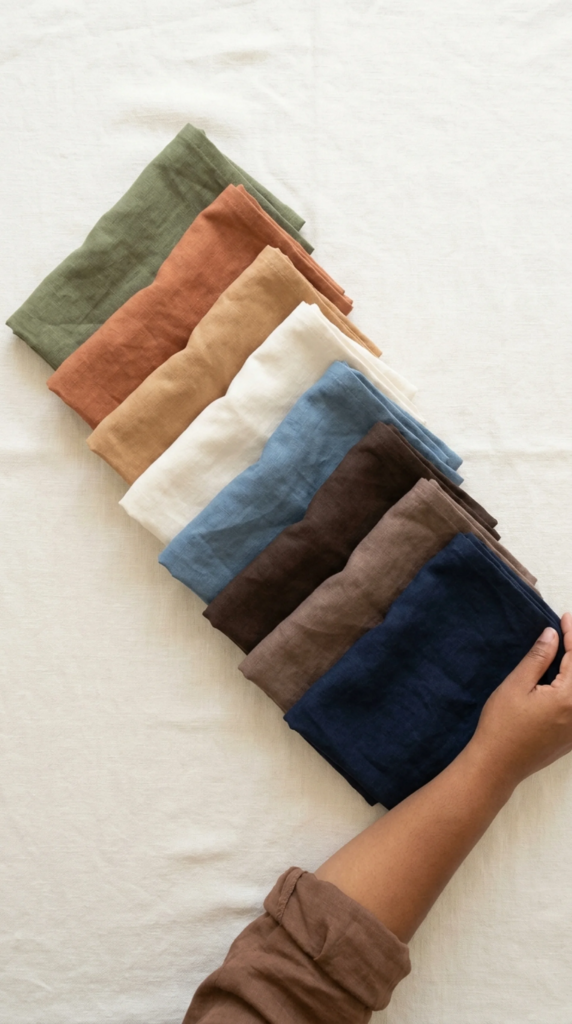
Best colors: olive green, terracotta, camel, cream, dusty blue, chocolate brown, mocha, navy.
Terracotta and camel pull the warmth in your skin forward. Olive green is a workhorse — it pairs with denim, white, black and brown without effort. Cream works far better than stark white because it does not fight your warmth.
Also excellent: rust, forest green, burnt orange, deep teal, bronze, mustard.
Go easy on: neon shades and very pale washed-out pastels. Both compete with your natural richness instead of supporting it.
Styling tip: monochrome brown — camel coat, chocolate knit, tan trousers — looks intentional and luxurious on brown skin in a way it does not on lighter tones.
What Colors to Wear for Medium Skin
Medium skin is the most flexible category and also the easiest to get wrong, because almost everything looks “fine.” The goal is to move from fine to flattering.
Best colors: sage green, rust, warm taupe, blush, steel blue, mocha, pearl gray, navy.
Muted and mid-saturation colors do the heavy lifting. Sage green and steel blue add a cool balance. Rust and warm taupe lean into golden undertones. Blush softens the face without washing it out.
Also excellent: olive, teal, plum, denim blue, coral, ivory.
Go easy on: bright orange, pure harsh white, and anything neon. They pull too much attention and can make medium skin look sallow under camera flash.
Styling tip: medium skin looks strongest in tonal outfits with a single accent — taupe on taupe with a rust scarf, for example.
What Colors to Wear for Light Medium Skin
Light medium skin often carries neutral or cool-neutral undertones. Soft, slightly desaturated colors do more for it than punchy ones.
Best colors: dusty blue, lavender, soft pink, beige, teal, camel, pearl gray, navy.
Lavender and soft pink brighten the face immediately. Dusty blue is the most underused shade in this category — it flatters almost every light medium complexion. Teal adds saturation without harshness.
Also excellent: periwinkle, sage, mauve, soft coral, denim, warm ivory.
Go easy on: mustard yellow, neon green, and very heavy dark browns near the face. They tend to grey out light medium skin.
Styling tip: if you need a dark base color, use navy instead of black. It gives structure without draining color from your face.
What Colors to Wear for Light and Fair Skin
Fair skin has the least natural contrast, so the priority is adding color rather than overpowering it.
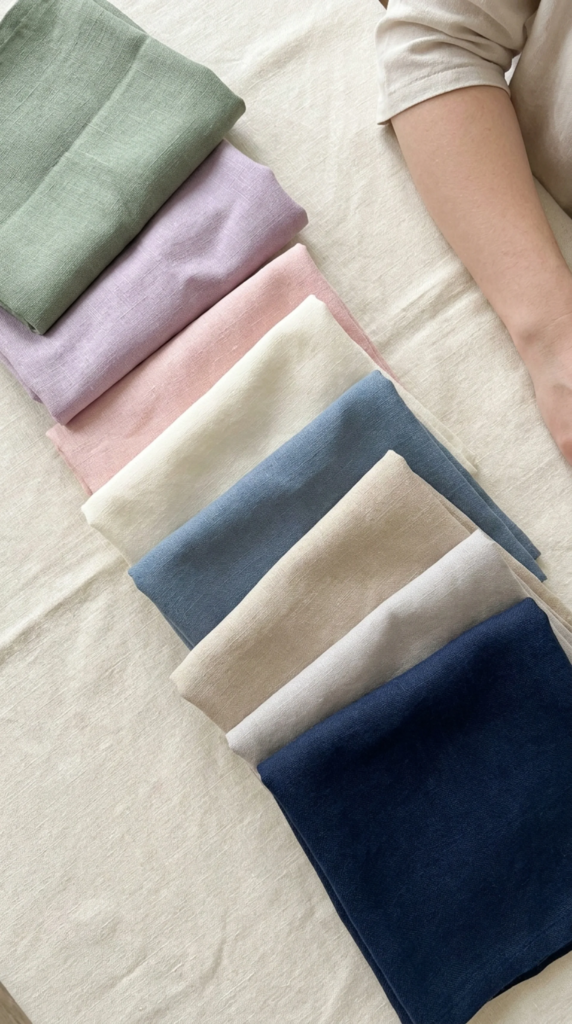
Best colors: sage green, lavender, soft pink, cream, dusty blue, beige, pearl gray, navy.
Soft cool tones and gentle pastels lift fair complexions. Sage green and dusty blue give color without sharpness. Cream is almost always better than optic white, which can make fair skin look pale by comparison.
Also excellent: rose, powder blue, soft plum, muted teal, denim, taupe.
Go easy on: bright yellow, neon anything, and pure black directly against the face. Black works better as trousers, a skirt or an outer layer than as a collar sitting under your chin.
Styling tip: if you love black, keep a colored scarf, collar or necklace between the black and your face. Problem solved.
Universal Colors That Work on Everyone
Some shades are close to foolproof across every skin tone and undertone. Build your core wardrobe from these:
- Navy — the single most flattering neutral across all five skin tones. It gives contrast without the harshness of black.
- Teal — sits exactly between warm and cool, so it flatters both undertones.
- Eggplant / deep plum — rich enough for deep skin, soft enough for fair skin.
- True red — a red that is neither orange-leaning nor blue-leaning works on nearly everyone.
- Soft white / off-white — safer than optic white for most complexions.
- Medium denim blue — the reason jeans work universally.
If you are unsure in a store, one of these six will not let you down.
Which Colors to Avoid for Your Skin Tone
There is no truly “banned” color. There are only colors that need more distance from your face. Watch for these three warning signs when you try something on:
- You look tired. The color is draining contrast from your face. Go deeper or brighter.
- You look flushed or red. The color is likely too warm for a cool undertone. Shift toward blue-based shades.
- You look yellow or sallow. The color is likely too cool for a warm undertone, or too close to your own skin depth.
The fix is rarely to throw the item out. Wear it as a bottom layer, a jacket or an accessory instead of a shirt.
How to Use This Guide When Shopping
- Test near your face, in daylight. Store lighting lies. Take the garment to a window or the entrance.
- Compare two options side by side. Colors are judged by contrast, so a single item tells you very little.
- Prioritize the top half. Whatever sits near your face matters most. Trousers and shoes have far more freedom.
- Buy neutrals from your palette first. Camel, navy, cream, taupe and olive give you the most outfit combinations per rupee.
- Take a photo. Front camera in natural light will show you what the mirror hides.
Frequently Asked Questions
Can I wear black if I have fair skin? Yes, but keep it away from your face. Use black for bottoms and outerwear, and place a lighter collar, scarf or shirt near your chin.
Does my undertone change when I tan? No. Your skin tone gets deeper, but the undertone underneath stays the same for life. A tan may shift you one category deeper on the chart, not into a different undertone group.
What if my undertone is neutral? You have the widest range of anyone. Focus on medium-saturation colors and avoid extremes on either end — very icy blues and very golden yellows are the only shades likely to look off.
Are seasonal color analysis and skin tone charts the same thing? Not exactly. Seasonal analysis (spring, summer, autumn, winter) combines undertone, skin depth, hair color and eye color into one of twelve palettes. The skin tone chart in this article is a simpler, faster starting point that covers most of the benefit.
Which color suits everyone? Navy. It creates contrast on light skin, harmonizes with medium skin, and stays rich against deep skin — without the severity of pure black.
Does hair color affect which shades suit me? Yes, though less than undertone. Dark hair supports higher-contrast colors, while lighter hair usually looks better with softer, lower-contrast shades.
You do not need a stylist or a color consultation to dress better. You need two facts: your skin depth and your undertone. Once you know both, the chart at the top of this page does the rest.
Start with three items — one jewel or earth tone, one soft neutral, and one navy piece. Wear them for a week and watch how differently people respond. Color is the quietest upgrade in style, and the one people notice most.