
The TV wall is no longer just a place to mount a television. In modern living rooms, it can become one of the most important design features in the entire space. With the right combination of materials, lighting, storage, color, and furniture, a basic entertainment wall can become a polished focal point that makes the whole room feel more stylish.
A well-designed TV wall should balance function and aesthetics. It needs to provide a comfortable viewing experience while hiding cables, organizing media equipment, and complementing the rest of the interior.
Whether you prefer a warm modern living room, minimalist design, contemporary luxury, or a cozy family space, these TV wall ideas can help you create a beautiful entertainment area that feels intentional and sophisticated.
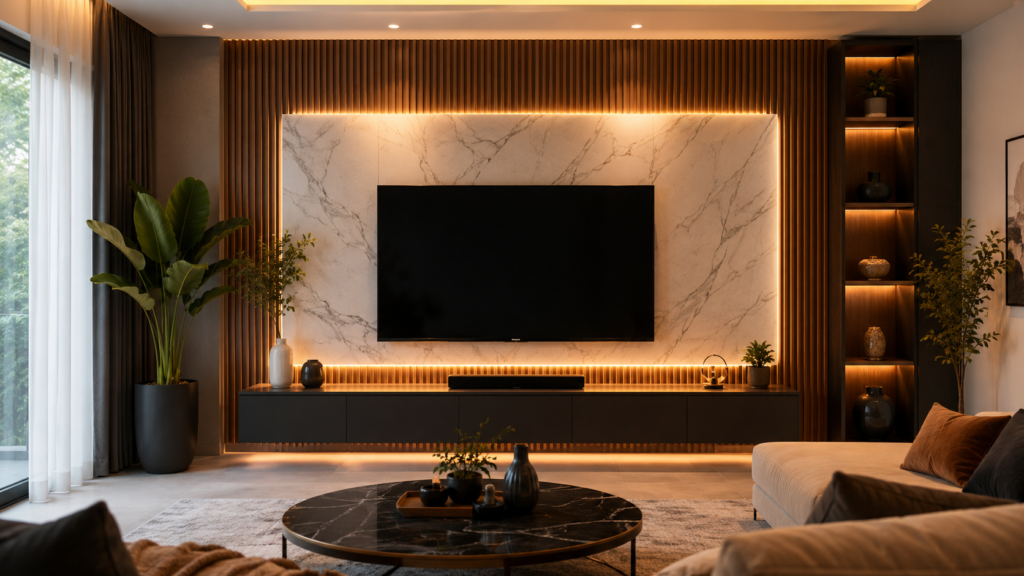
1. Create a Floor-to-Ceiling TV Wall
One of the easiest ways to make a TV wall feel impressive is to extend the design vertically.
Floor-to-ceiling paneling creates a strong architectural statement and can make the ceiling appear taller. Wood slats, fluted panels, painted cabinetry, stone-look surfaces, and textured wall treatments can all work beautifully.
For a warm modern living room, combine natural wood with a neutral wall color. For a more luxurious appearance, consider dark wood, marble-effect panels, or subtle textured finishes.
The television should remain the visual center, while the surrounding material gives the wall a finished appearance.
2. Add Warm Wood Paneling
Wood is one of the most versatile materials for a TV feature wall.
Natural oak, walnut, ash, and darker wood finishes can add warmth to an otherwise minimalist living room. Vertical wood slats can also introduce texture while visually emphasizing ceiling height.
A wood TV wall works particularly well with neutral sofas, soft rugs, black accents, and warm lighting.
If real wood is outside your budget, wood-effect panels and high-quality laminate surfaces can create a similar appearance.
3. Combine Wood With Stone
Combining two contrasting materials can make a TV wall look much more sophisticated.
Wood brings warmth, while stone introduces texture and visual weight. A marble-effect slab or stone-look porcelain panel behind the television can create a luxurious backdrop, while wooden panels on either side soften the overall appearance.
Keep the color palette cohesive. Warm beige stone works well with natural oak, while darker stone can complement walnut or charcoal finishes.
This combination is especially effective in contemporary and luxury living rooms.
4. Design a Minimalist Floating TV Wall
If you prefer clean interiors, a minimalist floating TV wall may be the perfect solution.
Mount the television directly to the wall and add a floating media console underneath. The absence of visible legs creates a streamlined appearance and makes the floor area feel more open.
Choose handleless cabinetry to maintain a clean look. Use concealed storage for remote controls, gaming equipment, streaming devices, and other electronics.
A floating console can also make cleaning easier because there are fewer obstacles on the floor.
5. Build a Custom Media Wall
A custom media wall can combine the television, storage, shelving, lighting, and decorative elements into one cohesive design.
Built-in cabinetry can surround the TV while providing hidden storage below and open shelving on either side.
This is particularly useful in family living rooms where electronics and everyday objects need to be organized.
Paint the cabinetry in the same color as the wall for a seamless appearance, or use contrasting materials to create a stronger focal point.
6. Use a Large Stone or Marble-Effect Backdrop
For a luxurious TV wall, large-format stone or marble-effect surfaces can create dramatic impact.
Bold veining behind the television can become the main visual feature of the room. Choose a relatively simple surrounding decor scheme so the material has space to stand out.
Large-format panels can also reduce the number of visible joints compared with smaller tiles, creating a cleaner appearance.
For a softer luxury aesthetic, select warm beige, cream, taupe, or subtle gray stone rather than highly contrasting patterns.
7. Add Vertical Fluted Panels
Fluted and reeded panels are popular for adding texture without overwhelming a room.
Their repeated vertical lines create subtle movement and can make a TV wall look more architectural.
Use fluted panels behind the entire TV or combine them with smooth cabinetry for contrast.
Warm wood tones work well in cozy interiors, while painted fluted panels can create a more contemporary appearance.
This design is particularly effective when paired with soft ambient lighting.
8. Create a Dark and Dramatic TV Wall
A dark TV wall can make the television blend into its surroundings while creating a sophisticated atmosphere.
Charcoal, deep green, navy, espresso, and black can all work beautifully.
A dark wall is especially effective in rooms designed primarily for evening relaxation and movie watching. Add warm lamps, concealed LED lighting, light-colored furniture, and soft textiles to maintain balance.
If the entire room is already dark, consider using texture to prevent the wall from appearing flat.
9. Add Built-In Shelving Around the TV
Shelving can turn an ordinary television wall into a personalized display.
Open shelves provide space for books, artwork, plants, ceramics, framed photographs, and decorative objects.
For a more sophisticated appearance, avoid filling every shelf. Leave some empty space so the arrangement feels curated rather than cluttered.
You can also combine open shelves with closed cabinets to hide less attractive electronics and household items.
10. Install LED Backlighting
Lighting can dramatically change the appearance of a TV wall.
Soft LED lighting behind the television or around the surrounding panels can create a subtle glow that makes the wall feel more luxurious.
Warm white lighting is generally suitable for creating a comfortable living room atmosphere. Concealed lighting beneath floating cabinets can also make the furniture appear to hover.
Avoid excessive lighting directly around the screen because it can become distracting while watching television.
11. Hide the TV Cables
A beautiful TV wall can quickly lose its impact when cables are visible.
During a renovation, plan cable routes before installing the wall finish. Concealed conduits or dedicated cable channels can keep wires hidden while allowing easy access for future equipment.
If you are not renovating, cable-management covers can provide a cleaner alternative to loose wires.
Think about future upgrades as well. Leave enough space and access points for streaming devices, gaming consoles, speakers, and other equipment you may add later.
12. Add a Floating Media Console
A floating media console can provide storage without making the TV wall feel heavy.
Choose a console wide enough to visually anchor the television. A unit that is too narrow can make the screen look oversized and disconnected from the furniture below.
Handleless doors create a modern appearance, while wood finishes introduce warmth.
Use the cabinets to hide remotes, consoles, cables, and other equipment that can make a living room appear cluttered.
13. Create a Cozy Fireplace and TV Combination
If your living room layout allows it, combining a fireplace with the TV can create a dramatic focal wall.
A fireplace can add warmth and architectural interest while the television becomes part of a larger composition.
However, the heat and installation requirements of a fireplace should be considered carefully when positioning electronics. Follow the manufacturer’s requirements for safe clearances and ventilation.
A balanced arrangement can use stone, plaster, tile, or wood-look materials to visually connect both features.
14. Use Wallpaper Behind the TV
Wallpaper is an easy way to add pattern without major construction.
Choose subtle geometric patterns, textured designs, botanical prints, or sophisticated neutral wallpaper depending on the style of your living room.
For a luxury appearance, textured wallpaper in taupe, charcoal, cream, or muted green can provide depth without becoming distracting.
If the television is the main focus, avoid extremely busy wallpaper that makes the screen area visually chaotic.
15. Keep the TV Wall Proportional
One of the most important TV wall design rules is proportion.
The television should feel appropriately sized for the wall and seating arrangement. A very small screen on a large feature wall can appear lost, while an oversized screen can dominate the room.
The media console should generally provide enough width to visually support the television.
Also consider viewing height and distance. The most beautiful TV wall will not work well if the screen is positioned uncomfortably high or too far from the seating.
How to Make a TV Wall Look Expensive
You do not need an enormous budget to create an expensive-looking TV wall. Focus on simplicity, proportion, texture, and concealed storage.
Choose two or three complementary materials instead of covering the wall with too many finishes. For example, combine warm wood with a neutral stone-effect surface and understated black hardware.
Hide cables, minimize visible electronics, and use layered lighting to highlight architectural details.
Large-scale materials can also make a wall feel more luxurious because they create fewer visual interruptions.
Finally, keep decorative accessories intentional. A few beautiful books, ceramics, plants, or pieces of artwork will usually look better than a crowded collection.
Final Thoughts
A stylish TV wall can completely transform the character of your living room. Whether you choose warm wood paneling, dramatic stone, minimalist cabinetry, fluted panels, built-in shelving, or a combination of several materials, the goal is to create a feature that looks beautiful while remaining practical.
The best TV wall ideas balance technology with interior design. Concealed cables, organized storage, comfortable viewing height, thoughtful lighting, and carefully selected materials can turn a basic entertainment area into a sophisticated focal point.
If you are planning a living room makeover, start with the TV wall and build the rest of the room around its colors, materials, and proportions. With thoughtful planning, even a simple television can become part of a living room that feels polished, modern, and completely showstopping.