
A sunroom can be one of the most enjoyable spaces in a home. Filled with natural light and connected to the outdoors, it offers a peaceful place to relax, read, entertain, enjoy morning coffee, or simply take in the changing seasons. With the right design choices, a sunroom can feel just as comfortable and stylish as any other room in the house.
Whether you have a spacious glass-enclosed room, a small screened porch, or an unused corner overlooking the garden, there are plenty of ways to turn it into a beautiful year-round retreat. From comfortable furniture and layered lighting to natural materials and indoor plants, these sunroom ideas can help you create a space that feels bright, inviting, and effortlessly connected to nature.
What Is a Sunroom?
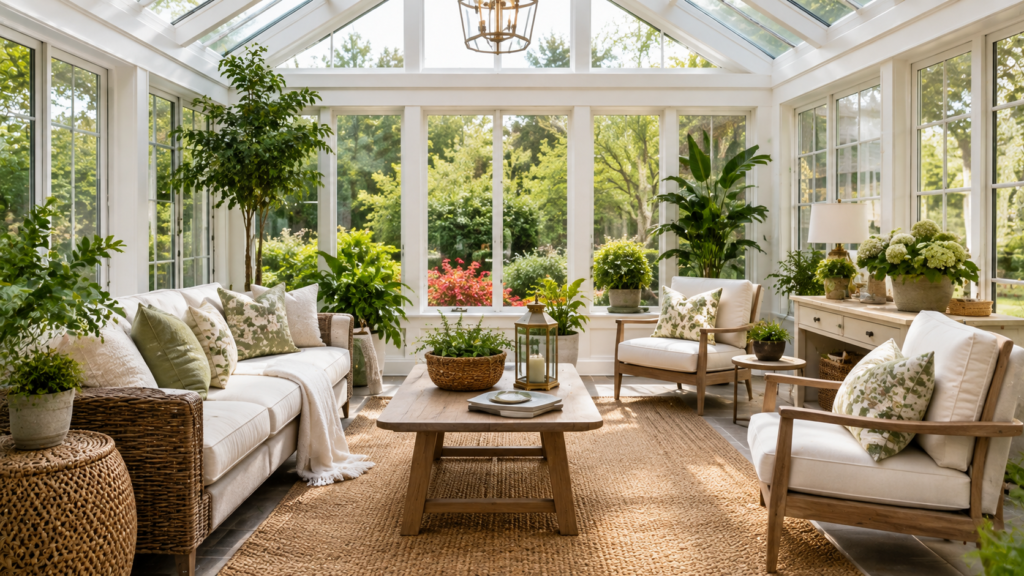
A sunroom is a room designed to maximize natural light, typically with large windows, glass doors, skylights, or a combination of these features. It may be attached to the main house or designed as an enclosed extension.
Unlike a traditional living room, a sunroom is often planned around outdoor views and sunlight. That makes furniture placement, window treatments, temperature control, and material selection especially important.
A well-designed sunroom should feel like a natural transition between indoor and outdoor living.
1. Create a Cozy Seating Area
The easiest way to make a sunroom inviting is to start with comfortable seating. Depending on the size of the room, you could use a sofa, loveseat, lounge chairs, a small sectional, or even a combination of different seating styles.
For a relaxed look, choose upholstery in soft neutrals such as cream, beige, warm gray, or light brown. These shades work beautifully with natural sunlight and allow the greenery outside to become part of the room’s decor.
Add a few textured cushions and a lightweight throw to make the seating area feel more comfortable without making the space look cluttered.
If your sunroom is small, consider furniture with a slim profile. A compact loveseat paired with one or two accent chairs can provide plenty of seating while keeping the room open.
2. Embrace Natural Materials
Sunrooms naturally lend themselves to organic materials. Incorporating wood, rattan, wicker, bamboo, linen, cotton, and jute can reinforce the connection between your interior and the surrounding landscape.
A rattan lounge chair or woven accent table can instantly create a relaxed atmosphere. A jute rug can define the seating area while adding warmth beneath your feet.
Wood furniture also works particularly well in sunrooms. Light oak, natural pine, walnut, and weathered finishes can complement both modern and traditional interiors.
The goal is not to make everything match perfectly. Mixing natural textures creates a more relaxed and lived-in appearance.
3. Bring in Plenty of Greenery
One of the best sunroom decorating ideas is to treat plants as part of the room’s architecture. Because sunrooms typically receive abundant daylight, they can be ideal for many indoor plants.
Place tall plants in empty corners, smaller plants on shelves, and trailing varieties on side tables or hanging planters. Large leafy plants can also help soften the hard lines of windows and doors.
Choose plants according to the amount of direct and indirect sunlight your particular room receives. Rotate plants when necessary so they grow evenly.
If maintaining many live plants isn’t practical, combine a few real plants with high-quality artificial greenery for a similar visual effect.
4. Choose Light and Airy Colors
A light color palette can make a sunroom feel even brighter and more spacious. White, ivory, cream, soft beige, pale blue, sage green, and warm taupe are excellent choices.
White walls can maximize the feeling of natural light, while warmer neutral shades can prevent the room from feeling too stark.
For a more colorful look, introduce color through cushions, rugs, artwork, curtains, and decorative accessories rather than committing to a strong wall color.
Soft greens and blues are particularly effective because they visually connect the interior with gardens, trees, and sky.
5. Add a Comfortable Area Rug
Even a bright sunroom can feel unfinished without something grounding the furniture. An area rug can define the seating zone and introduce warmth, texture, and personality.
For a relaxed sunroom, consider woven, jute, cotton, or indoor-outdoor rugs. These options can complement natural furniture while helping the room feel more connected to an outdoor setting.
Choose a rug large enough for at least the front legs of your main seating pieces to sit on it. This simple design trick can make the furniture arrangement feel much more intentional.
6. Make the Windows the Focal Point
Large windows are usually the star of a sunroom, so avoid covering them unnecessarily. Keep the view open whenever possible and use simple window treatments that provide privacy and light control when needed.
Sheer curtains can soften strong sunlight while maintaining an airy appearance. Woven shades provide texture and can create a warmer, more natural look.
If the room receives intense afternoon sunlight, adjustable shades or blinds can help control glare and reduce heat buildup.
Window treatments should complement the architecture rather than compete with it.
7. Design a Sunroom Dining Area
A sunroom doesn’t have to function only as a lounge. If you have enough space, it can become a beautiful dining area.
A round dining table works particularly well in smaller sunrooms because it creates easier movement around the room. In larger spaces, a rectangular wood table can provide a more substantial focal point.
Pair the table with comfortable chairs and a simple centerpiece, such as a vase of fresh flowers, greenery, or seasonal branches.
Dining beside large windows can make everyday meals feel special while allowing you to enjoy outdoor views throughout the year.
8. Create a Reading Nook
A quiet sunroom can be the perfect location for a reading corner. Place a comfortable armchair near a window and add a small side table for books, a cup of coffee, or decorative accessories.
A floor lamp can provide additional lighting when natural daylight fades.
For an extra cozy touch, add a footstool, soft throw blanket, and small bookshelf. Keep the decor simple so the view remains the main attraction.
This type of setup works particularly well in smaller sunrooms because it requires very little furniture.
9. Use Layered Lighting
Natural light may be the defining feature of a sunroom during the day, but thoughtful lighting is essential after sunset.
Combine several light sources rather than relying on a single ceiling fixture. A pendant light can provide general illumination, while table lamps and floor lamps create softer pools of light.
Wall sconces can also work well when wall space is available.
Warm-toned bulbs generally create a more comfortable atmosphere in the evening, especially when paired with natural wood, woven textures, and neutral upholstery.
10. Make the Space Comfortable Year-Round
A beautiful sunroom should also be practical. Because rooms with large windows can become hot during summer and chilly during winter, temperature control deserves attention.
Insulated windows, quality shades, ceiling fans, heating solutions, and appropriate insulation can make a significant difference depending on the home’s climate and the construction of the sunroom.
In warmer regions, prioritize ventilation, solar-control window treatments, and fabrics that can handle strong sunlight. In colder climates, insulated glazing, weather sealing, rugs, and supplemental heating can help maintain comfort.
For homes in areas with significant seasonal temperature changes, professional advice can be valuable before making major structural upgrades.
11. Blend Indoor and Outdoor Style
The most successful sunrooms often feel like a bridge between the house and the garden. Echo colors and materials from your outdoor space inside the room.
For example, if your backyard features natural stone and greenery, incorporate similar earthy tones and textures indoors. If your exterior has a modern design, choose streamlined furniture and simple accessories inside the sunroom.
Large glass doors can strengthen this connection by visually extending the room toward a patio, deck, garden, or landscaped yard.
12. Keep the Decor Simple
Because sunlight and outdoor views already provide visual interest, a sunroom doesn’t need excessive decoration.
Choose a few meaningful accessories instead of filling every surface. A ceramic vase, woven basket, framed botanical print, stack of books, or sculptural lamp can add personality without creating visual clutter.
A simple design also makes it easier to appreciate the changing landscape outside.
13. Add Seasonal Touches
A sunroom is a natural place to celebrate seasonal changes. In spring, introduce fresh flowers and pastel textiles. During summer, use lightweight fabrics and brighter accents. Autumn can bring warmer colors, woven textures, and cozy throws, while winter works beautifully with soft textiles, candles, and subtle greenery.
You don’t need to completely redesign the room for every season. A few small changes can give the space a fresh appearance throughout the year.
14. Make a Small Sunroom Feel Bigger
Small sunrooms can still be stylish and functional. Choose furniture that serves more than one purpose, such as an ottoman that doubles as seating or a storage bench placed beneath a window.
Keep the floor visually open and avoid oversized furniture. Light-colored walls, reflective surfaces, transparent furniture, and strategically placed mirrors can also help the space feel larger.
Most importantly, don’t block windows with bulky pieces. Preserving the natural flow of light can make a compact sunroom feel significantly more spacious.
15. Give Your Sunroom a Personal Touch
The final step is making the room feel like yours. Incorporate artwork, favorite books, family photographs, collected objects, or handmade pieces that reflect your personality.
A sunroom doesn’t need to look like a showroom. In fact, the most inviting spaces usually combine polished design with personal details.
Think about how you actually want to use the room. If you love morning coffee, create a dedicated coffee corner. If you enjoy reading, prioritize comfortable seating and a bookshelf. If you frequently host guests, focus on flexible seating and a central table.
Final Thoughts
The best sunroom ideas combine natural light, comfortable furniture, practical materials, and a strong connection to the outdoors. Whether you’re designing a large year-round living space or refreshing a small sun-filled corner, thoughtful choices can transform it into one of the most enjoyable areas of your home.
Focus on comfort first, keep the color palette light and natural, add plenty of greenery, and let the windows and outdoor views take center stage. With the right balance of function and style, your sunroom can become a bright retreat for relaxing, entertaining, reading, dining, and enjoying every season from the comfort of home.