
Quiet luxury home design is all about creating a space that feels refined, comfortable, and timeless without relying on flashy decorations or obvious signs of wealth. Instead of oversized logos, excessive ornamentation, or trendy statement pieces, this interior style focuses on quality materials, thoughtful details, calming colors, and beautifully balanced rooms.
The appeal of quiet luxury is its understated character. A quiet luxury home does not need to look extravagant to feel expensive. Natural wood, linen, stone, soft lighting, elegant furniture, and carefully chosen accessories can create a sophisticated atmosphere while still making the home feel welcoming and personal.
Whether you live in a modern apartment, a traditional house, or a small home, you can incorporate quiet luxury decorating ideas without completely renovating your space. The secret is choosing fewer, better pieces and creating visual harmony throughout your home.
Here are some of the best quiet luxury home ideas for creating an elegant interior that looks expensive without being flashy.
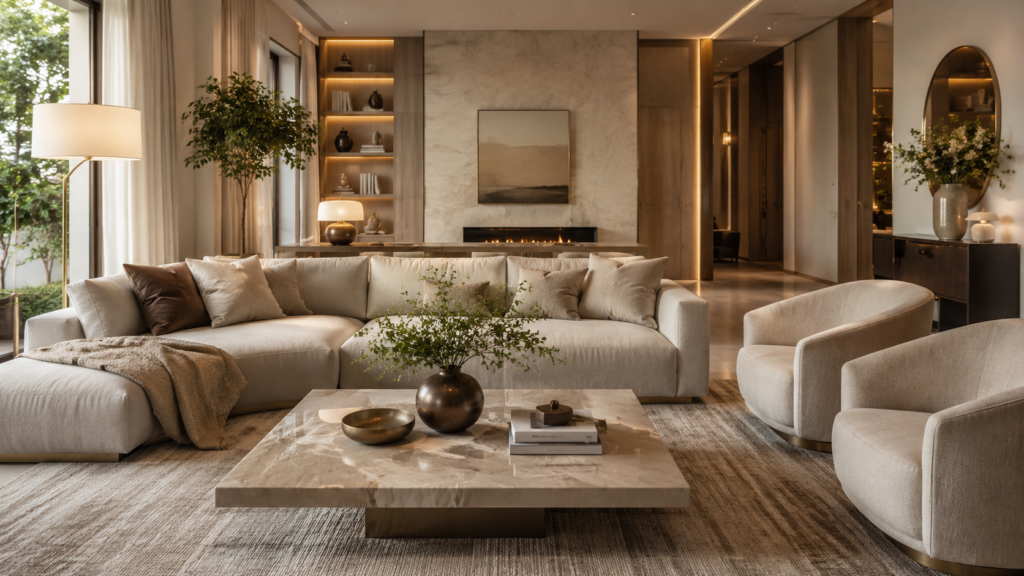
1. Start With a Sophisticated Neutral Color Palette
Color is one of the easiest ways to create a quiet luxury atmosphere.
Instead of relying on bright or highly contrasting shades, build your interior around sophisticated neutrals such as warm white, ivory, cream, taupe, beige, greige, soft gray, and muted brown.
These colors create a calm foundation and allow furniture, textures, and architectural details to become the focus.
For a warmer look, combine cream walls with beige upholstery, natural wood, and chocolate-brown accents. If you prefer a cooler interior, soft gray can be paired with ivory, pale oak, and brushed metal.
The goal is not to make every surface the same color. Layering several related shades creates depth while maintaining the understated appearance associated with quiet luxury.
2. Invest in Natural Materials
Natural materials instantly bring character and sophistication to an interior.
Consider incorporating natural wood, marble, limestone, travertine, wool, linen, cotton, leather, and stone throughout the home.
A solid wood coffee table can make a living room feel warmer, while linen curtains can soften large windows. A stone countertop or marble side table can introduce an elegant detail without overwhelming the room.
Natural materials also tend to age gracefully. Small variations in wood grain, stone pattern, or woven texture give a room an authentic appearance that manufactured decorative pieces often cannot replicate.
You do not need to use expensive materials everywhere. Even one or two natural-material accents can elevate an otherwise simple room.
3. Choose Timeless Furniture Over Trendy Pieces
Quiet luxury interiors are built around furniture that can remain attractive for years.
Instead of filling a room with short-lived trends, choose classic silhouettes with clean proportions. A comfortable curved sofa, tailored armchair, solid wood dining table, or elegant upholstered bed can become a long-term foundation for your interior.
Look for quality construction and fabrics that feel good to the touch.
The furniture does not need to be oversized or dramatic. In fact, understated proportions often create a more sophisticated appearance.
A beautifully designed neutral sofa can look far more luxurious than an elaborate statement piece when it is paired with thoughtful lighting, layered textiles, and carefully selected accessories.
4. Layer Different Textures
A neutral room can easily become flat if every surface has the same texture.
Quiet luxury design solves this by layering materials.
Combine linen curtains with a wool rug, boucle or cotton upholstery, smooth wood, textured ceramics, and stone accessories. The result feels rich without requiring bold colors or excessive decoration.
Texture is particularly important in monochromatic rooms. When the color palette is restrained, differences in texture provide visual interest.
Think about how materials feel as well as how they look. Soft upholstery, woven fabrics, natural wood, and tactile rugs can make a sophisticated room feel comfortable rather than formal.
5. Upgrade Your Lighting
Lighting can completely change the perceived quality of a room.
Instead of relying on one bright ceiling fixture, create layers of illumination using ceiling lights, table lamps, floor lamps, wall sconces, and accent lighting.
Choose fixtures with simple, elegant shapes. Materials such as linen, aged brass, glass, ceramic, and natural stone can add subtle sophistication.
Warm-toned lighting is especially effective in living rooms, bedrooms, and dining spaces because it creates a softer and more intimate atmosphere.
A beautiful lamp can also function as both lighting and decor. Rather than filling shelves with accessories, let a few well-chosen lighting pieces provide visual interest.
6. Keep Window Treatments Simple and Elegant
Window treatments have a surprisingly large impact on how expensive a room feels.
For a quiet luxury look, choose full-length curtains in linen, cotton, or another softly textured fabric. Hang curtains high and allow them to fall generously toward the floor to create a more finished appearance.
Neutral shades such as ivory, oatmeal, taupe, and soft beige are particularly versatile.
Avoid overly complicated patterns and excessive decorative details. Simple window treatments create a calm backdrop and allow natural light to remain an important part of the room.
7. Add Custom-Looking Built-Ins
Built-in storage can make a home feel more intentional and architectural.
Floor-to-ceiling bookcases, fitted media walls, built-in wardrobes, window seats, and custom-looking cabinetry can create a polished appearance while improving functionality.
You do not necessarily need a completely custom renovation. Ready-made cabinetry can sometimes be modified with trim, paint, or hardware to create a more integrated appearance.
Keep the styling restrained. A few books, ceramics, framed artworks, and decorative objects are often enough.
The goal is to make storage feel like part of the architecture rather than an afterthought.
8. Use Elegant Hardware and Fixtures
Small details can have a significant visual impact.
Replacing basic cabinet handles, drawer pulls, faucets, or light switches with better-designed alternatives can instantly make a kitchen or bathroom feel more refined.
Brushed brass, aged bronze, polished nickel, and matte black can all work in a quiet luxury interior, depending on the overall palette.
Consistency is important. Try to repeat related finishes throughout a room instead of mixing too many metals.
For example, brushed brass cabinet hardware can be paired with brass lighting and subtle brass bathroom details for a cohesive look.
9. Create a Beautifully Styled Entryway
The entryway establishes the mood for the rest of the home.
A quiet luxury entryway does not need lots of decoration. Instead, focus on proportion and quality.
A slim console table, elegant mirror, small table lamp, textured runner, and a simple vase can create a polished first impression.
If space allows, add a bench with upholstered or natural-fabric seating.
Keep the surface relatively uncluttered. A few intentional objects will look more sophisticated than a collection of unrelated accessories.
10. Make Your Bedroom Feel Like a Boutique Hotel
The bedroom is one of the easiest rooms to transform with quiet luxury principles.
Start with high-quality-looking bedding in neutral tones. Layer crisp sheets with a textured duvet, quilt, throw, and a few carefully chosen pillows.
Upholstered headboards can add softness and architectural presence. Pair them with symmetrical bedside tables and elegant lamps to create balance.
A bench at the foot of the bed can add another layer of texture while making the room feel more complete.
Keep artwork simple and choose curtains or blinds that soften natural light.
The result should feel calm and comfortable rather than overly decorated.
11. Use Large Rugs to Define Rooms
A well-sized rug can make furniture look more intentional and create a stronger sense of cohesion.
In a living room, choose a rug large enough for at least the front legs of the main seating pieces to sit comfortably on it. In a bedroom, a large rug extending around the bed can create a softer and more luxurious atmosphere.
Neutral rugs with subtle patterns are particularly useful because they add texture without competing with furniture.
Natural fibers such as wool can provide both visual warmth and tactile comfort.
12. Choose Art Instead of Excessive Decor
Quiet luxury does not mean leaving walls completely empty.
Instead, select artwork that feels personal, sophisticated, and visually connected to the room.
Large-scale artwork can often have more impact than several small pieces. Abstract paintings, photography, landscapes, botanical artwork, and classic-inspired pieces can all work beautifully.
The key is to avoid filling every wall.
Give your favorite artwork enough surrounding space to become a focal point. This creates a gallery-like feeling without making the home feel cluttered.
13. Style Shelves With Restraint
One of the biggest differences between an expensive-looking interior and a cluttered one is often editing.
When styling shelves, use a combination of books, ceramics, framed art, sculptures, plants, and meaningful objects—but leave some empty space.
Group objects in small arrangements rather than spreading dozens of accessories across every shelf.
Vary heights and shapes to create visual balance.
Most importantly, include items that have personal meaning. Quiet luxury should feel collected rather than staged.
14. Bring Nature Indoors
Plants and flowers can make a refined interior feel alive.
Instead of filling every room with small decorative plants, consider one large statement plant or a simple arrangement of fresh branches.
Olive branches, eucalyptus, greenery, and seasonal flowers can work particularly well with neutral interiors.
Natural greenery also introduces color without disrupting a restrained palette.
Choose simple ceramic, stone, or glass vessels rather than overly decorative planters and vases.
15. Focus on Quality Over Quantity
Perhaps the most important quiet luxury principle is buy less, but choose better.
You do not need to replace everything in your home. Instead, identify the pieces that have the biggest visual impact and upgrade them gradually.
A better-quality rug, elegant coffee table, beautiful lamp, substantial curtain fabric, or well-made accent chair can make a noticeable difference.
Remove items that no longer serve a purpose or fit the room.
A home with fewer carefully chosen objects often feels calmer, more sophisticated, and more expensive than a room filled with decorations.
How to Make Your Home Look Expensive on a Budget
Creating a quiet luxury interior does not require an unlimited decorating budget.
Start by decluttering and rearranging your existing furniture. A cleaner layout can instantly make a room feel more sophisticated.
Next, focus on inexpensive changes with a high visual impact. Upgrade cabinet hardware, replace outdated lampshades, add full-length curtains, introduce larger rugs, organize open shelving, and use cohesive neutral colors.
Secondhand furniture can also be valuable. Vintage wooden tables, classic mirrors, ceramic pieces, and well-made chairs can add character and depth.
The objective is not to make your home look obviously expensive. It is to make it feel intentional, comfortable, timeless, and beautifully considered.
Final Thoughts
Quiet luxury home design proves that an expensive-looking interior does not have to be flashy. The most sophisticated spaces often rely on restraint, natural materials, timeless furniture, layered textures, thoughtful lighting, and a carefully edited collection of accessories.
Whether you are decorating an entire house or refreshing a single room, begin with a calm color palette and build from there. Invest in pieces that are functional and beautiful, embrace natural materials, improve your lighting, and give your favorite objects enough space to stand out.