Few things are more comforting than a pot of homemade split pea soup simmering on the stove. Parker’s Split Pea Soup, created by Ina Garten, is a simple, hearty recipe made with dried green split peas, carrots, potatoes, onions, garlic, oregano, and chicken stock or water. The result is a thick, satisfying soup with plenty of vegetable flavor and a naturally creamy texture—without adding cream.
The recipe comes from The Barefoot Contessa Cookbook and is featured by Food Network. It takes about 10 minutes to prepare and 1½ hours to cook, making it a practical choice for a relaxed weekend lunch or cozy weeknight dinner.
What Is Parker’s Split Pea Soup?
Parker’s Split Pea Soup is Ina Garten’s take on classic American split pea soup. Unlike many traditional versions that rely on ham or a ham bone for flavor, this recipe uses vegetables, olive oil, dried oregano, garlic, and stock or water to create a hearty bowl of soup.
The original recipe serves approximately five to six people and uses one pound of dried split green peas, along with carrots and red boiling potatoes.
One of the recipe’s most interesting details is the way the split peas are added. Half of the peas go into the pot at the beginning, while the remaining peas are added after the first 40 minutes of simmering. This gives the soup a rich, thick body while preserving some texture from the later-added peas.
Ingredients You’ll Need
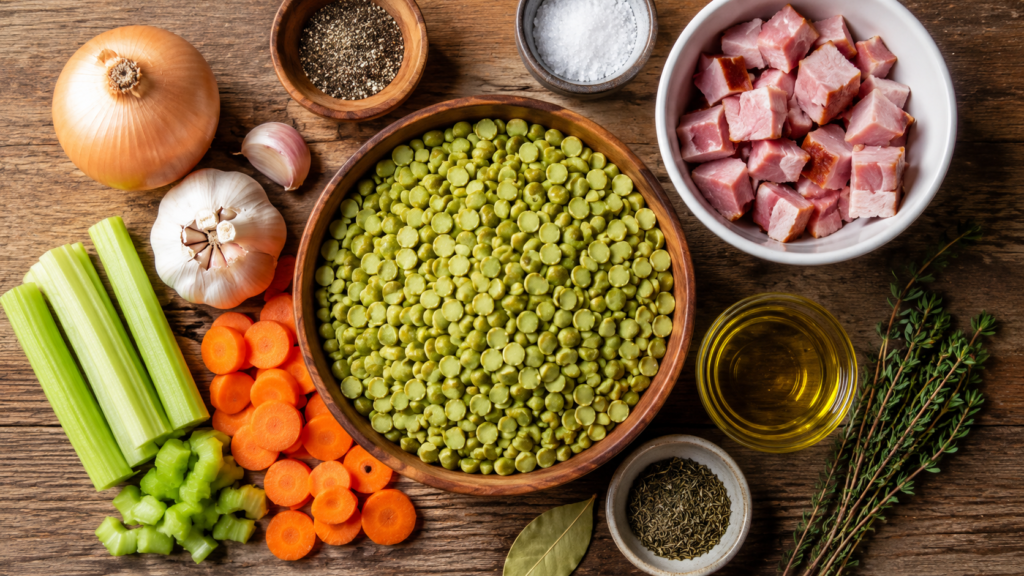
The ingredient list is refreshingly straightforward, which is one reason this soup works so well as a pantry-friendly dinner.
For about five to six servings, you’ll need:
- 1 cup chopped yellow onion
- 2 cloves garlic, minced
- ⅛ cup olive oil
- ½ teaspoon dried oregano
- 1½ teaspoons kosher salt
- 1 teaspoon freshly ground black pepper
- 2 cups medium-diced carrots
- 1 cup medium-diced red boiling potatoes, unpeeled
- 1 pound dried green split peas
- 8 cups chicken stock or water
These are the ingredients listed in the current Food Network version of the recipe.
If you prefer a vegetarian soup, vegetable stock can be used in place of chicken stock. Water also works when you want the vegetables and herbs to provide most of the flavor.
Why Split Peas Are Perfect for Soup
Dried green split peas are particularly well suited to slow-simmered soups because they soften considerably as they cook. They also help naturally thicken the broth, creating the substantial texture people expect from a classic split pea soup.
Unlike dried beans, split peas generally do not require an overnight soaking step for this style of recipe. That makes them convenient for keeping in the pantry when you need an inexpensive meal without much advance planning.
They also provide plant-based protein and fiber, making split pea soup more filling than a broth-based vegetable soup.
How to Make Parker’s Split Pea Soup
1. Sauté the Aromatics
Start with a large stockpot over medium heat. Add the olive oil, chopped onion, minced garlic, oregano, salt, and black pepper.
Cook the mixture for about 10 to 15 minutes, stirring occasionally, until the onions become translucent. This first step builds the savory foundation of the soup.
Avoid rushing the onions. Giving them enough time to soften helps bring out their natural sweetness.
2. Add the Vegetables and First Batch of Peas
Add the diced carrots, potatoes, and half of the dried split peas to the pot. Pour in the chicken stock or water and bring everything to a boil.
Once the mixture reaches a boil, reduce the heat and let the soup simmer uncovered for about 40 minutes.
During this stage, some foam may rise to the surface. Skimming it away helps keep the finished soup clean and attractive.
3. Add the Remaining Split Peas
After the first 40 minutes, add the remaining split peas.
Continue simmering for another 40 minutes, or until the peas are tender. Stir the soup regularly during cooking because the thickening mixture can settle on the bottom of the pot.
The potatoes and carrots should become tender while the split peas soften into the broth.
4. Taste and Adjust
Once the peas are fully cooked, taste the soup and adjust the salt and pepper as needed.
If the soup becomes thicker than you prefer, loosen it with a little additional stock or water. Split pea soup continues to thicken as it stands, so adding extra liquid before serving can help you achieve the consistency you like.
Serve it hot.
What Makes This Soup So Satisfying?
The appeal of Parker’s Split Pea Soup comes from its simplicity. There is no long list of specialty ingredients or complicated cooking technique.
The onions and garlic provide savory depth, carrots add natural sweetness, potatoes give the soup substance, and split peas create the signature thick texture. Oregano and black pepper add just enough seasoning to keep the flavor interesting without overwhelming the vegetables.
The soup also feels substantial without depending on heavy cream or a large amount of added fat.
Easy Ways to Serve Split Pea Soup
A warm bowl of split pea soup can easily become a complete lunch or dinner when served with the right sides.
For a classic American-style meal, pair it with crusty bread, sourdough, or a toasted baguette. The bread is particularly useful for soaking up the thick broth.
You can also serve the soup alongside:
- A simple green salad
- Roasted vegetables
- Whole-grain toast
- Garlic bread
- A turkey or vegetable sandwich
- Homemade croutons
For a lighter meal, serve a smaller bowl with a crisp salad dressed with lemon and olive oil.
How to Make the Soup Vegetarian
The easiest way to make this soup vegetarian is to replace the chicken stock with vegetable stock or water.
The vegetables, olive oil, garlic, oregano, and split peas already provide plenty of flavor, so the soup does not need meat to feel hearty.
If using store-bought vegetable stock, taste before adding extra salt because sodium levels can vary significantly between brands.
How to Store Leftovers
Split pea soup is particularly convenient for meal prep because it keeps well in the refrigerator and often becomes even thicker after chilling.
Allow the soup to cool before transferring it to airtight containers. Refrigerate leftovers and reheat them gently on the stovetop or in the microwave.
Because the soup thickens as it sits, add a splash of water or stock when reheating until it reaches your preferred consistency.
For longer storage, divide the cooled soup into freezer-safe containers and leave some room at the top for expansion. Thaw frozen soup in the refrigerator before reheating for the best texture.
Tips for the Best Split Pea Soup
Use fresh dried peas. Older split peas can sometimes take longer to soften.
Cut vegetables evenly. Similar-sized carrot and potato pieces cook more consistently.
Stir regularly. As the soup thickens, the peas can settle on the bottom of the pot and stick.
Do not rush the simmer. Gentle cooking gives the split peas and vegetables time to soften properly.
Adjust the consistency at the end. If you prefer a thinner soup, add additional stock or water just before serving.
Taste before serving. Seasoning needs can vary depending on whether you use homemade stock, water, or a packaged broth.
Can You Add Ham?
Although Parker’s original recipe does not include ham, split pea soup is traditionally associated with smoky ham and many cooks enjoy adding it.
If you want a meatier variation, diced cooked ham can be stirred into the finished soup and warmed through. You can also use leftover ham as a practical way to turn a simple pot of soup into a more substantial dinner.
For the classic Parker’s version, however, keeping the recipe as written allows the vegetables, herbs, and split peas to remain the focus.
A Budget-Friendly Weeknight Dinner
One of the biggest advantages of this recipe is its affordability. Dried split peas are inexpensive, shelf-stable, and widely available in American grocery stores. Carrots, onions, potatoes, and garlic are also everyday ingredients that can often be found in the kitchen already.
That makes this soup particularly useful when you want to prepare a satisfying meal without an expensive grocery list.
It is also easy to scale for meal preparation. A large pot can provide several lunches or dinners throughout the week, making it a practical option for busy households.
Final Thoughts
Parker’s Split Pea Soup is the kind of recipe worth keeping in your regular dinner rotation. It is hearty without being complicated, relies on simple ingredients, and develops plenty of flavor through slow simmering.
Ina Garten’s version keeps the ingredient list straightforward while using a clever two-stage approach to the split peas for a satisfying texture.
Serve it with crusty bread and a simple salad for a cozy dinner, or make a batch on the weekend and enjoy easy lunches throughout the week. Whether you are cooking for a family or simply want an inexpensive homemade meal, this classic split pea soup delivers plenty of comfort from a humble pot of pantry staples.