
A staircase can be much more than a practical connection between two floors. In a thoughtfully designed home, it can become one of the most impressive architectural features in the entire interior. The combination of a sculptural staircase, refined materials, and elegant LED wall lighting creates a sophisticated look that feels expensive without relying on excessive decoration.
Today’s luxury staircase designs are moving toward cleaner lines, concealed lighting, warm illumination, natural materials, and layered lighting schemes. LED strips, recessed wall lights, decorative sconces, and illuminated handrails can all work together to make a staircase feel inviting after sunset while improving visibility along the steps.
Whether you are designing a modern villa, duplex, apartment, or contemporary family home, the right staircase lighting can completely change how the space looks and feels.
Why Luxury Staircase Lighting Matters
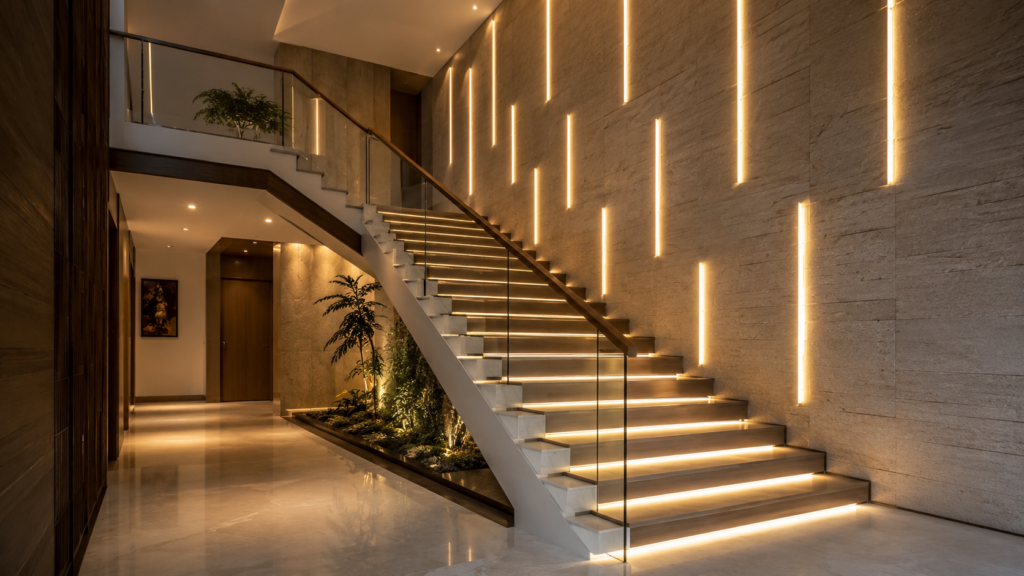
A staircase naturally attracts attention because of its height, movement, and architectural shape. In open-plan homes, it may also be visible from the living room, foyer, dining area, or upper floor.
That makes staircase lighting an important part of the overall interior design rather than an afterthought.
A well-planned lighting scheme can:
- Highlight the staircase architecture
- Improve visibility on every step
- Add warmth to an otherwise dark corner
- Emphasize wall textures and materials
- Create an elegant focal point
- Make a double-height space feel more dramatic
- Give modern homes a polished, high-end appearance
Good staircase lighting should first make the stairs comfortable and safe to use, then add visual drama. Current residential lighting guidance also emphasizes even, glare-controlled illumination rather than relying on one harsh overhead fixture.
1. Floating Staircase With Under-Tread LED Lighting
A floating staircase is one of the most striking choices for a luxury modern home.
Individual wooden, stone, or engineered-stone treads appear to extend from the wall with little or no visible structural support. Adding a concealed warm LED strip underneath each tread creates a soft floating effect.
Instead of seeing the light source directly, you see a subtle glow underneath the steps.
This works particularly well with:
- Natural oak stairs
- Walnut finishes
- White marble
- Beige stone
- Concrete-effect finishes
- Minimal black metal railings
For a truly sophisticated result, keep the LED source concealed. The goal is to illuminate the architectural edge rather than make the staircase look like it is covered in decorative lights.
Under-tread LED lighting is increasingly popular in modern Indian homes, particularly with floating and open-riser staircase designs.
2. Elegant LED Wall Lighting Along the Staircase
If the staircase has a large blank wall beside it, turn that wall into part of the design.
Slim LED wall lights can be positioned at carefully planned intervals to create a rhythmic pattern as the staircase rises. Minimal recessed fixtures are particularly effective because they provide illumination without competing with the staircase itself.
For a contemporary luxury look, consider:
Vertical LED fixtures: Perfect for emphasizing the height of the staircase.
Up-and-down wall lights: These create an attractive beam pattern on textured or painted walls.
Recessed LED lights: Ideal when you want the lighting to visually disappear into the architecture.
Wall-grazing LEDs: Excellent for stone, fluted panels, textured plaster, or other decorative surfaces.
Wall-mounted lighting can simultaneously improve visibility and highlight the vertical character of the staircase wall.
3. Marble Staircase With Warm LED Glow
Marble and warm lighting are an exceptionally elegant combination.
A white, cream, or beige marble staircase can sometimes feel cold when illuminated with bright white light. A warmer LED tone softens the stone and emphasizes its natural veining.
Imagine a staircase with:
- Cream marble treads
- A slim brushed-brass railing
- Warm LED wall lights
- Neutral beige walls
- Minimal artwork
- A large pendant in the stairwell
The result feels sophisticated without being overly flashy.
If you are using expensive stone, avoid covering the staircase with too many competing lighting effects. Let the natural material remain the star.
4. LED Lighting With a Statement Staircase Wall
One of the best ways to create a luxury staircase is to treat the wall beside it as an architectural feature.
Instead of plain paint, consider:
- Fluted wood panels
- Travertine-look surfaces
- Natural stone
- Large-format marble
- Microcement
- Decorative plaster
- Vertical wood slats
A concealed LED strip can then be installed behind or beside the feature wall to create a soft wash of illumination.
This technique is particularly effective in modern villas and duplex homes where the staircase wall is visible from multiple areas of the house.
Concealed LED coves are also being used to highlight textures, artwork, and stone surfaces while keeping the actual light source visually hidden.
5. Double-Height Staircase With Pendant Lighting
If your staircase rises through a double-height or triple-height space, you have an opportunity to introduce a dramatic lighting centerpiece.
A large sculptural pendant or cluster of hanging lights can fill the vertical space above the stairs. Wall lighting can then provide a softer secondary layer.
This combination works beautifully:
Statement pendant + LED wall lighting + step lighting
The pendant becomes the visual centerpiece, while the wall and step lights provide practical illumination.
For luxury interiors, choose a fixture that complements the staircase materials rather than simply choosing the largest chandelier available.
Glass, brass, smoked glass, sculptural metal, and contemporary crystal designs can all work depending on the home’s architectural style.
6. Warm LED Lighting for a Softer Luxury Look
One of the easiest ways to make a staircase feel more luxurious is to avoid excessively cool lighting.
Warm illumination generally works particularly well with:
- Wood
- Beige
- Cream
- Brass
- Bronze
- Natural stone
- Warm gray interiors
A softer color temperature can make the staircase feel calmer and more inviting during the evening.
This is especially important when the staircase connects directly to a living room or open-plan space. The lighting should feel like part of the room rather than a separate, brightly illuminated zone.
Luxury lighting design increasingly favors layered illumination and warm, controlled light instead of flooding interiors with uniform cool-white downlights.
7. LED Handrail Lighting
For an even cleaner look, integrate LED lighting directly into the handrail.
A concealed LED strip underneath a wooden or metal handrail creates a continuous line of light along the staircase.
This approach is particularly attractive for minimalist interiors because there are fewer visible fixtures.
A beautiful combination is:
Wooden handrail + black metal railing + warm concealed LED
The result is modern, understated, and highly architectural.
Handrail lighting can also be paired with low-level step lighting when additional illumination is required.
8. Staircase Wall Sconces for a More Classic Look
LED lighting doesn’t always have to mean hidden strips.
If your home has a transitional, classic, or contemporary-luxury style, decorative wall sconces can provide a more sophisticated appearance.
Choose fixtures in finishes such as:
- Aged brass
- Brushed brass
- Matte black
- Bronze
- Fluted glass
- Opal glass
A pair of elegant sconces positioned along a staircase wall can create a boutique-hotel atmosphere.
Recent luxury interiors have also highlighted the atmospheric effect of traditional-style wall sconces, showing how mid-level wall lighting can create warmth and architectural character without relying entirely on ceiling downlights.
9. LED Lighting for Small Staircases
You don’t need a huge staircase or double-height foyer to create a luxury appearance.
For a narrow staircase, keep the design simple.
A slim recessed LED fixture every few steps can provide enough visual guidance without overwhelming the wall. Alternatively, a concealed LED strip underneath the handrail can create a continuous glow.
For smaller homes, choose:
- Light-colored walls
- Slim railings
- Recessed LEDs
- Minimal wall decor
- Reflective or lightly textured finishes
This keeps the staircase visually open.
10. Modern Black and Gold Staircase Design
Black and gold remain powerful choices for a luxury interior.
A black staircase railing paired with warm gold or brass lighting can create a sophisticated contrast.
For example, imagine:
- Dark wood staircase treads
- Matte black railing
- Warm brass wall sconces
- Soft LED step lighting
- Cream-colored walls
- Minimal contemporary artwork
The combination feels expensive without becoming overly decorative.
The key is restraint. Use gold as an accent rather than covering every element in a metallic finish.
11. Lighting Textured Staircase Walls
A staircase wall becomes much more interesting when lighting interacts with texture.
Wall-grazing LED fixtures can reveal the shadows and depth of surfaces such as fluted panels, stone, brick, plaster, or decorative wall finishes.
During daylight, the wall provides texture. At night, the lighting creates a completely different appearance.
This is particularly effective in modern Indian homes where statement walls, natural stone, wood textures, and layered lighting are frequently used together.
12. Make Staircase Lighting Smart and Practical
Luxury is not only about appearance. Convenience matters too.
Consider connecting staircase LEDs to:
- Dimmer controls
- Motion sensors
- Smart-home systems
- Two-way switching
- Separate lighting zones
Motion-activated low-level lighting can be particularly useful at night because it provides enough illumination to navigate the stairs without turning on bright room lights.
For any permanent electrical installation, have the wiring, switching, drivers, earthing, and fixture installation handled by a qualified electrician. Staircase lighting should be planned around applicable local electrical and building requirements rather than treated as a DIY project.
Choosing the Right LED Color and Brightness
The brightest light isn’t necessarily the best light.
A staircase needs enough illumination for comfortable movement, but excessive brightness can create glare and reduce the elegant atmosphere you’re trying to achieve.
A layered setup is usually more effective:
Ambient lighting: Provides overall illumination.
Wall lighting: Highlights the architecture.
Step lighting: Helps define the individual treads.
Accent lighting: Adds drama to stone, artwork, or textured walls.
This layered approach allows different lighting levels for daytime, evening entertaining, and nighttime movement.
Luxury Staircase Design Ideas for Indian Homes
For Indian villas, duplexes, and contemporary apartments, staircase lighting can be tailored to both architectural style and climate-conscious design preferences.
A few combinations that work especially well include:
Modern Villa
Marble staircase + brass handrail + concealed warm LED + sculptural pendant.
Contemporary Duplex
Floating wooden treads + black railing + under-tread LED + recessed wall lights.
Minimalist Apartment
Light oak staircase + white walls + hidden handrail LED + simple recessed fixtures.
Luxury Traditional Home
Rich wood staircase + decorative brass sconces + warm ambient lighting + statement chandelier.
Modern Indian Home
Stone-textured staircase wall + floating steps + warm LED strips + natural wood accents.
Common Staircase Lighting Mistakes to Avoid
Even expensive materials can look ordinary when the lighting is poorly planned.
Avoid placing exposed LED strips where the individual diodes are clearly visible. Avoid excessive cool-white lighting that makes warm materials look flat or harsh.
It is also important not to rely exclusively on decorative lighting. Every tread should remain visually clear, particularly where the staircase is used at night.
Another common mistake is installing fixtures without considering the viewing angle. A light that looks beautiful straight on may create uncomfortable glare when viewed while walking up or down the stairs.
Finally, don’t overcrowd the staircase wall. A luxury staircase usually benefits from fewer, better-designed elements.
Final Thoughts
A luxury staircase design with elegant LED wall lighting can completely transform the character of a home. The most successful designs don’t simply add more lights; they use lighting strategically to reveal architecture, highlight materials, improve visibility, and create a warm evening atmosphere.
Whether you choose floating wooden stairs with concealed LEDs, marble steps with brass sconces, a dramatic double-height staircase with a statement pendant, or a minimalist wall with recessed LED fixtures, the best result comes from balance.
Keep the light warm, hide the hardware where possible, layer different sources, and let the staircase architecture lead the design. When carefully planned, the staircase becomes more than a passage between floors—it becomes a memorable feature that gives the entire home a polished, luxurious finish.
For Indian homes especially, current staircase lighting guidance emphasizes the combination of safety, even illumination, step visibility, wall lighting, handrail lighting, and carefully controlled ambient light.