
Designing a child’s bedroom is about more than choosing cute colors and playful decorations. The best kids’ rooms are comfortable, practical, and flexible enough to change as children grow. A room that works for a preschooler may feel completely different when that child becomes a school-age kid or teenager, so thoughtful design choices can save time, money, and effort later.
Whether you are decorating a small bedroom, updating a shared kids’ room, or creating a more personalized space, these kids’ room ideas can help you build a room that feels fun today and still works beautifully for years to come.
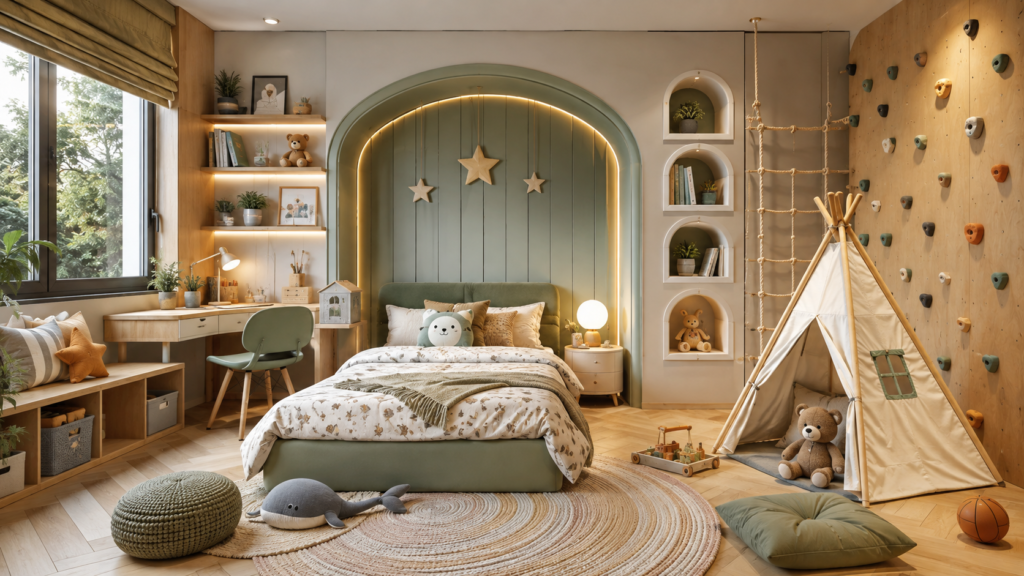
1. Choose a Flexible Color Palette
A flexible color palette is one of the easiest ways to create a kids’ bedroom that grows with your child. Instead of covering every wall with a theme-specific color, consider soft neutrals, warm whites, sage green, dusty blue, muted terracotta, beige, or gentle pastels.
These colors create a calm foundation while leaving plenty of room for personality.
You can bring in brighter colors through bedding, artwork, rugs, curtains, storage baskets, and accessories. When your child’s preferences change, replacing a few accessories is much easier than repainting the entire room.
For American homes, warm neutral colors also work particularly well with popular modern, farmhouse, Scandinavian, and transitional interior styles.
2. Create a Fun Accent Wall
A kids’ room does not have to be completely themed to feel playful. An accent wall can provide plenty of personality without making the entire space feel overwhelming.
Try a geometric pattern, subtle wallpaper, painted arches, vertical paneling, stars, clouds, botanical prints, or simple stripes. For a more temporary solution, removable wallpaper can be especially useful in children’s bedrooms.
Choose a design your child enjoys but that still looks sophisticated enough to work several years from now.
3. Invest in a Bed That Can Adapt
The bed is usually the largest piece of furniture in a child’s bedroom, so choosing the right one can make a major difference.
A simple twin or full-size bed with a timeless frame can easily transition through different stages of childhood. Instead of buying a heavily themed bed, let the bedding and accessories provide the playful elements.
For smaller bedrooms, consider a bed with built-in drawers underneath. In shared rooms, bunk beds can maximize floor space while creating a fun sleeping arrangement.
A neutral wood, white, or upholstered frame is generally easier to style as your child gets older.
4. Add Plenty of Smart Storage
Kids accumulate things quickly—from books and stuffed animals to school supplies, sports equipment, toys, and clothing. Good storage can make the room easier to maintain while keeping the design attractive.
Use a combination of:
- Under-bed drawers
- Open shelves
- Storage baskets
- Built-in cabinets
- Toy bins
- Wall-mounted organizers
- Closet organizers
- Bookcases
Keep frequently used items within your child’s reach. Lower shelves and labeled baskets encourage kids to put their belongings away themselves.
For a cleaner appearance, use attractive baskets or matching storage containers instead of allowing colorful plastic bins to dominate the room.
5. Design a Dedicated Reading Corner
A small reading nook can turn an unused corner into one of the most inviting parts of a child’s bedroom.
You do not need a large space. A comfortable chair, floor cushion, small bookshelf, and warm lamp can create a cozy reading area.
Place books where children can easily see and reach them. A low bookshelf with front-facing book storage can make choosing a story more exciting for younger children.
As your child grows, the reading corner can become a quiet spot for homework, drawing, journaling, or relaxing.
6. Create a Homework-Friendly Zone
For school-age children, a dedicated study area can make the bedroom more functional. A compact desk against a wall is often enough.
Choose a desk with drawers or shelves for pencils, notebooks, art supplies, and school materials. Add an adjustable desk lamp and a comfortable chair that supports good posture.
If the bedroom is small, consider a wall-mounted desk or a narrow writing table instead of a bulky traditional desk.
Keep the area visually simple so it feels like a productive workspace rather than another play zone.
7. Let the Decor Show Their Personality
A child’s bedroom should feel like their space. The easiest way to accomplish this is by allowing personality to come through smaller, replaceable pieces.
Display artwork, photographs, favorite books, collections, crafts, or framed prints. A simple picture ledge makes it easy to change artwork without constantly putting new holes in the walls.
You can also create a gallery wall using inexpensive frames. Mix illustrations, family photos, inspirational prints, and your child’s own artwork for a more personal look.
The goal is not to create a perfect showroom. A room should feel lived-in and meaningful.
8. Use Rugs to Add Comfort and Color
A soft area rug can instantly make a kids’ room feel warmer and more comfortable. It also provides a designated place for playing on the floor.
For a long-lasting design, choose a simple pattern rather than a highly specific character or theme. Geometric designs, stripes, vintage-inspired patterns, and subtle shapes can work at different ages.
In homes with hardwood floors, a rug can also help soften sound and make the bedroom feel cozier.
Look for durable, easy-to-clean materials because children’s rooms naturally experience spills, crumbs, and everyday messes.
9. Bring in Playful Lighting
Lighting can completely change the mood of a kids’ bedroom. Instead of relying on one overhead fixture, combine several light sources.
A ceiling light can provide general illumination, while a bedside lamp can create softer light for reading. String lights, wall sconces, or a small decorative lamp can add a playful touch.
For younger children, avoid overly bright lighting at night and consider a soft night-light near the bed.
As children grow, decorative lighting can easily be replaced with more mature fixtures without changing the rest of the room.
10. Choose Furniture With Longevity in Mind
When decorating a kids’ bedroom, it can be tempting to purchase miniature furniture or pieces designed around a specific age. However, furniture that can serve multiple stages of childhood often offers better long-term value.
Choose pieces with simple silhouettes and neutral finishes. A sturdy dresser, versatile nightstand, practical desk, and adaptable bed can remain useful for years.
Instead of replacing major furniture every few years, update the room through textiles and accessories.
This approach is especially useful for families furnishing homes in cities where bedroom space can be limited and every piece of furniture needs to serve a purpose.
11. Make a Small Kids’ Room Feel Bigger
Small bedrooms require thoughtful planning, but they can still feel stylish and comfortable.
Start by keeping the furniture proportional to the room. Avoid filling every available wall with large pieces.
Use vertical space with tall bookcases, floating shelves, pegboards, or wall-mounted storage. Light-colored walls and mirrors can also help the room feel more open.
A bed with built-in storage is particularly useful in compact bedrooms because it combines sleeping space with additional organization.
Keep the floor as clear as possible so children have room to move, play, and relax.
12. Try a Nature-Inspired Theme
Nature-inspired kids’ rooms are playful without feeling overly childish. Think woodland animals, clouds, leafy patterns, mountains, ocean-inspired colors, or simple botanical artwork.
Pair natural textures such as wood, rattan, cotton, and woven baskets with calming shades of green, blue, cream, and tan.
The beauty of a nature-inspired bedroom is that it can evolve naturally. A room featuring subtle botanical wallpaper and animal artwork can still feel appropriate as a child gets older.
13. Create a Room That Encourages Creativity
Children’s bedrooms can double as creative spaces. Reserve a small area for drawing, crafting, building, or imaginative play.
A simple art table, chalkboard wall, magnetic board, or rolling cart can keep supplies organized.
Instead of hiding every creative material away, display a few favorite projects. This gives children a sense of ownership and makes the room feel personal.
As interests change, the creative zone can become a music corner, hobby station, gaming area, or study space.
14. Keep the Theme Subtle
Themes can make kids’ bedrooms exciting, but they do not have to appear on every surface.
If your child loves dinosaurs, space, cars, animals, princesses, or sports, incorporate the interest through bedding, artwork, pillows, or accessories.
For example, a space-themed room could have navy bedding, star artwork, and a few celestial accessories rather than permanent galaxy wallpaper covering every wall.
This makes it much easier to update the room when interests change.
15. Layer Soft Textiles for a Cozy Feel
Comfort matters just as much as appearance. Layer the bed with soft sheets, a comfortable quilt or duvet, decorative pillows, and a cozy throw.
Curtains can soften the room while controlling natural light. Blackout curtains may also be useful for children who need a darker environment for sleep.
Choose washable fabrics whenever possible. Kids’ bedrooms need materials that can handle everyday life, not just look beautiful in photographs.
16. Build a Room That Can Grow
The smartest kids’ room designs focus on longevity. Think about what your child may need three, five, or even eight years from now.
A playful room can gradually become a more mature bedroom simply by changing:
- Bedding
- Wall art
- Curtains
- Rugs
- Lighting
- Desk accessories
- Decorative pillows
- Small storage pieces
Keeping permanent elements neutral gives you the freedom to make those changes without starting from scratch.
17. Prioritize Safety and Practicality
Beautiful design should never come at the expense of safety. Secure tall furniture and bookcases to the wall, keep cords organized, and choose age-appropriate furniture and accessories.
Make sure pathways remain clear and frequently used items are easy for children to access.
For younger children, avoid placing climbable furniture directly beneath windows and follow appropriate safety guidance for beds, cribs, cords, and window treatments.
A practical kids’ room should make everyday routines easier for both children and parents.
Final Thoughts
The best kids’ room ideas balance imagination with practicality. A child’s bedroom should be fun enough to inspire creativity but flexible enough to evolve as their personality, interests, and needs change.
Start with timeless furniture and a versatile color palette, then layer in personality through artwork, bedding, rugs, lighting, storage, and accessories. Whether you are designing a spacious suburban bedroom or making the most of a smaller room in a city apartment, thoughtful planning can create a space that feels special at every stage of childhood.
Most importantly, leave room for the child’s personality to take center stage. The most memorable kids’ bedrooms are not necessarily the most perfectly decorated ones—they are the spaces where children can read, play, create, relax, and truly feel at home.