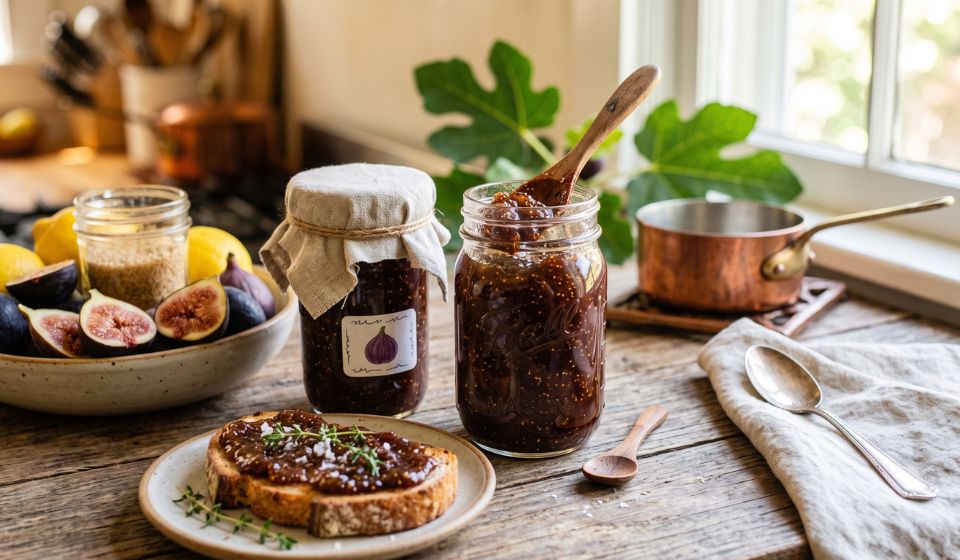
Homemade Fig Jam is one of the easiest and most rewarding preserves you can make at home. Fresh figs naturally have a rich sweetness, soft texture, and subtle honey-like flavor that transforms into a thick, spreadable jam with just a few simple ingredients. Whether you’re spreading it on warm toast, serving it with a cheese board, stirring it into yogurt, or using it as a glaze for meats, this homemade fig jam is far more flavorful than most store-bought versions.
This recipe is designed for U.S. home cooks using common kitchen tools and easy-to-find ingredients. No pectin is required because ripe figs naturally thicken as they cook. Follow the detailed steps below for a perfectly balanced jam every time.
Why You’ll Love This Homemade Fig Jam
- No commercial pectin required
- Ready in about 45 minutes
- Naturally sweet with fresh fruit
- Great for beginners
- Perfect for breakfast, desserts, and appetizers
- Stores well in the refrigerator or freezer
Ingredients
- 2 pounds fresh ripe figs (about 8 cups chopped)
- 1½ cups granulated sugar
- 2 tablespoons fresh lemon juice
- 1 teaspoon lemon zest (optional)
- ¼ teaspoon ground cinnamon (optional)
- Pinch of salt
- 2 tablespoons water (if needed)
Kitchen Equipment
- Large saucepan or Dutch oven
- Wooden spoon or silicone spatula
- Sharp knife
- Cutting board
- Measuring cups and spoons
- Potato masher (optional)
- Clean glass jars with lids
How to Choose the Best Figs
Choose figs that are:
- Soft but not mushy
- Deeply colored
- Slightly fragrant
- Free from mold or bruises
Common varieties available in the U.S. include Black Mission, Brown Turkey, Kadota, and Adriatic figs. Any variety works well for this recipe.
Step 1: Wash and Prepare the Figs
Rinse the figs gently under cool running water. Pat them dry with a clean kitchen towel.
Trim off the stems and chop each fig into small pieces. You can leave the skins on because they soften while cooking and add flavor and texture.
You should have approximately 8 cups of chopped figs.
Step 2: Combine the Ingredients
Place the chopped figs into a large saucepan.
Add:
- Granulated sugar
- Lemon juice
- Lemon zest (if using)
- Cinnamon (optional)
- Pinch of salt
Stir everything together until the sugar begins dissolving.
Allow the mixture to sit for about 15 minutes. This helps the figs release their natural juices, reducing the chance of burning during cooking.
Step 3: Cook the Jam
Place the saucepan over medium heat.
Bring the mixture to a gentle boil while stirring frequently.
As the figs cook, they will release more juice and become very soft.
Reduce the heat to medium-low and continue simmering.
Cook for 30–40 minutes, stirring every few minutes to prevent sticking.
Step 4: Mash the Fruit
If you prefer a smoother jam, use a potato masher to gently crush the softened figs.
For a chunkier, rustic-style jam, simply leave larger fruit pieces intact.
Continue stirring while the jam thickens.
Step 5: Test for Doneness
The jam is ready when it coats the back of a spoon.
You can also use the cold plate test:
- Place a small plate in the freezer for 10 minutes.
- Drop a spoonful of jam onto the cold plate.
- Wait 30 seconds.
- Push the jam with your finger.
If it wrinkles slightly and doesn’t run, it’s finished.
If it’s still watery, continue cooking for another 5–10 minutes.
Step 6: Fill the Jars
Remove the saucepan from the heat.
Allow the jam to cool for about 5 minutes.
Carefully spoon the hot jam into clean glass jars, leaving about ¼ inch of headspace.
Wipe the rims clean before sealing with lids.
Step 7: Cool and Store
For refrigerator storage:
Allow the jars to cool completely before refrigerating.
The jam will continue thickening as it cools.
For freezer storage:
Leave extra headspace in freezer-safe jars and freeze for up to one year.
Storage Tips
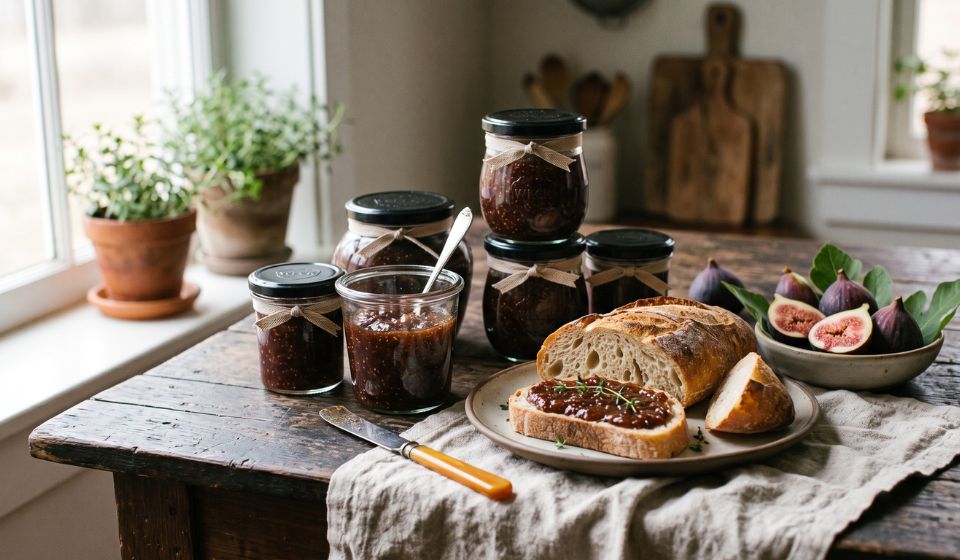
- Refrigerator: Up to 3 weeks
- Freezer: Up to 12 months
- Always use a clean spoon when serving.
- Discard if you notice mold, unusual odor, or fermentation.
Tips for the Best Homemade Fig Jam
- Use fully ripe figs for the sweetest flavor.
- Stir frequently during the final 15 minutes.
- Lemon juice balances sweetness and helps preserve freshness.
- Do not overcook, as the jam thickens more after cooling.
- Add a splash of vanilla extract for extra richness.
- A pinch of nutmeg or ginger creates a warm fall flavor.
Delicious Ways to Serve Fig Jam
- Spread on toast, English muffins, or biscuits
- Pair with cream cheese or goat cheese
- Add to charcuterie boards
- Swirl into oatmeal or Greek yogurt
- Spoon over pancakes or waffles
- Fill thumbprint cookies
- Use as a glaze for roasted chicken or pork
- Spread on sandwiches with turkey and brie
- Serve alongside baked brie
Flavor Variations
Honey Fig Jam
Replace ½ cup of sugar with honey for a deeper natural sweetness.
Vanilla Fig Jam
Add 1 teaspoon pure vanilla extract after removing the jam from heat.
Spiced Fig Jam
Mix in cinnamon, cloves, and a pinch of nutmeg for holiday flavors.
Orange Fig Jam
Replace lemon juice with fresh orange juice and add orange zest.
Maple Fig Jam
Substitute part of the sugar with pure maple syrup for a rich autumn flavor.
Common Mistakes to Avoid
- Using underripe figs
- Cooking over high heat
- Not stirring often enough
- Filling dirty jars
- Overcooking until the jam becomes overly thick
- Skipping the lemon juice
Nutrition Information
Approximate values per 2-tablespoon serving.
| Nutrient | Amount |
|---|---|
| Calories | 55 |
| Carbohydrates | 14 g |
| Sugar | 13 g |
| Protein | 0.4 g |
| Total Fat | 0.1 g |
| Saturated Fat | 0 g |
| Fiber | 1 g |
| Sodium | 5 mg |
| Potassium | 80 mg |
| Vitamin C | 2% DV |
Final Thoughts
Making Homemade Fig Jam is an easy way to preserve the sweet flavor of fresh figs while creating a versatile spread you’ll enjoy year-round. With just a handful of pantry ingredients and no need for commercial pectin, this recipe produces a rich, fruity jam that’s perfect for breakfast, baking, appetizers, or gifting. By following these simple step-by-step instructions, you’ll have a delicious homemade preserve that tastes fresh, natural, and far better than many store-bought alternatives.