
If you want a home that feels warm, calming, natural, and effortlessly stylish, earth-tone home ideas are an excellent place to start. Inspired by nature, earthy colors bring warmth and depth to interiors without feeling overly dramatic or trendy.
Earth tones include shades such as beige, cream, taupe, terracotta, warm brown, olive green, sand, clay, muted rust, and soft stone. When combined with natural materials and thoughtful lighting, these colors can create an interior that feels comfortable today and timeless for years to come.
The beauty of an earth-tone interior is its versatility. These colors work beautifully in modern, minimalist, farmhouse, rustic, Scandinavian, bohemian, and contemporary homes. You can use them across an entire home or introduce them gradually through furniture, textiles, artwork, and accessories.
Here are 12 earth-tone home ideas to help you create a warm and timeless interior.
1. Start With a Warm Neutral Foundation
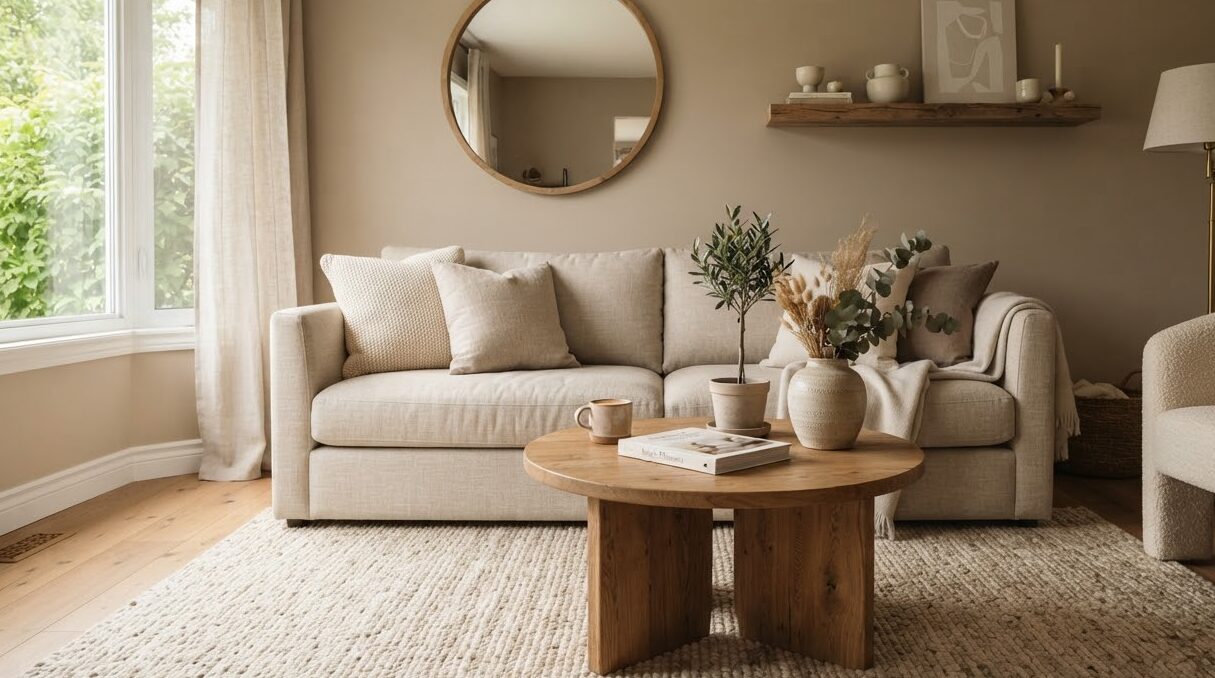
The easiest way to create an earth-tone home is to begin with a neutral base.
Instead of bright white, consider warm white, ivory, cream, beige, or soft taupe for your walls.
These shades create a gentle background that allows earthy furniture and accessories to stand out without creating too much contrast.
A warm neutral foundation works particularly well in living rooms and bedrooms because it creates a relaxed atmosphere.
For example, combine:
- Cream walls
- Beige sofa
- Light oak furniture
- Taupe curtains
- Natural woven accessories
The result is subtle, sophisticated, and easy to update.
2. Bring in Natural Wood
Natural wood is one of the most effective materials for creating an earthy interior.
Wood introduces warmth, texture, and an organic quality that painted furniture often cannot provide.
Try incorporating oak, walnut, teak, ash, or reclaimed wood through:
- Coffee tables
- Dining tables
- Cabinets
- Bed frames
- Shelving
- Console tables
- Decorative bowls
For a modern look, pair natural wood with simple furniture and neutral walls.
For a rustic atmosphere, choose more textured or weathered wood finishes.
3. Add Terracotta and Clay Tones
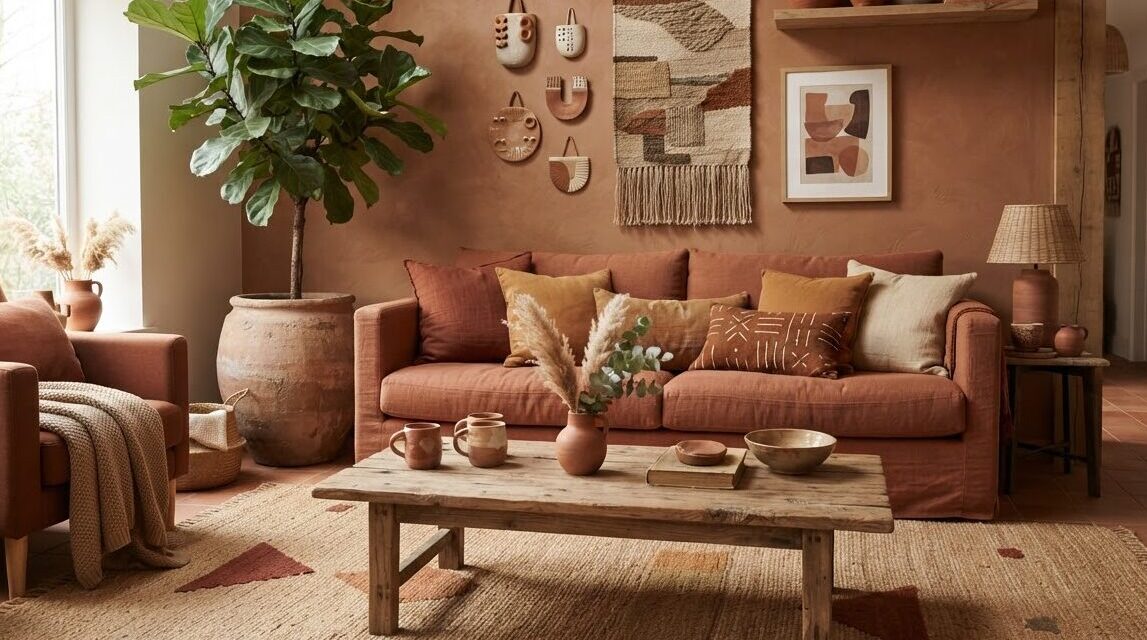
Terracotta is an excellent accent color for an earth-tone home because it adds warmth without becoming overly bright.
Use terracotta through cushions, pottery, rugs, artwork, curtains, or accent furniture.
You can also use muted clay, burnt orange, cinnamon, and rust shades.
The key is moderation.
If your walls and furniture are already warm, a few terracotta accents can create depth without making the room feel too orange.
4. Use Olive and Sage Green
Green is naturally associated with plants, forests, and the outdoors, making it a natural addition to an earthy color palette.
Soft sage works beautifully in bedrooms, kitchens, and bathrooms, while deeper olive can create a more dramatic effect.
Try:
Sage green + cream + light wood
for a soft and airy interior.
Or choose:
Olive green + warm beige + walnut
for a richer and more sophisticated appearance.
Plants can also reinforce the natural feeling of an earth-tone room.
5. Layer Different Textures
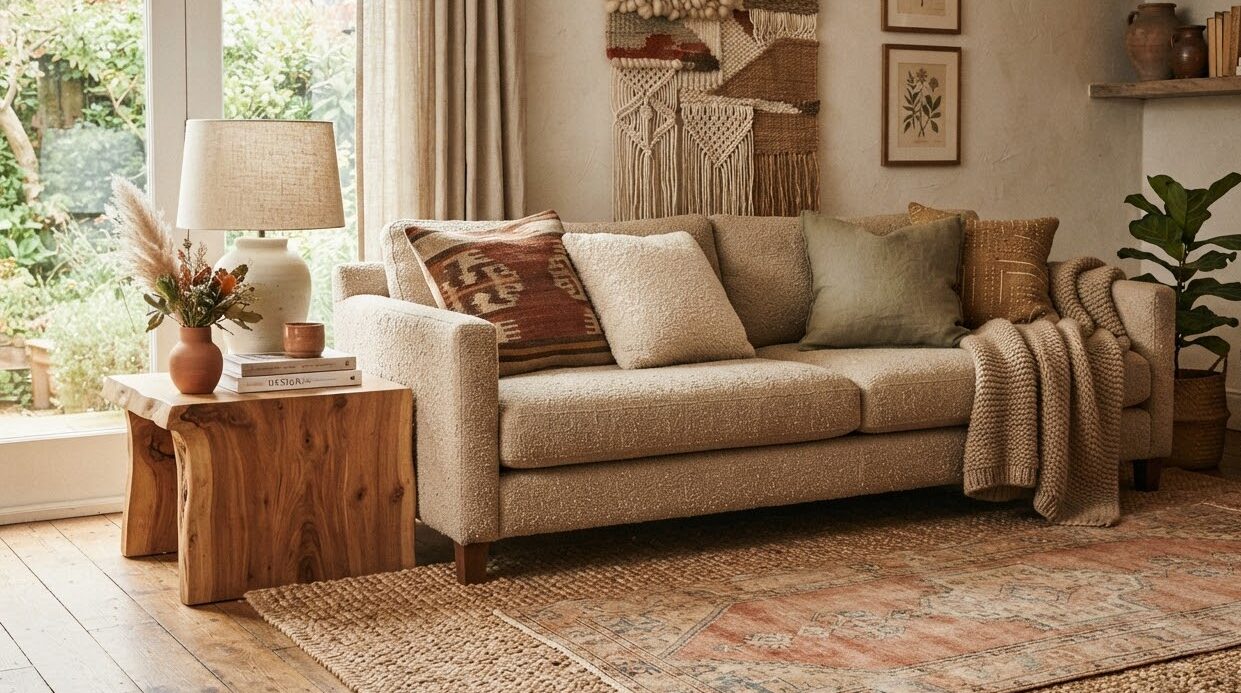
Color alone isn’t enough to create a warm interior.
Texture is equally important.
Combine materials such as:
- Linen
- Cotton
- Wool
- Jute
- Rattan
- Wood
- Stone
- Ceramic
- Leather
For example, imagine a beige sofa paired with a woven rug, linen curtains, a wooden coffee table, ceramic vases, and a knitted throw.
Although the color palette is simple, the different textures prevent the space from feeling flat.
6. Choose an Earth-Tone Living Room
The living room is one of the easiest places to experiment with earthy colors.
Start with a neutral sofa in cream, beige, taupe, or warm gray.
Then layer in:
- A brown or terracotta rug
- Wooden furniture
- Olive cushions
- Woven baskets
- Ceramic accessories
- Nature-inspired artwork
Avoid matching every piece exactly.
A combination of slightly different earth tones usually creates a richer and more natural appearance.
7. Create a Warm Earth-Tone Bedroom
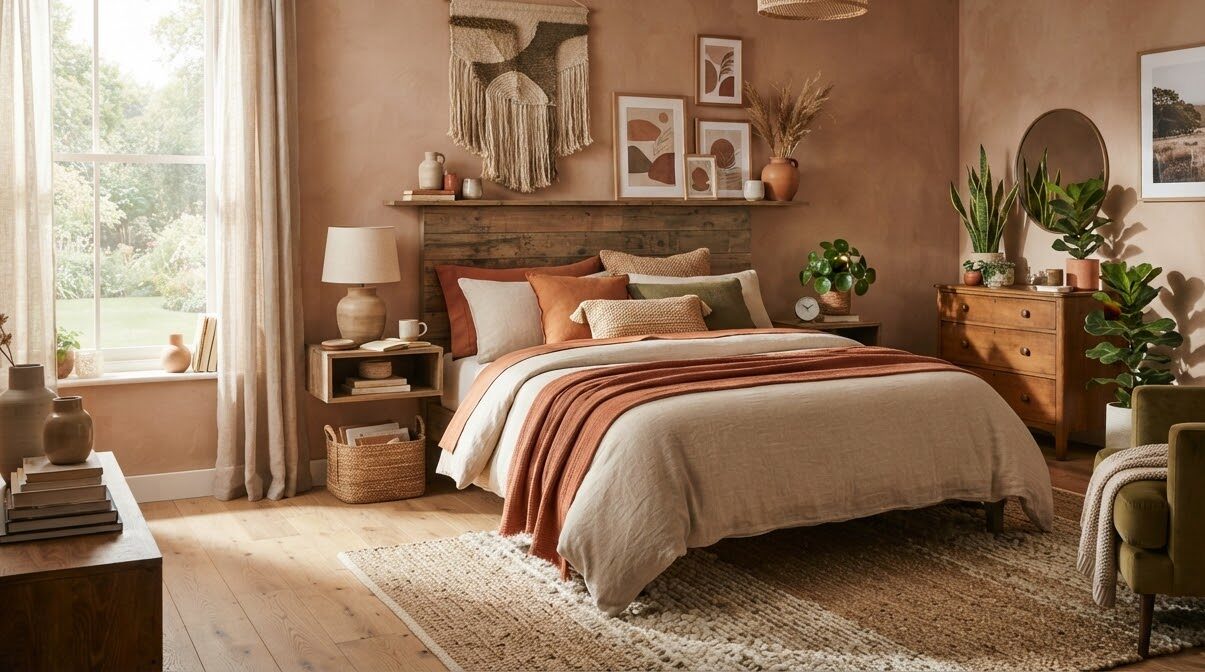
Earth tones are particularly effective in bedrooms because they can create a calm, grounded atmosphere.
Consider warm beige walls with cream bedding, walnut furniture, and terracotta or olive accents.
Soft lighting is especially important.
Use bedside lamps, wall sconces, and warm-toned bulbs rather than relying entirely on a bright ceiling light.
Layered bedding in different natural textures can make the room feel even more comfortable.
8. Use Stone and Natural Materials
Stone can add a subtle connection to nature.
Depending on your budget and style, consider marble, limestone, travertine-inspired finishes, slate, or other natural-looking surfaces.
Stone works particularly well in:
- Kitchens
- Bathrooms
- Fireplace surrounds
- Entryways
- Coffee tables
Pair stone with wood to create contrast.
For example, a warm wood vanity with a stone countertop can create a sophisticated and timeless bathroom.
9. Add Earthy Artwork
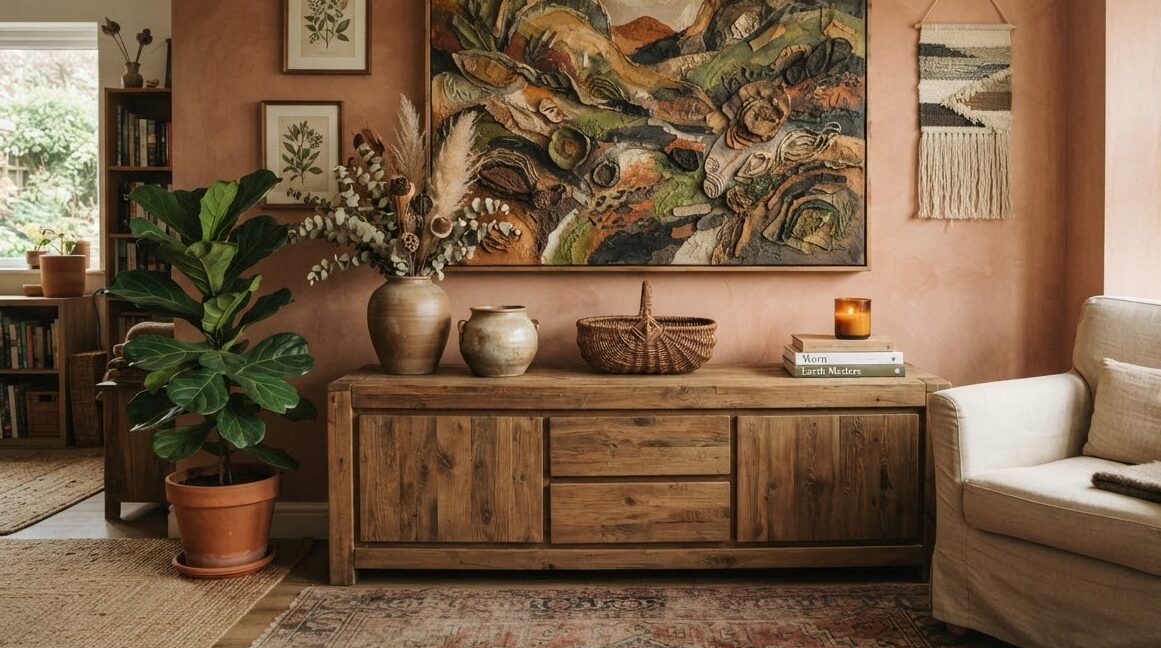
Artwork is an easy way to introduce earthy colors without committing to permanent changes.
Look for pieces featuring:
- Landscapes
- Botanical illustrations
- Abstract organic shapes
- Clay and rust tones
- Neutral photography
- Natural textures
Large artwork can become a focal point above a sofa or bed.
If your room already contains several earthy colors, choose artwork with a simple composition to avoid visual overload.
10. Use Warm Metal Accents
Metallic finishes can work beautifully with earth tones.
Instead of relying entirely on cool chrome, consider warmer finishes such as aged brass, antique brass, bronze, or brushed gold.
Use these finishes through:
- Cabinet handles
- Lighting fixtures
- Mirrors
- Faucets
- Picture frames
- Decorative objects
Warm metals complement wood, beige, brown, and terracotta particularly well.
11. Create an Earth-Tone Kitchen
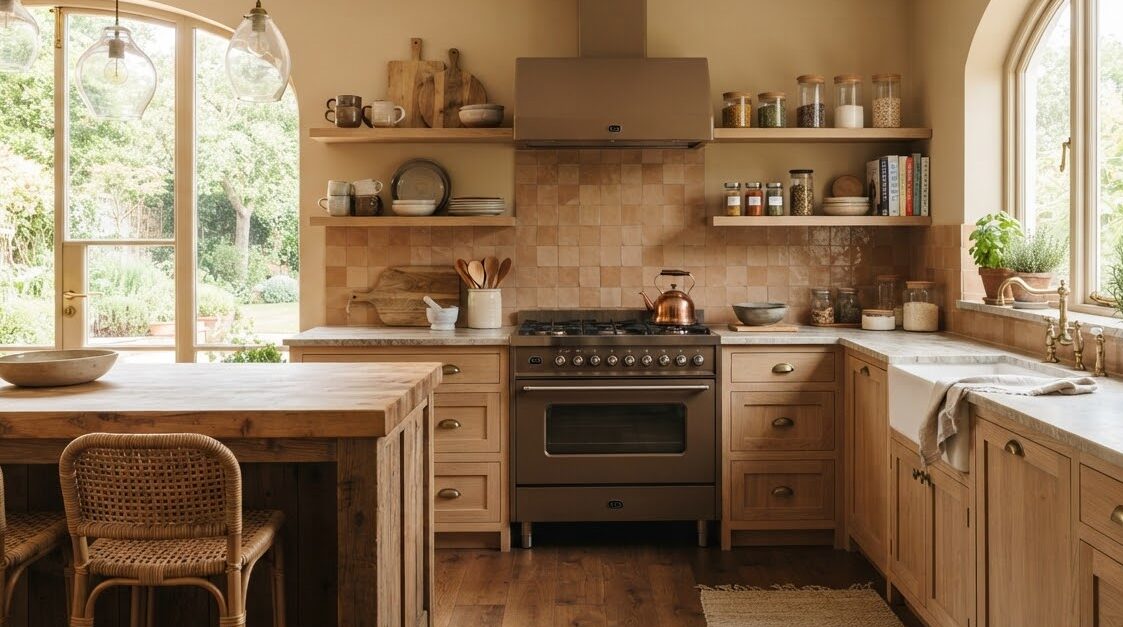
Earthy colors can make a kitchen feel welcoming rather than purely functional.
Consider cream or taupe cabinetry combined with natural wood, stone countertops, and muted green accents.
For a more dramatic kitchen, use olive or deep brown cabinetry with lighter countertops.
Open shelves can provide space for displaying handmade ceramics, wooden cutting boards, woven baskets, and other natural accessories.
Keep countertops relatively clear so the materials remain the focus.
12. Bring the Outdoors Inside
The strongest earth-tone interiors usually include natural elements.
Houseplants are an obvious choice, but you can go further with dried branches, woven baskets, natural stone, wood accessories, and botanical artwork.
Large leafy plants can add contrast to neutral rooms, while smaller plants work well on shelves, side tables, and kitchen counters.
Even a simple vase filled with branches can make a room feel more connected to nature.
How to Combine Earth Tones Without Making a Room Dark
Earth tones don’t have to make your home feel heavy.
The key is to balance darker shades with lighter neutrals.
A useful combination is:
60% light neutral + 30% medium earth tone + 10% darker accent.
For example:
- 60% cream and beige
- 30% natural wood and taupe
- 10% olive, terracotta, or dark brown
This creates depth while keeping the room visually light.
Natural light also plays an important role. Keep windows unobstructed and use lightweight curtains where possible.
How to Make an Earth-Tone Interior Feel Modern
Earth tones can work beautifully in contemporary spaces when paired with clean lines.
Choose streamlined furniture, simple lighting, minimal accessories, and uncluttered layouts.
For example, a modern living room could combine a simple cream sofa, walnut coffee table, large neutral rug, sculptural lamp, and one oversized piece of earthy artwork.
The result feels modern without losing warmth.
How to Make Earth Tones Feel Luxurious
Luxury doesn’t require excessive decoration.
Instead, focus on quality-looking materials and thoughtful layering.
Try combining:
- Velvet
- Linen
- Walnut
- Stone
- Brushed brass
- Textured wool
- Sculptural lighting
A restrained color palette can actually make these materials feel more sophisticated.
For example, a taupe bedroom with walnut furniture, linen bedding, stone accessories, and warm brass lighting can look elegant without being overly decorated.
Earth-Tone Color Combinations to Try
If you’re unsure where to begin, try one of these combinations:
Soft and Airy
Cream + beige + light oak + sage
Warm and Cozy
Taupe + caramel + walnut + terracotta
Modern and Sophisticated
Warm white + chocolate brown + olive + brass
Rustic and Natural
Sand + reclaimed wood + clay + stone
Earthy Luxury
Mushroom + walnut + bronze + muted olive
These combinations can be adapted to almost any room.
Common Earth-Tone Decorating Mistakes
Earth-tone decorating is relatively forgiving, but a few mistakes can make a room feel flat.
Avoid using only one shade of beige throughout the entire room. Without texture and contrast, the space can look bland.
Also avoid introducing too many warm colors at once. Beige, brown, terracotta, orange, and yellow can become overwhelming when used in equal amounts.
Another common mistake is ignoring lighting. Warm colors can appear very different depending on the type and amount of light in the room.
Finally, don’t forget contrast. Even a soft earth-tone room benefits from a few darker elements such as walnut furniture, black accents, olive green, or bronze.
Final Thoughts
The best earth-tone home ideas create spaces that feel warm, natural, comfortable, and timeless.
Start with a soft neutral foundation, then add natural wood, earthy colors, organic textures, plants, stone, warm metals, and personal accessories.
You don’t need to redesign your entire home to embrace the look. Start with a new rug, cushions, artwork, wooden furniture, or a few ceramic accessories.
The most successful earth-tone interiors feel collected rather than overly coordinated. By balancing light neutrals with richer natural shades and combining different textures, you can create a home that feels both contemporary and timeless.