Central Texas-style barbecue is all about simplicity, smoke, and patience. Unlike barbecue styles that rely heavily on sweet sauces or complicated spice blends, the Central Texas approach lets the meat speak for itself. A quality beef brisket, a simple salt-and-black-pepper rub, clean-burning wood smoke, and plenty of time are the foundation of this iconic barbecue tradition.
This Central Texas-Style Barbecue recipe is designed to help you recreate that deeply smoky, tender, peppery brisket at home. You do not need a huge commercial smoker to get excellent results. With the right technique, temperature control, and patience, you can make brisket with a flavorful bark and juicy interior that feels right at home on a Texas barbecue plate.
What Makes Central Texas-Style Barbecue Special?
Central Texas barbecue is known for its minimalist philosophy. The meat is generally seasoned with salt and black pepper rather than covered in a sugary marinade or sauce. The brisket is slowly cooked with wood smoke until the outside develops a dark, flavorful bark while the inside becomes tender and juicy.
The smoke should complement the beef rather than overpower it. Traditional hardwoods such as post oak are especially popular because they provide a balanced smoke flavor. The finished brisket is often sliced and served without sauce, sometimes alongside simple sides such as potato salad, coleslaw, beans, or pickles.
The beauty of this style is that every ingredient has a purpose. There is nowhere for poor technique to hide, so choosing good meat and maintaining a steady cooking temperature are especially important.
Central Texas-Style Barbecue Ingredients
For the brisket:
- 1 whole beef brisket, about 10–12 pounds
- ¼ cup coarse kosher salt
- ¼ cup coarse-ground black pepper
- 1–2 tablespoons yellow mustard or Worcestershire sauce, optional
- Hardwood smoking wood, preferably post oak
- Water for the smoker’s water pan, if needed
For serving:
- Sliced white bread
- Dill pickles
- Sliced onions
- Pickled jalapeños
- Your favorite simple barbecue sides
The classic seasoning is essentially a 50/50 mixture of coarse salt and coarse black pepper. You can adjust the ratio slightly according to taste, but keeping the seasoning simple is central to the style.
How to Prepare the Brisket
1. Trim the Brisket
Start with a cold brisket because the fat is easier to trim while firm. Place it on a large cutting board with the fat side facing up.
Trim away thick, hard pieces of surface fat and remove any silver skin that will prevent seasoning and smoke from reaching the meat. Leave a reasonable layer of soft fat because it helps protect the brisket during the long cooking process.
Do not over-trim the brisket. The goal is to create an even shape so the meat cooks consistently while retaining enough fat for moisture and flavor.
2. Season Generously
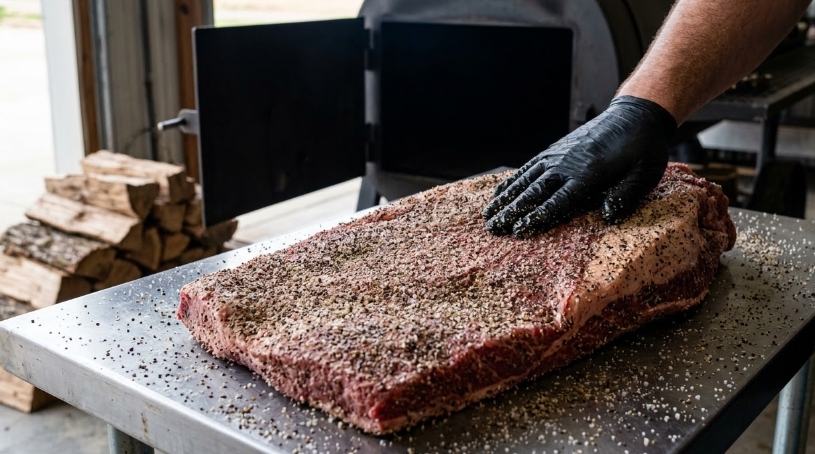
Combine the kosher salt and coarse black pepper. Pat the brisket dry with paper towels, then coat every surface evenly with the seasoning mixture.
For better seasoning adhesion, you can apply a very thin layer of yellow mustard or Worcestershire sauce before adding the rub. This is optional and will not make the finished brisket taste strongly of mustard.
Once seasoned, allow the brisket to sit for about 30–60 minutes while you prepare the smoker.
3. Prepare the Smoker
Preheat your smoker to approximately 250°F (121°C). Aim for a clean, steady fire rather than heavy white smoke.
Add hardwood chunks or splits according to your smoker’s instructions. Post oak is an excellent choice for a Central Texas-style flavor, while other mild hardwoods can also work.
The most important thing is clean smoke. Thick, billowing smoke can make the brisket bitter, while thin, barely visible smoke provides a more balanced flavor.
4. Smoke the Brisket
Place the brisket in the smoker with the thicker portion toward the hotter area of the cooking chamber. Close the lid and let the smoker do its work.
Avoid repeatedly opening the smoker. Every time you open the lid, heat escapes and the cooking process can become less consistent.
Cook the brisket at around 250°F until the bark is deeply developed and the internal temperature reaches roughly 160–170°F. Depending on the brisket and your smoker, this can take several hours.
Remember that brisket is finished based on tenderness, not simply a specific number on a thermometer.
5. Handle the Stall
At some point during cooking, the brisket’s internal temperature may stop rising quickly. This is commonly called the stall.
You can let the brisket continue cooking uncovered, which allows the bark to develop further, or wrap it in butcher paper once the bark looks dark and well established.
For a Central Texas-style result, unwaxed butcher paper is a great option because it helps speed up the cooking process while allowing the bark to remain relatively dry and smoky.
Foil can also be used, but it traps more moisture and can soften the bark.
6. Continue Cooking Until Tender
After wrapping, return the brisket to the smoker and continue cooking until it becomes extremely tender.
Many briskets become tender somewhere around 195–205°F, but temperature should only be used as a guide. Start checking for tenderness by inserting a probe or thermometer into the thickest part of the brisket.
When the probe slides in with very little resistance, similar to inserting it into softened butter, the brisket is generally ready.
Different briskets cook differently, so do not rush this stage.
7. Rest the Brisket
Resting is one of the most important steps in this Central Texas-style barbecue recipe.
Remove the finished brisket from the smoker and keep it wrapped. Let it rest for at least 1 hour, and preferably longer if your schedule allows.
Resting allows the juices to redistribute throughout the meat and gives the brisket time to finish relaxing after the long cooking process.
Avoid slicing immediately after removing the brisket from the smoker. Cutting too soon can cause flavorful juices to escape onto the cutting board instead of staying in the meat.
8. Slice Like a Texas Pitmaster
Brisket contains different muscle groups, so pay attention to the direction of the grain.
Separate the flat and point if necessary, then slice across the grain. The flat is usually best sliced into thin, even pieces, while the fattier point can be sliced slightly thicker.
A good slice should hold together when picked up but still feel tender and juicy.
Serve the brisket simply with white bread, pickles, onions, and jalapeños. Sauce can be offered on the side, but a properly smoked Central Texas brisket does not need sauce to taste delicious.
Tips for the Best Central Texas-Style Barbecue
Choose a quality brisket: Look for a brisket with good marbling. Intramuscular fat helps keep the meat flavorful and tender during the long cook.
Do not over-season: Salt and pepper are enough. The purpose of the rub is to enhance the beef rather than hide it.
Use clean smoke: Manage your fire carefully and avoid excessive smoke.
Maintain steady heat: A stable smoker temperature is more important than obsessing over every degree.
Trust tenderness: A brisket is done when it feels tender, not simply when it reaches a particular internal temperature.
Rest before slicing: Give the brisket enough time to rest so the texture and moisture can settle.
Slice against the grain: This is essential for creating tender bites instead of chewy slices.
What to Serve With Central Texas Barbecue
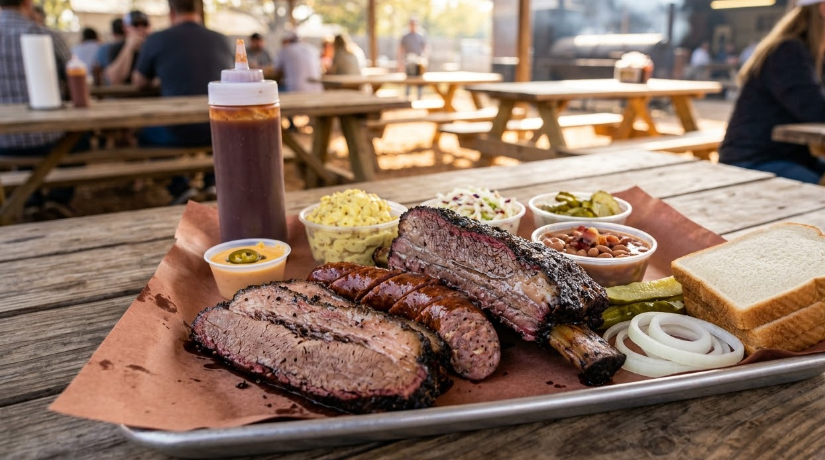
Keep the sides straightforward. Creamy potato salad, pinto beans, crunchy coleslaw, dill pickles, sliced onions, jalapeños, and white bread all pair beautifully with smoky brisket.
For a traditional presentation, arrange several slices of brisket on butcher paper and add a few pickles, onions, and slices of bread. The simple presentation puts the smoked meat front and center.
How to Store Leftover Brisket
If you have leftovers, allow the brisket to cool appropriately and store it in an airtight container or tightly wrapped in the refrigerator. For the best quality, use refrigerated leftovers within a few days.
To reheat, gently warm the slices with a little reserved brisket juice or another small amount of moisture. Avoid overheating because brisket can dry out when reheated aggressively.
You can also freeze properly wrapped brisket for longer storage. Thaw it in the refrigerator before reheating.
Final Thoughts
This Central Texas-Style Barbecue recipe proves that great barbecue does not require an elaborate sauce or complicated seasoning. The combination of well-marbled brisket, coarse salt, cracked black pepper, clean hardwood smoke, controlled heat, and patience creates an unforgettable meal.
The biggest secret is simply giving the brisket enough time. Keep the smoker steady, develop a beautiful bark, cook until genuinely tender, and let the meat rest before slicing. Once you master those fundamentals, you can bring the unmistakable flavor of Central Texas barbecue to your own backyard.