Few barbecue dishes are as impressive as a perfectly cooked barbecue brisket. With a smoky crust, juicy center, rich beef flavor, and tender texture, this classic BBQ favorite is ideal for summer cookouts, family gatherings, game days, and weekend dinners.
The secret to great brisket is not complicated ingredients—it is low-and-slow cooking, a flavorful dry rub, proper temperature control, and enough resting time. This easy barbecue brisket recipe walks you through everything from choosing the right cut of beef to slicing and serving it.
What Is Barbecue Brisket?
Barbecue brisket is beef brisket that is seasoned and slowly cooked until the connective tissue breaks down and the meat becomes tender. Traditional barbecue brisket is usually cooked in a smoker, allowing the meat to absorb a deep smoky flavor while developing a dark, flavorful bark.
A whole brisket contains two sections: the flat and the point. The flat is leaner and slices beautifully, while the point contains more fat and is especially juicy and flavorful.
For home cooks, a brisket flat is often easier to manage, while a whole packer brisket is an excellent choice when cooking for a crowd.
Why You’ll Love This Barbecue Brisket Recipe
- Rich, smoky BBQ flavor
- Tender and juicy texture
- Delicious homemade spice rub
- Beautifully caramelized bark
- Perfect for parties and cookouts
- Excellent for sandwiches, tacos, and leftovers
- Can be prepared with a smoker or grill setup
- Easy to customize with your favorite barbecue sauce
Barbecue Brisket Ingredients
For the brisket:
- 1 beef brisket, approximately 5–7 pounds
- 2 tablespoons yellow mustard or Worcestershire sauce
- 2 tablespoons kosher salt
- 2 tablespoons coarse black pepper
- 1 tablespoon smoked paprika
- 1 tablespoon garlic powder
- 1 tablespoon onion powder
- 1 teaspoon chili powder
- 1 teaspoon brown sugar
- ½ teaspoon cayenne pepper, optional
For cooking:
- ½–1 cup beef broth or apple juice
- Wood chunks or chips for smoking
- Your favorite barbecue sauce, for serving
The mustard or Worcestershire sauce helps the seasoning adhere to the meat. You generally will not taste the mustard after cooking.
How to Prepare Brisket for Barbecue
Start by placing the brisket on a large cutting board and patting it dry with paper towels. Trim away thick, hard pieces of fat, but leave a thin layer of fat because it helps protect the meat during the long cooking process.
Avoid removing every bit of fat. Brisket needs some fat to stay moist and flavorful.
Combine the kosher salt, black pepper, smoked paprika, garlic powder, onion powder, chili powder, brown sugar, and cayenne pepper.
Lightly coat the brisket with mustard or Worcestershire sauce, then generously apply the dry rub to every surface. Press the seasoning into the meat rather than brushing it away.
For the best flavor, refrigerate the seasoned brisket uncovered for at least 4 hours or, ideally, overnight.
How to Cook Barbecue Brisket
1. Preheat Your Smoker
Set your smoker to approximately 225°F (107°C). Use a mild or medium-strength wood such as oak, hickory, or pecan.
Oak provides a balanced smoke flavor, while hickory gives the brisket a stronger BBQ character. Pecan adds a slightly sweeter, nutty smoke.
2. Place the Brisket in the Smoker
Remove the brisket from the refrigerator and allow it to sit briefly while the smoker reaches temperature.
Place the brisket in the smoker with the thicker point positioned toward the hotter area if your smoker has noticeable temperature differences.
Insert a meat thermometer into the thickest part of the brisket. Close the smoker and let the cooking begin.
3. Cook Low and Slow
Cook the brisket at around 225°F until it develops a dark, flavorful bark and reaches an internal temperature of roughly 160–170°F.
At this stage, the brisket may enter what is commonly called the stall, when the internal temperature rises very slowly. This happens because moisture evaporating from the surface cools the meat.
Don’t panic—the stall is normal.
4. Wrap the Brisket
Once the bark has developed, you can wrap the brisket in butcher paper or aluminum foil.
Butcher paper allows some smoke and moisture to escape while helping the brisket retain moisture. Foil creates a tighter seal and can speed up the cooking process, although the bark may become softer.
Add a small amount of beef broth or apple juice before wrapping if desired.
5. Continue Cooking Until Tender
Return the wrapped brisket to the smoker and continue cooking until it reaches approximately 195–205°F internally.
However, temperature is only a guide. The most important test is tenderness.
Insert a probe or instant-read thermometer into several parts of the brisket. It should slide in with very little resistance, similar to inserting it into softened butter.
This can take several additional hours depending on the brisket’s size, shape, smoker temperature, and other cooking conditions.
The Most Important Step: Resting the Brisket
Once the brisket is tender, remove it from the smoker and keep it wrapped.
Allow it to rest for at least 1 hour, and longer if your schedule allows. Resting gives the juices time to redistribute throughout the meat and makes the brisket easier to slice.
If you cut brisket immediately after cooking, flavorful juices can run onto the cutting board instead of staying in the meat.
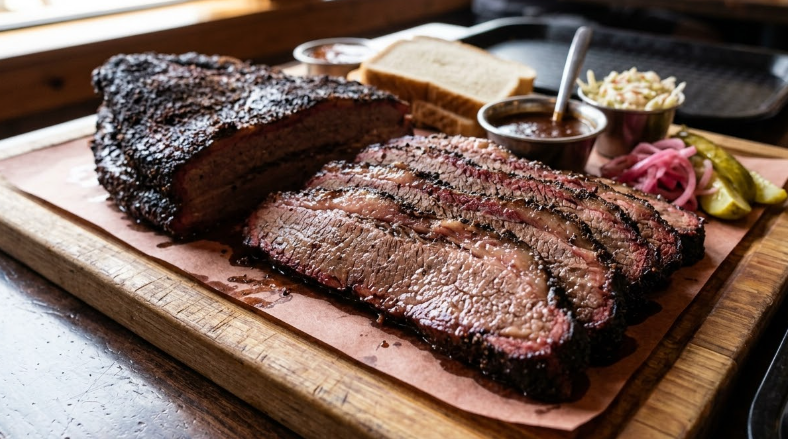
How to Slice Barbecue Brisket
Slicing brisket correctly is just as important as cooking it correctly.
First, identify the direction of the grain. The muscle fibers run in a particular direction, and you want to cut against the grain.
Use a long, sharp slicing knife and cut the brisket into thin, even slices.
The grain can change direction between the flat and point, so you may need to rotate the brisket when moving from one section to the other.
For especially tender brisket, avoid slicing it too thickly.
How to Serve Barbecue Brisket
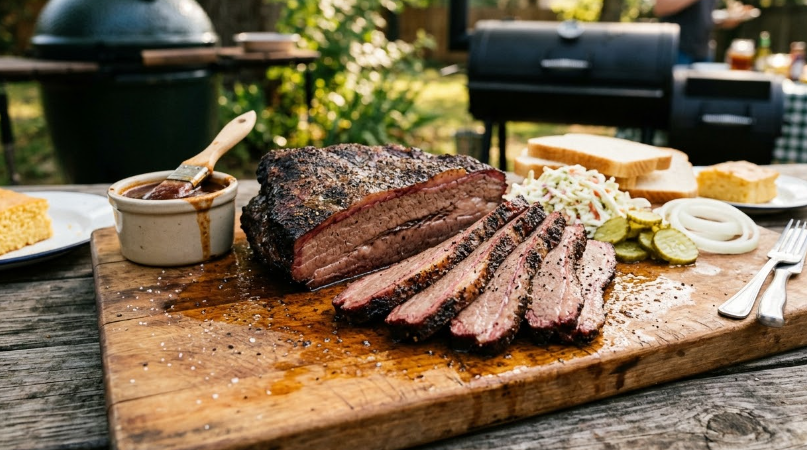
Serve your homemade barbecue brisket with classic BBQ sides such as:
- Creamy coleslaw
- Baked beans
- Cornbread
- Potato salad
- Macaroni and cheese
- Grilled corn
- Pickles and onions
- French fries
- Green salad
You can also pile sliced brisket onto toasted buns with barbecue sauce and crunchy pickles for an irresistible brisket sandwich.
Tips for the Best Barbecue Brisket
Don’t Over-Trim the Fat
Some fat is essential for flavor and moisture. Remove thick, hard pieces, but keep a reasonable fat layer.
Season Generously
Brisket is a large, dense cut of beef, so it can handle a generous amount of seasoning. Make sure the rub covers all sides.
Maintain a Steady Temperature
Avoid constantly opening the smoker. Every time you open the lid, heat escapes and cooking becomes less consistent.
Don’t Cook Only by Time
A brisket may take several hours depending on its size and cooking conditions. Use internal temperature and, most importantly, tenderness to determine when it is finished.
Let It Rest
A proper resting period can make a major difference in texture and juiciness. Don’t skip this step.
Slice Against the Grain
Even a perfectly cooked brisket can seem chewy if sliced incorrectly. Always identify the grain and cut across it.
Can You Make Barbecue Brisket Without a Smoker?
Yes. While a smoker produces the most authentic smoky flavor, you can prepare brisket on a charcoal or gas grill using indirect heat.
You can also cook brisket in the oven at a low temperature and add smoked paprika or a small amount of liquid smoke to create a smoky-style flavor. However, the bark and smoke profile will be different from traditionally smoked brisket.
For the closest barbecue-style result, use a smoker or a grill capable of maintaining low indirect heat.
How to Store Leftover Brisket
Allow leftover brisket to cool before transferring it to an airtight container. Refrigerate it for up to several days.
For longer storage, wrap individual portions tightly and freeze them in freezer-safe bags or containers.
To reheat, use a low oven temperature and add a small splash of beef broth or BBQ sauce to help prevent the meat from drying out.
Leftover brisket is fantastic in sandwiches, loaded baked potatoes, quesadillas, tacos, nachos, and breakfast hash.
Final Thoughts
This barbecue brisket recipe delivers everything you want from classic BBQ: tender beef, smoky flavor, a flavorful bark, and juicy slices. The process takes time, but most of the work is hands-off. With a good brisket, flavorful dry rub, steady low temperature, and plenty of resting time, you can create restaurant-style barbecue at home.
Whether you’re serving it at a backyard cookout or turning leftovers into sandwiches throughout the week, this brisket is guaranteed to become a favorite. Serve it with your favorite BBQ sides, plenty of sauce, and enjoy every smoky, tender bite.