
Your bedroom should feel like the easiest room in the house to relax in—not a space that feels unfinished, cluttered, or disconnected from the rest of your home. The good news is that creating a beautiful bedroom does not necessarily require a major renovation or expensive furniture.
A few thoughtful changes to layout, lighting, color, bedding, storage, and texture can completely change how the room looks and feels. In 2026, bedroom design is moving toward warmer colors, tactile materials, personalized decor, and cozy, layered spaces rather than rooms that feel overly staged.
If you’re refreshing a primary bedroom, guest room, apartment bedroom, or small bedroom, these nine bedroom design tricks can help you create a space that feels polished, comfortable, and distinctly yours.
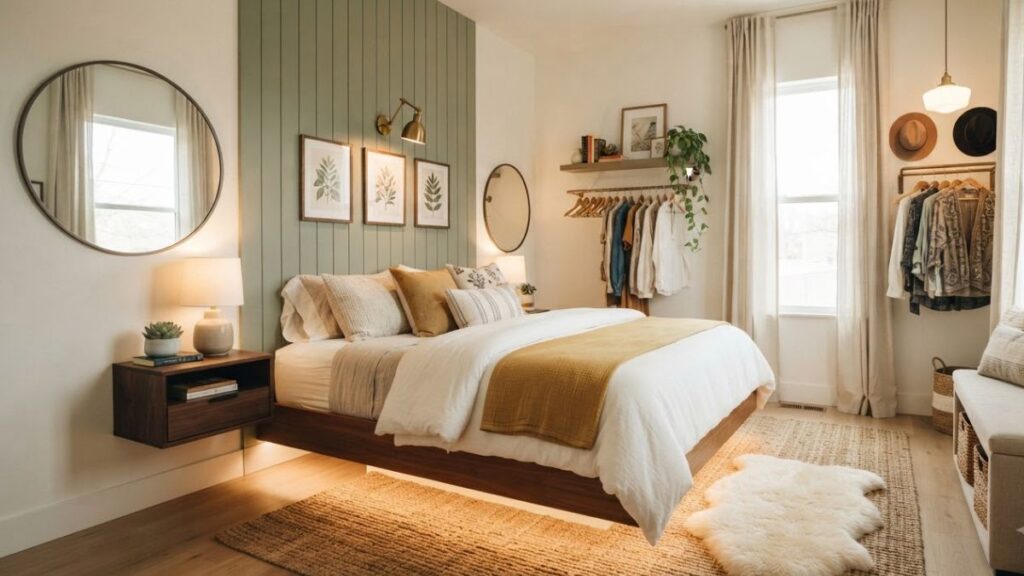
1. Make the Bed the Star of the Room
The bed is naturally the largest piece of furniture in most bedrooms, so use it as your main focal point instead of trying to make every wall compete for attention.
Start by positioning the bed where it has a strong visual presence when you walk through the door. If the layout allows, center it on the most substantial wall and leave enough room around both sides for comfortable movement.
A substantial headboard can make an especially noticeable difference. An upholstered headboard in linen, boucle, velvet, or another textured fabric instantly adds softness and visual weight.
You don’t necessarily need a new bed frame. A large piece of artwork, a decorative wall treatment, or even a textile behind the bed can create a similar focal point.
Interior designers have long recommended treating the bed as the anchor of the bedroom rather than allowing it to disappear into the background.
Design tip: Keep the biggest visual statement around the bed and use simpler pieces elsewhere.
2. Layer Your Bedding Instead of Buying More Decor
One of the easiest ways to make a bedroom look more luxurious is to improve the bed itself.
Instead of piling on dozens of decorative pillows, focus on layers of texture. Start with comfortable sheets, add a duvet or quilt, fold a throw blanket across the lower third of the bed, and finish with a few carefully chosen pillows.
For a relaxed American bedroom aesthetic, washed cotton, linen, quilted coverlets, knitted throws, and textured blankets work particularly well.
You can also experiment with slightly different shades of the same color. For example, a warm beige duvet can work beautifully with cream sheets, taupe pillows, and a caramel-colored throw.
The goal isn’t perfection. The bed should look inviting enough that you want to climb into it.
Current bedroom trends are emphasizing tactile layers and cocooning comfort, making bedding one of the easiest places to introduce this look.
3. Use Lighting to Change the Entire Mood
Overhead lighting alone can make even a beautifully decorated bedroom feel harsh.
Instead, think about bedroom lighting in layers.
Use an overhead fixture for general illumination, bedside lamps for reading, and accent lighting to highlight artwork or architectural details. Dimmable fixtures are especially useful because they allow the atmosphere to change throughout the day.
Warm-toned bulbs can create a softer evening environment than bright, cool lighting. You can also place a small table lamp on a dresser or console to create another pool of light.
For a more dramatic look, consider wall sconces beside the bed. They save nightstand space while adding a designer-inspired touch.
Bedroom design experts are increasingly emphasizing layered lighting and flexible light control as part of creating comfortable, functional bedrooms.
Quick upgrade: Replace one harsh overhead bulb with warmer, softer lighting and see how dramatically the room changes at night.
4. Try Color Drenching for a More Sophisticated Look
If you want a bedroom that feels dramatically different without changing every piece of furniture, rethink the walls.
One of the standout bedroom design directions for 2026 is color drenching—using one color across multiple architectural surfaces, potentially including walls, trim, and ceiling. Designers say the technique can create a more cohesive and enveloping atmosphere.
For a calming bedroom, consider:
- Warm olive green
- Dusty blue
- Soft taupe
- Clay
- Muted terracotta
- Creamy beige
- Deep blue-gray
- Warm burgundy
You don’t have to choose the darkest possible shade. A muted mid-tone can create plenty of character while remaining easy to live with.
For small bedrooms, painting multiple surfaces in related tones can also reduce the visual breaks created by contrasting trim.
5. Add Texture Before Adding More Color
A bedroom can have a beautiful color palette and still feel flat.
That’s where texture comes in.
Combine materials such as linen, cotton, wood, woven fibers, wool, velvet, ceramic, and natural stone. A wooden nightstand beside a fabric-covered bed, for example, creates much more visual interest than using matching furniture in the same finish.
Texture is particularly effective in neutral bedrooms because it prevents beige, cream, white, and taupe from becoming boring.
Try adding a woven basket, textured area rug, linen curtains, a boucle bench, or a chunky throw before buying another decorative object.
Current 2026 bedroom trends strongly favor tactile surfaces, natural materials, and layered finishes.
6. Make a Small Bedroom Feel Larger With Smarter Placement
You don’t need a huge primary suite to create an attractive bedroom.
In a smaller room, every piece of furniture should earn its place.
Start by measuring the room before purchasing anything. Oversized nightstands, deep dressers, and bulky chairs can quickly make a compact bedroom feel crowded.
Choose furniture that provides useful storage without overwhelming the floor plan. A bed with built-in drawers, a narrow nightstand, or a tall dresser can provide more practical storage than several small decorative pieces.
Mirrors can also help bounce light around the room and create a greater sense of openness.
Most importantly, maintain clear pathways around the bed and between major furniture pieces. Good circulation can make a room feel substantially more spacious even when its square footage hasn’t changed.
7. Bring in Natural Materials and Greenery
Bedrooms benefit from natural elements because they add warmth and character without requiring a complicated decorating scheme.
Wood is one of the easiest materials to introduce. Consider a wooden nightstand, bench, picture frame, woven basket, or natural wood headboard.
Plants can also provide a fresh finishing touch. If your room receives sufficient natural light, choose a plant that suits those conditions rather than buying greenery purely for appearance.
For a lower-maintenance approach, dried branches or natural decorative arrangements can add organic texture.
Rattan, cane, jute, woven baskets, and linen are particularly useful for creating a relaxed bedroom with a natural feel.
The emphasis on natural materials and earthy colors is particularly strong in current U.S. home-design trends.
8. Create a Clutter-Free Nightstand
A beautifully designed bedroom can lose its appeal when the nightstand becomes a dumping ground for chargers, books, water bottles, receipts, and miscellaneous items.
Keep the surface simple.
A good nightstand arrangement might include:
- One attractive lamp
- One small decorative object
- A book
- A small tray
- A plant or vase
Use drawers or baskets for everything else.
If you’re short on space, wall-mounted lighting can free up the nightstand completely.
This approach isn’t just about aesthetics. Reducing visual distractions can make the bedroom feel calmer and more intentional. Designers are increasingly focusing on bedrooms that support relaxation and everyday routines rather than simply looking good in photographs.
9. Add One Personal Statement Piece
The final trick is perhaps the most important: make the room yours.
Instead of filling every empty wall with generic artwork, choose one or two things that actually mean something to you.
It could be:
- A large piece of artwork
- A vintage mirror
- A favorite photograph
- A handmade ceramic piece
- A beautiful antique dresser
- A textile collected while traveling
- A statement chair
- A unique bedside lamp
Personal pieces give a bedroom character that cannot be created by simply copying a showroom.
This also fits where bedroom design is heading in 2026. Designers are increasingly embracing meaningful artwork, vintage pieces, layered materials, and spaces that feel collected rather than perfectly matched.
How to Put These Bedroom Design Tricks Together
The easiest way to avoid a mismatched bedroom is to choose your overall direction before shopping.
Start with the bed and color palette. Once those are established, choose lighting, nightstands, rugs, curtains, and decorative accessories that support them.
For a warm modern bedroom, you might combine cream walls, a walnut bed, beige linen bedding, black or aged-brass lighting, a textured rug, and olive-green accents.
For a relaxed coastal bedroom, consider soft blue, sandy beige, white cotton, light wood, woven accessories, and natural textures.
For a modern luxury bedroom, try deeper wall colors, an oversized upholstered headboard, layered bedding, elegant lighting, and minimal accessories.
And for a cozy boho bedroom, mix washed cotton, woven materials, warm wood, patterned textiles, plants, and a few handcrafted pieces. Boho bedroom inspiration is currently leaning heavily into natural textures, layered patterns, and relaxed personalization.
Small Changes That Can Make a Big Difference
You don’t have to complete a full bedroom makeover in one weekend.
Try changing these elements first:
Week 1: Declutter the nightstands and dresser.
Week 2: Upgrade the bedding.
Week 3: Add warmer, layered lighting.
Week 4: Introduce a rug, curtains, or textured throw.
Week 5: Add artwork or one meaningful statement piece.
These small improvements can gradually transform the room without requiring a major renovation.
Final Thoughts
The best bedroom design ideas aren’t necessarily the most expensive ones. A thoughtfully positioned bed, layered bedding, warm lighting, carefully selected colors, natural textures, smart storage, and personal decor can completely change the character of a room.
For 2026, the strongest bedroom trends are moving toward spaces that feel warm, tactile, personal, and genuinely comfortable rather than overly coordinated or designed purely for appearance.
Whether you’re decorating a small apartment bedroom in New York, updating a suburban primary bedroom in Texas, or creating a cozy guest room in California, the same principle applies: design around how you actually want the room to feel.
Start with one change—perhaps better bedding or improved lighting—and build from there. Sometimes the smallest design decision is the one that makes the entire bedroom finally feel finished.