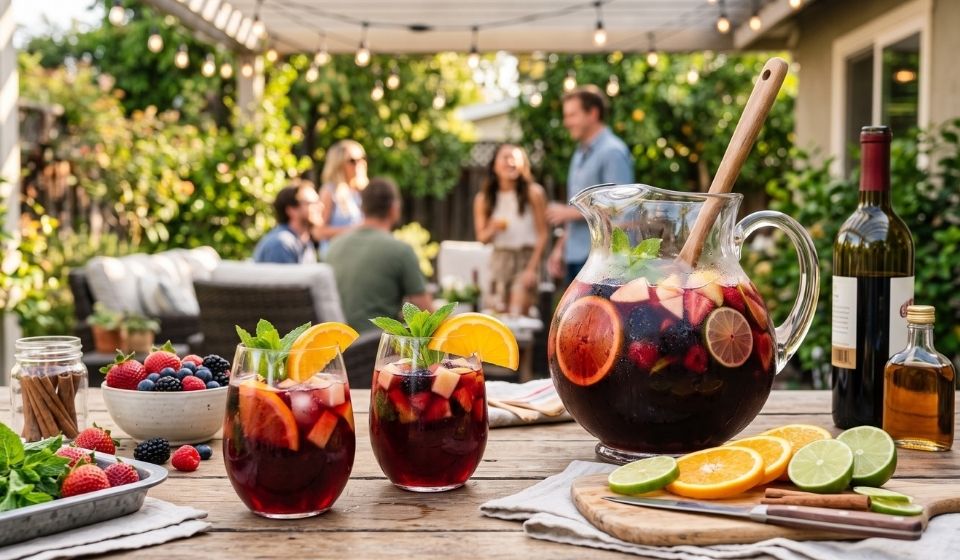
If you’re looking for a simple drink that feels special without requiring complicated ingredients, this Red Wine Sangria Recipe is an excellent choice. Made with red wine, fresh fruit, citrus juice, and a splash of sparkling water, sangria is colorful, refreshing, and easy to prepare for gatherings.
This classic Spanish-inspired drink is especially popular for summer parties, backyard barbecues, brunches, and holiday get-togethers. The best part is that you can prepare it ahead of time, allowing the fruit and wine to blend together for a deeper, more balanced flavor.
This recipe is designed with ingredients that are easy to find in most U.S. grocery stores. You can also adjust the sweetness, fruit, and fizz to suit your taste.
What Is Red Wine Sangria?
Red wine sangria is a fruit-based wine punch traditionally made with red wine, fresh fruit, a sweetener, and sometimes brandy or another spirit. The mixture is chilled before serving and often finished with sparkling water or soda for a light, bubbly texture.
Unlike cocktails that need to be prepared one glass at a time, sangria is made in a pitcher. That makes it particularly convenient when you’re serving several guests.
The flavor can range from fruity and sweet to crisp and citrusy depending on the wine and fruit you choose.
Ingredients for Red Wine Sangria
For about 6–8 servings, you’ll need:
- 1 bottle (750 ml) dry or medium-dry red wine
- 1 orange, thinly sliced
- 1 lemon, thinly sliced
- 1 lime, thinly sliced
- 1 cup strawberries, sliced
- 1 green apple, chopped
- 2–3 tablespoons granulated sugar or simple syrup
- ¼ cup fresh orange juice
- ¼ cup brandy, optional
- ½ cup sparkling water or club soda
- 1 cup ice, for serving
- Fresh fruit slices, for garnish
Best Red Wine for Sangria
You don’t need an expensive bottle of wine for sangria. In fact, a moderately priced bottle is usually the better choice because the fruit and other ingredients add plenty of flavor.
Good options include:
- Merlot
- Cabernet Sauvignon
- Tempranillo
- Garnacha
- Pinot Noir
- Zinfandel
For a smoother and fruitier sangria, Merlot or Garnacha works particularly well. If you prefer a bolder drink, Cabernet Sauvignon can be a good choice.
Avoid extremely sweet red wines unless you plan to reduce the added sugar.
How to Make Red Wine Sangria Step by Step
Step 1: Prepare the Fruit
Wash all of your fruit thoroughly before cutting it.
Slice the orange, lemon, and lime into thin rounds or half-moons. Chop the apple into small bite-sized pieces and slice the strawberries.
Keeping the fruit pieces relatively small makes it easier for guests to scoop some fruit into their glasses while also allowing the flavors to infuse into the sangria.
Step 2: Add the Fruit to a Pitcher
Place the orange, lemon, lime, strawberries, and chopped apple into a large pitcher.
A pitcher that holds at least 2 quarts is ideal because you’ll need enough room for the wine, juice, and sparkling water.
For an attractive presentation, arrange some of the citrus slices against the inside of the pitcher before adding the remaining fruit.
Step 3: Add the Sugar
Sprinkle 2–3 tablespoons of sugar over the fruit.
If you prefer, use simple syrup instead. Simple syrup dissolves more easily and gives you better control over the sweetness.
Gently stir the fruit and sugar together. Let it sit for about 5–10 minutes so the sugar can begin drawing out some of the fruit’s juices.
If you’re using very sweet fruit or a sweet wine, start with less sugar.
Step 4: Add the Orange Juice
Pour ¼ cup of fresh orange juice into the pitcher.
Freshly squeezed orange juice gives the sangria a brighter citrus flavor, but bottled orange juice can also work if that’s what you have available.
Stir gently to combine the fruit, sugar, and orange juice.
Step 5: Pour in the Red Wine
Slowly pour one 750-ml bottle of red wine into the pitcher.
Use a dry or medium-dry red wine rather than a heavily sweet wine. The fruit and sugar will naturally add sweetness to the finished drink.
Stir gently with a long spoon. Avoid stirring too aggressively because you don’t want to crush the fruit.
Step 6: Add Brandy
For a more traditional and slightly stronger sangria, add ¼ cup of brandy.
Brandy isn’t absolutely necessary, so you can leave it out if you want a lighter drink.
If you’re making the sangria for a mixed group, keeping the brandy optional is an easy way to customize the recipe.
Step 7: Refrigerate the Sangria
Cover the pitcher and place it in the refrigerator for at least 2 hours.
For the best flavor, allow the sangria to chill for approximately 4–8 hours.
This resting period gives the wine time to absorb the flavors from the citrus and other fruit.
You can even prepare it the night before your party. However, if you’re making it well in advance, consider adding delicate fruits and sparkling water closer to serving time.
Step 8: Add Sparkling Water Before Serving
Just before serving, add ½ cup of chilled sparkling water or club soda.
Stir gently.
Adding the sparkling water at the last minute helps preserve the bubbles and gives the sangria a refreshing finish.
If you like a more carbonated drink, you can increase the amount of sparkling water.
Step 9: Serve Over Ice
Fill wine glasses or large glasses with ice.
Pour the sangria over the ice, making sure each glass gets a little of the fruit.
Garnish with an orange slice, strawberry, or lime wedge.
Serve immediately while the sangria is cold and bubbly.
Tips for Making the Best Red Wine Sangria
Choose Fresh, Flavorful Fruit
Fresh fruit makes a noticeable difference in sangria. Citrus fruits provide acidity and brightness, while apples and berries add sweetness and texture.
You can also experiment with peaches, nectarines, grapes, raspberries, blueberries, or pineapple.
Don’t Use Too Much Sugar
The amount of sugar you need depends on the wine and fruit you’re using.
Start with 2 tablespoons and taste the mixture after it has chilled. You can always add more sweetness, but it’s difficult to remove excess sugar.
Let It Chill
One of the biggest mistakes when making sangria is serving it immediately.
Allowing the mixture to rest for several hours gives the flavors time to combine. For a party, preparing it in the morning for an afternoon or evening gathering can be convenient.
Add Bubbles at the End
Don’t add club soda or sparkling water several hours ahead of time. The carbonation will disappear.
Add it immediately before serving for the freshest, most refreshing result.
Don’t Use Expensive Wine
Sangria is a great way to transform an affordable bottle of wine into a flavorful party drink. Choose something you enjoy drinking, but there’s no need to spend a lot.
Easy Fruit Variations
One of the best things about this Red Wine Sangria Recipe is how flexible it is.
For a summer version, try peaches, strawberries, oranges, and blueberries.
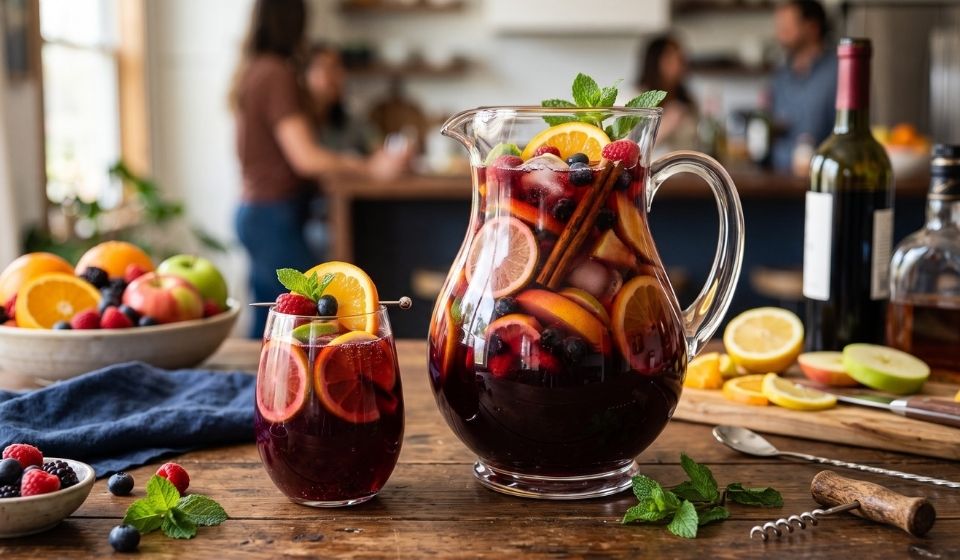
For a fall-inspired version, use apples, oranges, pears, and a small cinnamon stick while the sangria chills.
For a tropical twist, add pineapple and mango.
For a berry sangria, combine strawberries, raspberries, blueberries, and blackberries.
You can also replace the apple with peaches or nectarines when they’re in season.
How to Make Sangria Less Sweet
If you prefer a crisp, less-sweet sangria, use a dry red wine and reduce the sugar to 1 tablespoon or skip it initially.
Add more fresh citrus juice and increase the amount of sparkling water if needed.
Avoid sweet fruit juices and sweetened sodas, which can quickly make the drink overly sugary.
How to Make Sangria Sweeter
For a sweeter sangria, add simple syrup one tablespoon at a time until you reach your preferred flavor.
You can also use a splash of orange liqueur or a naturally sweeter red wine.
Always taste the sangria after it has chilled because the final flavor can change as the fruit infuses into the wine.
Can You Make Red Wine Sangria Ahead of Time?
Yes. Sangria is actually one of the best party drinks to prepare ahead of time.
You can combine the wine, fruit, juice, and sweetener several hours before serving. Keep it covered in the refrigerator until you’re ready.
For the freshest texture, add sparkling water immediately before serving.
If you’re preparing the sangria a day ahead, don’t worry if the fruit becomes very flavorful. However, very delicate fruits such as strawberries can soften considerably after prolonged soaking.
How to Store Leftover Sangria
Store leftover sangria in a covered pitcher or airtight container in the refrigerator.
For the best flavor, drink it within about 1–2 days. The fruit will continue to soften and release flavor over time, while the sparkling water will gradually lose its carbonation.
If you know you’ll have leftovers, you can add sparkling water to individual glasses instead of the entire pitcher. This keeps the remaining sangria less diluted and allows you to add fresh bubbles later.
Nutrition Information
Nutrition can vary depending on the specific wine, fruit, sugar, and brandy used. The following is an approximate estimate per serving when the recipe makes 8 servings.
| Nutrient | Approximate Amount |
|---|---|
| Calories | 145 kcal |
| Carbohydrates | 13 g |
| Sugar | 9 g |
| Protein | 1 g |
| Fat | 0 g |
| Fiber | 2 g |
| Sodium | 5 mg |
Final Thoughts
This Red Wine Sangria Recipe is an easy, colorful, and refreshing option for parties, cookouts, brunches, and casual gatherings. With a bottle of red wine, fresh citrus, seasonal fruit, a little sweetness, and some sparkling water, you can create a pitcher that looks impressive without requiring complicated preparation.
The recipe is also easy to customize. Adjust the sweetness, switch up the fruit, add brandy for extra depth, or increase the sparkling water for a lighter finish. Most importantly, prepare it a few hours ahead so the flavors have time to come together.
Serve it well chilled over ice with plenty of fresh fruit, and you have a simple party drink that’s ready to share.