If you’re looking for a brisket recipe that delivers incredibly tender meat, rich smoky flavor, and a deliciously caramelized crust, this easy method is a great place to start. Brisket is a classic comfort food that can seem intimidating, but with the right seasoning, cooking temperature, and plenty of patience, you can turn a tough cut of beef into unbelievably juicy slices.
This recipe is perfect for weekend gatherings, backyard barbecues, holidays, game days, and family dinners. The secret is simple: season the brisket generously, cook it low and slow, wrap it at the right time, and let it rest before slicing.
What Is Brisket?
Brisket is a flavorful cut of beef taken from the lower chest of the cow. Because these muscles work hard, brisket contains a significant amount of connective tissue. Cooking it slowly at a low temperature gives that connective tissue enough time to break down, resulting in tender, succulent meat.
A whole brisket generally contains two sections: the flat and the point. The flat is leaner and produces neat slices, while the point contains more fat and is especially rich and juicy.
For this brisket recipe, you can use a whole brisket or a smaller brisket flat depending on how many people you are serving.
Why You’ll Love This Brisket Recipe
- Tender and juicy: Low-and-slow cooking helps create incredibly soft beef.
- Rich smoky flavor: A simple dry rub allows the natural beef flavor to shine.
- Beautiful bark: Proper seasoning and cooking create a flavorful crust on the outside.
- Perfect for gatherings: One brisket can feed a crowd.
- Make-ahead friendly: Brisket often tastes even better after resting or reheating.
- Versatile: Serve it sliced, chopped, in sandwiches, tacos, or alongside classic barbecue sides.
Ingredients
For the brisket:
- 1 beef brisket, about 5–7 pounds
- 2 tablespoons kosher salt
- 2 tablespoons coarse black pepper
- 1 tablespoon smoked paprika
- 1 tablespoon garlic powder
- 1 teaspoon onion powder
- 1 teaspoon chili powder
- 1 teaspoon brown sugar, optional
- 1 tablespoon yellow mustard or Worcestershire sauce, optional as a binder
- 1 cup beef broth
- ½ cup apple juice or water
The classic combination of salt and pepper is enough to make excellent brisket, but the additional spices add another layer of flavor.
How to Choose the Best Brisket
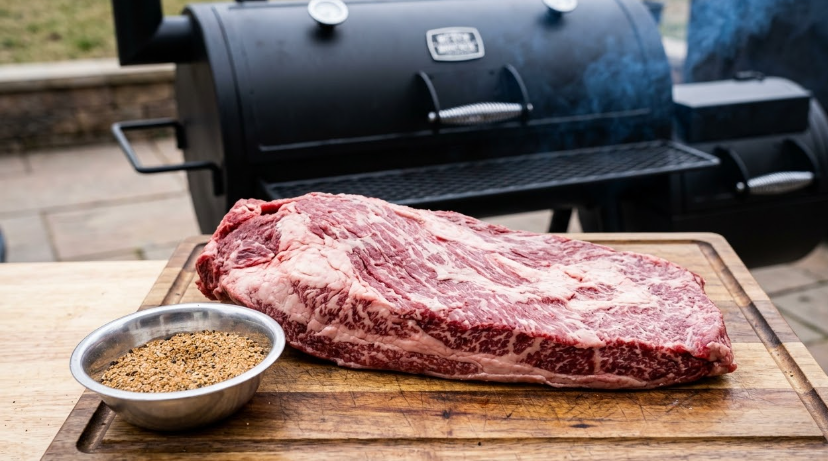
Look for a brisket with good marbling throughout the meat. Fat distributed inside the muscle helps keep the brisket moist and flavorful during the long cooking process.
If possible, choose a brisket with a reasonably even thickness. Extremely thin sections can become dry before thicker areas are fully tender.
A brisket with a flexible texture when lifted from one end is often a good choice because flexibility can indicate a well-marbled cut.
How to Prepare Brisket
1. Trim the Brisket
Place the brisket on a large cutting board with the fat side facing up. Trim away thick, hard pieces of fat, leaving approximately ¼ inch of the fat cap.
Remove loose pieces of meat and excess surface fat that could burn during cooking.
Don’t remove all the fat. A moderate fat layer helps protect the brisket and contributes to its flavor.
2. Apply the Dry Rub
Pat the brisket dry with paper towels.
Combine the kosher salt, black pepper, smoked paprika, garlic powder, onion powder, chili powder, and brown sugar in a bowl.
Lightly coat the brisket with mustard or Worcestershire sauce if using it as a binder. Sprinkle the seasoning mixture generously over every surface, including the sides.
Gently press the rub into the meat so it adheres well.
For the best flavor, refrigerate the seasoned brisket for several hours or overnight. If you’re short on time, you can cook it immediately.
How to Cook Brisket
3. Start Cooking Low and Slow
Preheat your smoker or oven to approximately 225°F (107°C).
If using a smoker, place the brisket on the grates with the fat side positioned according to your smoker’s heat source. Add your preferred smoking wood, such as oak, hickory, or pecan.
If using an oven, place the brisket on a rack inside a roasting pan and add the beef broth and apple juice to the pan beneath the rack.
Cook slowly until the outside develops a dark, flavorful bark and the internal temperature reaches roughly 160–170°F (71–77°C).
The exact cooking time will vary significantly depending on the brisket’s size, thickness, cooking equipment, and temperature.
4. Wrap the Brisket
Once the brisket has developed a good bark, wrap it tightly in butcher paper or heavy-duty aluminum foil.
Wrapping helps reduce moisture loss and can help the brisket move through the later stages of cooking more efficiently.
Return the wrapped brisket to the smoker or oven and continue cooking at approximately 225°F.
5. Cook Until Tender
Continue cooking until the brisket becomes extremely tender. For many briskets, the internal temperature will be somewhere around 195–205°F (90–96°C) when finished, but temperature alone should not determine doneness.
The most important test is tenderness.
Insert a meat thermometer probe or another thin probe into the thickest portion of the brisket. It should slide in with very little resistance, similar to inserting it into softened butter.
If the brisket still feels tough, continue cooking and check it again later.
6. Rest the Brisket
This step is extremely important.
Remove the finished brisket from the smoker or oven and allow it to rest while still wrapped. A rest of at least 30–60 minutes is recommended, while a longer rest can work well when properly maintained at a safe temperature.
Resting allows the juices to redistribute and gives the meat time to relax, making it easier to slice without losing too much moisture.
7. Slice Against the Grain
Unwrap the brisket and place it on a cutting board.
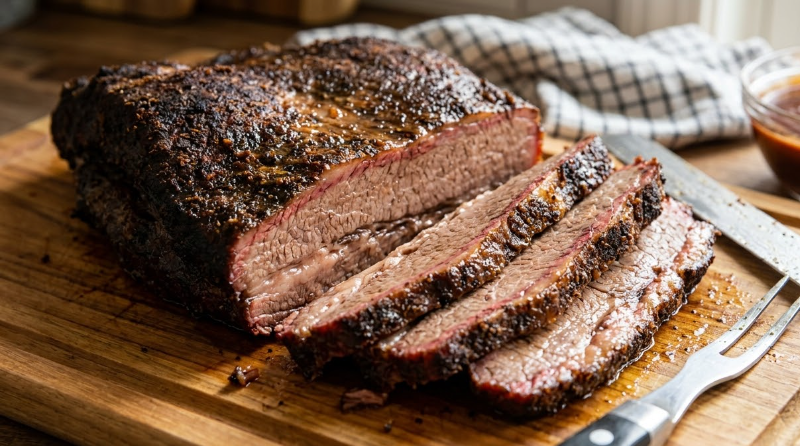
Look carefully at the direction of the muscle fibers. Slice against the grain rather than parallel to it.
Cut the flat into thin slices. The point can be sliced thicker or chopped into bite-sized pieces.
Slicing against the grain shortens the muscle fibers, making each bite noticeably more tender.
Tips for Perfect Brisket
Don’t Rush the Cooking
Brisket is not a cut that benefits from high heat and quick cooking. Low-and-slow cooking gives the connective tissue time to break down.
Use a Meat Thermometer
A reliable thermometer is one of the best tools for cooking brisket. It helps you monitor the internal temperature without repeatedly opening the smoker or oven.
Focus on Tenderness
Two briskets of the same weight may finish at different times. Use temperature as a guide, but rely on tenderness to determine when the brisket is ready.
Don’t Over-Trim
Removing too much fat can leave the brisket dry. Keep a thin, even fat cap while removing thick or hard pieces.
Let It Rest
Cutting immediately into a hot brisket can cause more juices to escape. Give it enough time to rest before slicing.
Oven-Baked Brisket Variation
You don’t need a smoker to make delicious brisket.
For an oven version, season the brisket as directed and place it on a rack in a roasting pan. Add beef broth and apple juice to the bottom of the pan, cover tightly with foil, and cook at approximately 225–250°F until tender.
For a darker exterior, uncover the brisket toward the end of cooking and increase the oven temperature briefly. Keep a close eye on it so the exterior doesn’t burn.
Although oven brisket won’t have exactly the same smoke flavor as smoked brisket, it can still be incredibly tender and flavorful.
What to Serve With Brisket
Brisket pairs beautifully with classic barbecue sides. Try serving it with:
- Creamy coleslaw
- Potato salad
- Mac and cheese
- Baked beans
- Corn on the cob
- Cornbread
- Pickles and onions
- Roasted vegetables
- Crispy potato wedges
- Fresh green salad
For sandwiches, pile sliced brisket onto toasted buns and add barbecue sauce, pickles, and crunchy slaw.
How to Store Leftover Brisket
Allow leftover brisket to cool appropriately, then store it in an airtight container or tightly wrapped in the refrigerator.
For best quality, keep the meat with some of its cooking juices. This helps prevent the slices from drying out during reheating.
You can also freeze brisket in airtight freezer-safe packaging. Divide it into meal-sized portions before freezing so it is easier to thaw and reheat.
Reheat gently in the oven, covered with a little beef broth or reserved juices, until warmed through.
Best Ways to Use Leftover Brisket
Leftover brisket is incredibly versatile. Use it to make:
- Brisket sandwiches
- Brisket tacos
- Loaded baked potatoes
- Brisket nachos
- Breakfast hash
- Brisket mac and cheese
- BBQ brisket sliders
- Brisket quesadillas
The smoky beef adds rich flavor to almost any savory dish.
Final Thoughts
This brisket recipe proves that great barbecue is more about patience than complicated ingredients. A well-marbled brisket, flavorful seasoning, low cooking temperature, and proper resting time are the keys to achieving tender, juicy meat with an irresistible bark.
Whether you’re cooking brisket in a smoker or making an oven-baked version, remember to cook by tenderness rather than relying only on the clock. Once you master the low-and-slow method, homemade brisket can become one of your favorite recipes for entertaining.