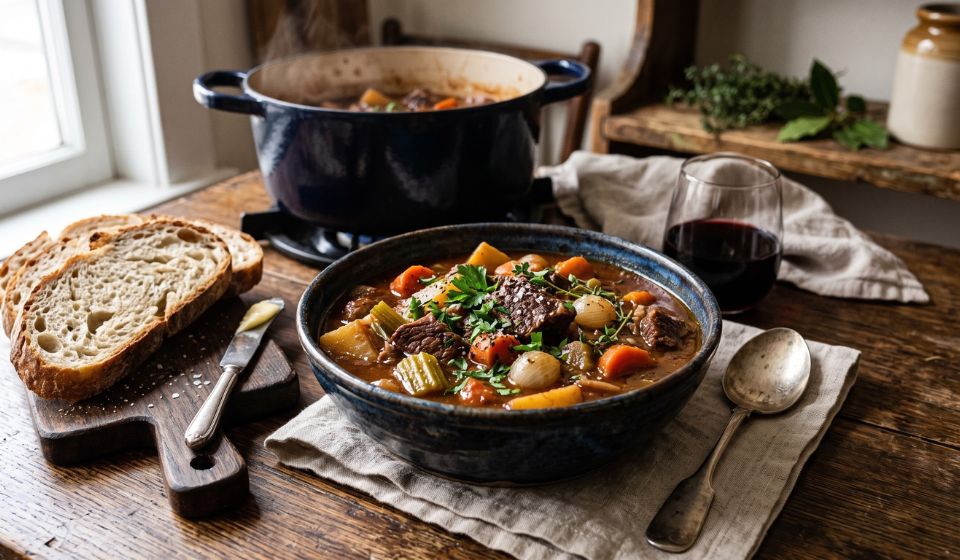
When you want a comforting dinner that feels homemade and satisfying, few dishes beat a classic beef stew. This beef stew recipe combines tender chunks of beef, hearty vegetables, and a rich, savory sauce that becomes even more flavorful as everything slowly cooks together.
It is an ideal meal for chilly evenings, Sunday dinners, or whenever you want something cozy without complicated ingredients. The secret to excellent beef stew is taking your time: browning the beef creates deep flavor, while slow simmering helps the meat become fork-tender and allows the sauce to develop a rich taste.
This recipe uses familiar ingredients that are easy to find at most U.S. grocery stores. Serve it with crusty bread, biscuits, mashed potatoes, or simply enjoy it in a bowl on its own.
Why You’ll Love This Beef Stew Recipe
There are plenty of reasons to keep this recipe in your regular dinner rotation.
- Tender, flavorful beef: Slow simmering transforms affordable beef into melt-in-your-mouth bites.
- Rich and savory sauce: Beef broth, tomato paste, herbs, and browned meat create a deeply flavorful gravy.
- Hearty vegetables: Potatoes, carrots, onions, and celery make this a satisfying one-pot meal.
- Simple ingredients: Everything is readily available at most American supermarkets.
- Great for leftovers: The flavor often gets even better the next day.
- Freezer-friendly: You can freeze portions for a convenient future dinner.
What Is the Best Beef for Beef Stew?
For the best results, choose a cut of beef with enough connective tissue and marbling to withstand a long cooking time.
Beef chuck roast is one of the best choices. It is flavorful, relatively affordable, and becomes wonderfully tender when slowly simmered. Look for a boneless chuck roast and cut it into roughly 1½-inch pieces yourself.
You can also use beef stew meat sold pre-cut at the grocery store. However, cutting your own chuck roast gives you more control over the size and quality of the pieces.
Avoid very lean cuts such as beef tenderloin or sirloin for a traditional slow-cooked stew. They can become dry or lose their texture during extended cooking.
Ingredients You’ll Need
For about 6 servings, gather the following ingredients:
For the Beef Stew
- 2 pounds boneless beef chuck roast, cut into 1½-inch cubes
- 2 tablespoons all-purpose flour
- 1½ teaspoons kosher salt, divided
- 1 teaspoon freshly ground black pepper
- 2 tablespoons olive oil
- 1 large yellow onion, diced
- 3 cloves garlic, minced
- 2 tablespoons tomato paste
- 1 cup dry red wine, optional
- 4 cups low-sodium beef broth
- 1 tablespoon Worcestershire sauce
- 1 teaspoon dried thyme
- 1 teaspoon dried rosemary
- 2 bay leaves
- 4 medium carrots, peeled and cut into chunks
- 3 medium Yukon Gold potatoes, cut into 1½-inch pieces
- 2 celery stalks, sliced
- 1 cup frozen peas
- 1 tablespoon chopped fresh parsley, for garnish
Optional Ingredients
You can customize your stew with a few additional ingredients:
- 8 ounces mushrooms, sliced
- ½ teaspoon smoked paprika
- ½ teaspoon garlic powder
- 1 tablespoon balsamic vinegar
- Fresh thyme for garnish
How to Make the Best Beef Stew
Step 1: Prepare the Beef
Pat the beef cubes thoroughly dry with paper towels. This is an important step because excess moisture can prevent the beef from browning properly.
Place the beef in a large bowl and sprinkle it with flour, 1 teaspoon of kosher salt, and black pepper. Toss until the pieces are lightly coated.
The flour helps create a beautiful crust on the beef and will also contribute to a slightly thicker stew.
Step 2: Brown the Beef
Heat the olive oil in a large Dutch oven or heavy-bottomed pot over medium-high heat.
Once the oil is hot, add the beef in a single layer. Do not overcrowd the pot. If necessary, brown the beef in two or three batches.
Cook the pieces for approximately 2–3 minutes per side, turning occasionally, until they develop a deep brown crust.
Transfer the browned beef to a clean plate.
Tip: Don’t rush this step. Properly browned beef creates some of the most important flavor in the entire stew.
Step 3: Cook the Onion
Reduce the heat to medium and add the diced onion to the same pot.
Cook for about 4–5 minutes, stirring occasionally, until the onion becomes soft and lightly golden.
If there are browned bits stuck to the bottom of the pot, don’t worry. Those flavorful bits will become part of the sauce.
Step 4: Add Garlic and Tomato Paste
Add the minced garlic and tomato paste.
Cook for approximately 1–2 minutes, stirring constantly. The tomato paste should become slightly darker and fragrant.
Cooking the tomato paste briefly helps deepen its flavor and gives the finished stew a richer taste.
Step 5: Deglaze the Pot
If using red wine, slowly pour it into the pot while scraping the bottom with a wooden spoon.
Allow it to simmer for about 2–3 minutes.
The wine is optional. If you prefer not to use alcohol, simply replace it with an additional 1 cup of beef broth.
Step 6: Add the Beef Broth and Seasonings
Return the browned beef and any accumulated juices to the pot.
Add:
- Beef broth
- Worcestershire sauce
- Dried thyme
- Dried rosemary
- Bay leaves
Stir everything together and bring the liquid to a gentle simmer.
Step 7: Simmer the Beef
Reduce the heat to low and partially cover the pot with a lid.
Allow the stew to simmer gently for about 1½ hours.
Stir occasionally and make sure the liquid is not boiling aggressively.
A gentle simmer is important. Cooking the beef too quickly can result in tougher meat rather than the tender texture you’re looking for.
Step 8: Add the Vegetables
After the beef has simmered for about 1½ hours, add the carrots, potatoes, and celery.
Stir everything together and continue cooking for another 30–40 minutes, or until the vegetables are tender and the beef is fork-tender.
Avoid adding the vegetables too early because they can become overly soft and lose their texture.
Step 9: Add the Peas
During the final 5 minutes of cooking, stir in the frozen peas.
Frozen peas don’t require much cooking, so adding them near the end helps preserve their color and texture.
Taste the stew and add additional salt and pepper if needed.
Step 10: Adjust the Consistency
Your stew should have a rich, slightly thick sauce that coats the ingredients.
If it seems too thin, simmer uncovered for another 5–10 minutes to allow some liquid to evaporate.
If it is too thick, add a little beef broth until you reach your preferred consistency.
Remove the bay leaves before serving.
Step 11: Garnish and Serve
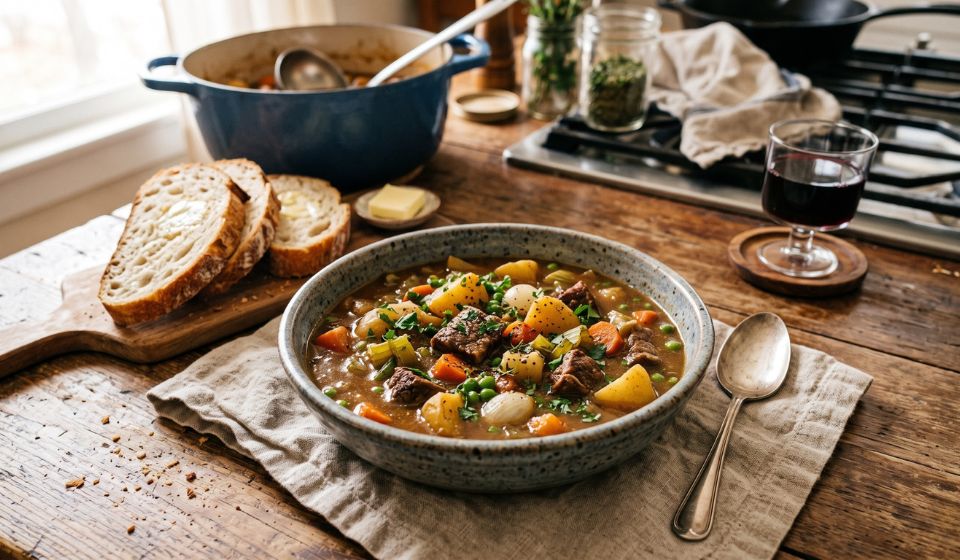
Ladle the hot beef stew into bowls and sprinkle with freshly chopped parsley.
Serve immediately with crusty French bread, sourdough, dinner rolls, biscuits, or another favorite side.
How to Get Extra-Tender Beef
Getting tender beef is mostly about choosing the right cut and cooking it correctly.
Use chuck roast. The connective tissue in chuck breaks down during slow cooking, producing tender, flavorful meat.
Don’t skip browning. While browning doesn’t make the beef tender by itself, it adds significant depth and richness.
Keep the heat low. A gentle simmer gives connective tissue time to break down without aggressively tightening the meat.
Give it enough time. If the beef still feels chewy after the recommended cooking time, keep simmering it. Depending on the size of the pieces and the cut of beef, it may need additional time to become fork-tender.
Should You Use Wine in Beef Stew?
Red wine is a traditional addition to many beef stew recipes because it adds acidity and depth to the sauce.
A dry red wine such as Cabernet Sauvignon, Merlot, or Pinot Noir can work well. You don’t need an expensive bottle; choose a wine you would be comfortable drinking.
However, wine isn’t essential. For a family-friendly or alcohol-free version, replace it with beef broth.
You can also add a small splash of balsamic vinegar toward the end of cooking for additional acidity and complexity.
How to Thicken Beef Stew
This recipe uses flour on the beef to help naturally thicken the sauce.
If your stew is still thinner than you’d like, there are several easy options.
Simmer uncovered: Remove the lid and let the stew simmer for 5–15 minutes. Some liquid will evaporate naturally.
Use a cornstarch slurry: Mix 1 tablespoon cornstarch with 2 tablespoons cold water. Stir it into the simmering stew and cook for several minutes until thickened.
Mash some potatoes: Gently mash a few cooked potato pieces directly into the stew. Their starch can naturally thicken the sauce.
Avoid adding dry flour directly to the hot liquid because it can create lumps.
Best Vegetables for Beef Stew
Classic beef stew usually includes potatoes and carrots, but you can easily customize the vegetables.
Good options include:
- Yukon Gold potatoes
- Russet potatoes
- Carrots
- Celery
- Mushrooms
- Pearl onions
- Frozen peas
- Green beans
- Parsnips
- Turnips
Yukon Gold potatoes are particularly useful because they hold their shape well while still becoming creamy and tender.
What to Serve With Beef Stew
Because beef stew already contains meat and vegetables, it can easily work as a complete meal. Still, a few sides make it even more enjoyable.
Crusty bread: Perfect for soaking up the rich sauce.
Dinner rolls: Soft rolls provide a comforting contrast to the hearty stew.
Mashed potatoes: For an extra-indulgent dinner, spoon the stew over creamy mashed potatoes.
Biscuits: Homemade or store-bought biscuits are excellent for soaking up the savory gravy.
Simple green salad: A fresh salad can balance the richness of the stew.
Can You Make Beef Stew Ahead of Time?
Absolutely. Beef stew is an excellent make-ahead meal.
After cooking, allow the stew to cool slightly before transferring it to an airtight container. Refrigerate it and enjoy it within 3–4 days.
When reheating, warm it gently in a saucepan over medium-low heat. Add a splash of beef broth if the sauce has become too thick in the refrigerator.
In fact, many people find that beef stew tastes even better the following day because the flavors have more time to blend.
Can You Freeze Beef Stew?
Yes, beef stew freezes well.
Allow the stew to cool completely, then transfer it to freezer-safe containers or heavy-duty freezer bags. Leave a little room for expansion.
Freeze for up to about 3 months for the best quality.
Thaw it overnight in the refrigerator before reheating. Warm it gently on the stovetop and add a little broth if needed.
Potatoes can sometimes change texture after freezing, so if you’re specifically preparing stew for the freezer, you may prefer to slightly undercook the potatoes or add freshly cooked potatoes when reheating.
Common Mistakes to Avoid
Crowding the Pot
Adding too much beef at once lowers the temperature and causes the meat to steam instead of brown.
Skipping the Browning Step
It may save a few minutes, but you’ll sacrifice a lot of flavor.
Boiling the Stew Too Hard
A rolling boil can make the beef tougher. Keep the stew at a gentle simmer.
Adding Vegetables Too Early
Carrots and potatoes can become mushy if they cook for the entire duration.
Not Seasoning in Layers
Seasoning the beef, aromatics, and broth throughout the cooking process creates a more balanced final dish.
Cutting the Beef Too Small
Small pieces can become overcooked and lose their texture. Aim for approximately 1½-inch chunks.
Easy Variations
Slow Cooker Beef Stew
Brown the beef and sauté the onions first, then transfer everything except the peas to a slow cooker. Cook on LOW for 7–8 hours or until the beef is tender. Add the peas during the final 15–20 minutes.
Instant Pot Beef Stew
Use the sauté function to brown the beef and cook the aromatics. Add the remaining ingredients, secure the lid, and cook under high pressure according to your appliance’s beef/stew settings. Allow for a natural pressure release before opening.
Mushroom Beef Stew
Add 8 ounces of sliced mushrooms with the carrots and potatoes for a richer, earthy flavor.
Spicy Beef Stew
Add a pinch of red pepper flakes or a small amount of smoked paprika for gentle heat.
Storage and Food Safety
Refrigerate leftover beef stew promptly in shallow airtight containers. Keep your refrigerator at 40°F or below, and use refrigerated leftovers within 3–4 days.
When reheating leftovers, heat the stew thoroughly until steaming hot throughout. Only reheat the amount you plan to eat rather than repeatedly reheating the entire batch.
Nutrition Information
The following nutrition information is an estimate and can vary depending on the exact ingredients and portion sizes.
| Nutrition | Per Serving |
|---|---|
| Calories | 465 kcal |
| Protein | 39 g |
| Carbohydrates | 38 g |
| Fat | 19 g |
| Saturated Fat | 6 g |
| Fiber | 6 g |
| Sugar | 8 g |
| Sodium | 720 mg |
Final Thoughts
This beef stew recipe is the kind of comforting dinner that rewards a little patience. Browning the beef, slowly cooking the aromatics, and allowing everything to simmer gently creates tender meat and a deeply savory sauce.
For the best results, use a well-marbled chuck roast, don’t overcrowd the pot when browning, and give the beef enough time to become fork-tender. Add the vegetables later so they remain hearty rather than mushy.
Serve your finished stew with warm crusty bread or fluffy biscuits, and you’ll have a satisfying homemade meal that’s perfect for a cozy family dinner, weekend gathering, or make-ahead meal.