
A staircase is often treated as nothing more than a practical connection between floors, but it can be so much more. Because staircases are frequently positioned near entryways, living rooms, or dining areas, they have the potential to become one of the most noticeable architectural features in a home.
With the right materials, lighting, railing, wall treatment, and under-stair design, even a basic staircase can become a beautiful focal point. The area underneath the stairs can also provide valuable storage, a compact workspace, a reading nook, a display area, or even a small indoor garden. Recent interior-design guidance increasingly treats these spaces as opportunities rather than leftover corners.
Whether you are designing a new home or refreshing an existing staircase, these staircase ideas can help you create a space that feels stylish, intentional, and functional.
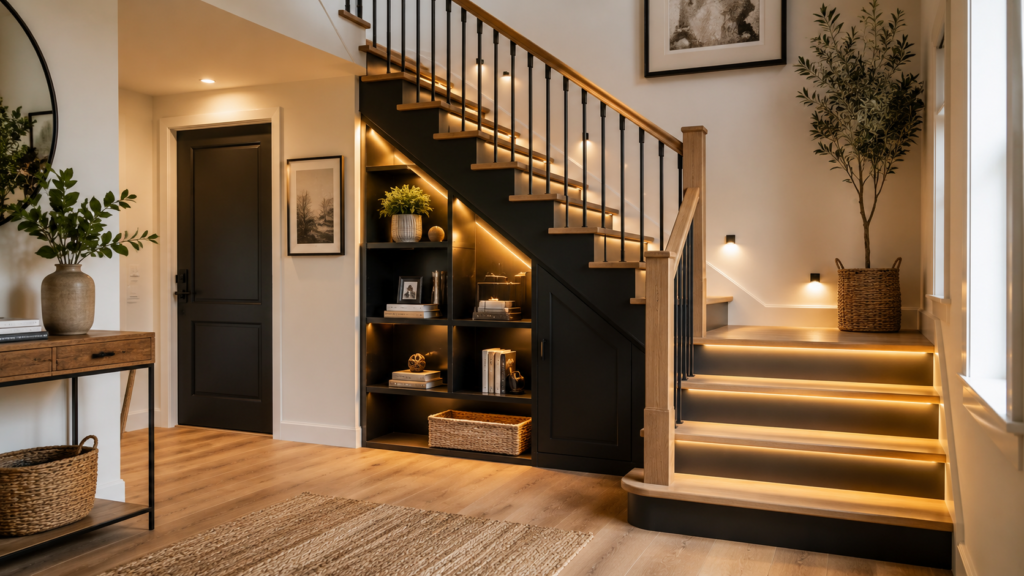
1. Create a Statement Staircase Wall
One of the easiest ways to transform a staircase is to make the surrounding wall part of the design.
Instead of leaving the wall completely plain, consider adding textured paint, wood paneling, fluted details, wallpaper, stone-look finishes, or decorative molding. The staircase wall provides a long vertical surface, making it ideal for creating visual interest without taking up floor space.
For a modern home, vertical wood slats can add warmth and texture. In a more traditional interior, wall molding or framed artwork can create an elegant appearance.
Keep the treatment connected to the rest of your home’s color palette so the staircase feels like part of the overall design rather than a separate feature.
2. Add Warm Staircase Lighting
Lighting can completely change the appearance of a staircase while also improving nighttime visibility.
LED strips beneath stair treads, recessed step lights, wall sconces, and illuminated handrails can create a subtle architectural glow. Warm lighting is particularly effective when you want the staircase to feel sophisticated and inviting.
For a dramatic double-height staircase, consider a sculptural pendant or cluster of hanging lights above the stairwell.
If you are installing new lighting, plan the electrical points before construction begins. Two-way switching at the top and bottom of the staircase is also useful for everyday convenience.
3. Turn the Space Under the Stairs Into Storage
The area beneath a staircase is one of the most valuable places to add hidden storage.
Custom cabinetry can transform the awkward triangular space into drawers, cupboards, shelves, or a combination of all three. Pull-out drawers are particularly useful because they allow you to access deeper sections that can otherwise become difficult to reach.
Depending on where your staircase is located, you can use the storage for shoes, coats, cleaning supplies, toys, luggage, books, or household essentials.
Closed cabinets are ideal when you want a clean, minimalist appearance, while a combination of open shelves and closed storage creates more visual variety.
4. Design a Stylish Reading Nook
If you do not need additional storage, the space beneath the stairs can become a cozy reading corner.
A built-in bench, comfortable cushion, small bookshelf, and wall light can create a charming retreat without requiring an entire room.
This works particularly well beneath staircases located in living rooms, hallways, or family spaces. The lower ceiling naturally creates an intimate atmosphere.
Use soft textiles, warm wood, and gentle lighting to make the nook feel comfortable rather than cramped.
5. Create a Compact Home Office
With more people working or studying from home, an under-stair workspace can be a practical way to use an otherwise overlooked area.
A slim built-in desk can fit beneath the taller section of the staircase, while floating shelves provide space for books and office supplies.
Choose a desk depth that allows comfortable use without obstructing circulation. Integrated cable management is also worth planning before the cabinetry is installed.
If the workspace is visible from the living room, use cabinetry and finishes that complement the surrounding interior.
Under-stair workspaces are particularly useful in smaller homes where creating a separate office is difficult.
6. Use Glass Railings for a Light, Open Look
Glass balustrades are an excellent choice when you want a staircase to feel modern and visually lightweight.
Clear glass allows light to travel through the space instead of creating a heavy visual barrier. This can be especially useful in smaller homes or rooms where maintaining an open feeling is important.
Pair glass with timber treads for warmth, or combine it with stone or minimalist finishes for a more contemporary appearance.
For safety, use appropriately specified architectural glass and professional installation. Staircase railings should always meet applicable local building and safety requirements.
7. Choose a Floating Staircase Design
Floating stairs can create a dramatic architectural effect because the individual treads appear to project from the wall or structure with minimal visible support.
Wooden floating treads can make a contemporary home feel warmer, while stone or composite finishes can produce a more minimalist look.
Open risers also allow more light to pass through the staircase, helping the surrounding room feel visually open. However, staircase geometry, structural support, guardrails, and local code requirements must be carefully considered before choosing this style.
A floating staircase is most effective when the rest of the room has a relatively clean design, allowing the staircase itself to become the focal point.
8. Add Open Shelving for Display
Not every staircase needs to be purely functional.
Open shelving beneath or beside the stairs can turn the area into a curated display for books, artwork, plants, ceramics, photographs, or decorative objects.
Keep the shelves relatively shallow and avoid filling every available space. A carefully edited collection will look much more sophisticated than an overcrowded arrangement.
Integrated LED lighting can highlight individual shelves and give the staircase a custom-built appearance.
9. Bring Nature Into the Staircase Area
An indoor garden can completely change an otherwise forgotten staircase corner.
If there is sufficient natural light, consider adding plants beneath the stairs or around the landing. Pebbles, natural stone, timber, and warm lighting can create a small biophilic feature.
For darker areas, select plants based on their actual light requirements or use suitable artificial greenery instead.
A pocket garden is especially effective beneath glass or open staircases because the plants remain visible from multiple angles. Architectural Digest India recently highlighted under-stair pocket gardens as one way to transform unused space into a visually striking feature.
10. Make the Railing a Design Statement
The railing can completely change the character of a staircase.
Simple vertical metal balusters provide a clean contemporary appearance, while horizontal or geometric designs can create a stronger architectural statement.
Wooden handrails add warmth and work beautifully with neutral interiors. Brass or dark metal details can create a more luxurious look.
For a minimalist staircase, keep the railing slim and understated. For a traditional home, consider decorative profiles or more detailed balustrades.
The best railing design should balance visual appeal with comfortable grip, appropriate height, spacing, and safety.
11. Use Wood to Add Warmth
Wood is one of the most versatile materials for staircase design.
Oak, walnut, ash, and other timber finishes can soften modern architecture and create a welcoming transition between floors.
You can use wood for the treads, handrail, wall paneling, cabinetry, or even decorative ceiling details around the staircase.
For a cohesive interior, repeat the same or complementary wood tone elsewhere in the home. A wooden staircase can look especially beautiful when paired with white walls, natural stone, soft beige furnishings, or black metal accents.
12. Try a Bold Stair Runner
If you already have a traditional staircase and want an easier update, a stair runner can make a significant difference.
A neutral runner can create a refined, timeless appearance, while a patterned design adds personality.
Choose a durable material appropriate for the level of foot traffic the staircase receives. A runner can also add softness and traction, although professional installation is important to ensure it remains securely fitted.
For a classic look, consider subtle stripes or geometric patterns. For a contemporary home, a simple solid-color runner can create a clean visual line.
13. Turn the Landing Into a Gallery
Do not forget the space at the top and bottom of the stairs.
A staircase landing can become a small gallery displaying artwork, family photographs, mirrors, or sculptural pieces.
Create a consistent arrangement rather than randomly placing frames along the wall. A series of similarly sized frames can produce a sophisticated appearance, while one oversized artwork can create a dramatic focal point.
Lighting is important here too. Picture lights or directional wall lighting can draw attention to the artwork after dark.
14. Use Mirrors to Brighten the Staircase
A staircase can sometimes be one of the darker areas of a home, particularly when it is positioned away from windows.
Mirrors can help reflect available light and create a greater sense of depth. A large statement mirror at the landing can also become a decorative feature.
For smaller staircases, consider a series of small mirrors or one tall vertical mirror that emphasizes the height of the space.
Pair reflective surfaces with warm lighting to prevent the staircase from feeling cold or overly stark.
15. Add a Small Powder Room Beneath the Stairs
If the staircase is located near an entrance or living area, the available space may be large enough for a compact powder room.
This can be a highly practical use of the space, particularly in homes where an additional bathroom is needed.
Because powder rooms are small, they also offer an opportunity to experiment with bolder finishes. A dramatic wallpaper, patterned tile, statement mirror, or unusual vanity can create a memorable space.
Plumbing, ventilation, headroom, access, and local building requirements should be evaluated by a qualified professional before pursuing this option.
16. Choose a Cohesive Material Palette
The staircase should complement the interior around it.
Instead of selecting every material independently, create a simple palette of two or three primary finishes. For example, combine natural oak, white walls, and black metal; or marble-effect stone, warm beige, and brushed brass.
Repeating materials elsewhere in the home helps the staircase feel intentional.
A cohesive material palette is especially important when the staircase is visible from several rooms.
17. Prioritize Safety Without Sacrificing Style
A beautiful staircase still needs to be comfortable and safe.
Pay attention to appropriate tread depth, riser height, handrail placement, lighting, surface traction, and guardrail design. Families with children or older adults may need additional safety considerations.
Avoid extremely slippery finishes or designs that make individual steps difficult to distinguish.
Good staircase design combines aesthetics with everyday usability. Design guidance for Indian homes similarly emphasizes comfortable dimensions, non-slip finishes, appropriate railings, and adequate lighting.
How to Make a Staircase a Focal Point
The easiest way to make a staircase stand out is to give it one clear design feature.
That might be a sculptural railing, dramatic pendant light, statement wall, beautiful timber treads, patterned runner, built-in shelving, or carefully illuminated under-stair storage.
Avoid combining too many competing features. If your staircase already has striking woodwork, keep the wall treatment simple. If the wall has dramatic stone or wallpaper, choose a more understated railing.
The goal is to make the staircase feel designed rather than decorated.
Final Thoughts
A staircase can be one of the most overlooked opportunities in home design, but it can also become one of the most memorable.
From built-in storage and compact workspaces to statement railings, warm lighting, gallery walls, indoor gardens, and beautiful materials, there are countless ways to transform this everyday architectural feature.
The most successful staircase ideas combine style, functionality, safety, and thoughtful use of space. Rather than treating the area beneath and around the stairs as leftover space, consider how it can contribute to the way your entire home looks and works.
With the right design choices, even a simple staircase can become a beautiful focal point that adds character, storage, and value to your interior.