
Color-drenched rooms are one of the most striking ways to make a home feel intentional, stylish, and full of personality. Instead of using one color only on the walls, color drenching carries the same or closely related shade across the walls, ceiling, trim, doors, and sometimes built-ins. The result is an immersive room where the color becomes part of the architecture rather than simply a backdrop.
From rich emerald green and deep navy to warm terracotta, soft blush, chocolate brown, and sophisticated blue-gray, there are countless ways to make this decorating technique work. It can make a large room feel cozier, give a small space more visual continuity, and create a memorable backdrop for furniture and artwork.
If you’re ready to move beyond plain white walls, these color-drenched room ideas will help you create a bold and beautiful home without making the space feel chaotic.
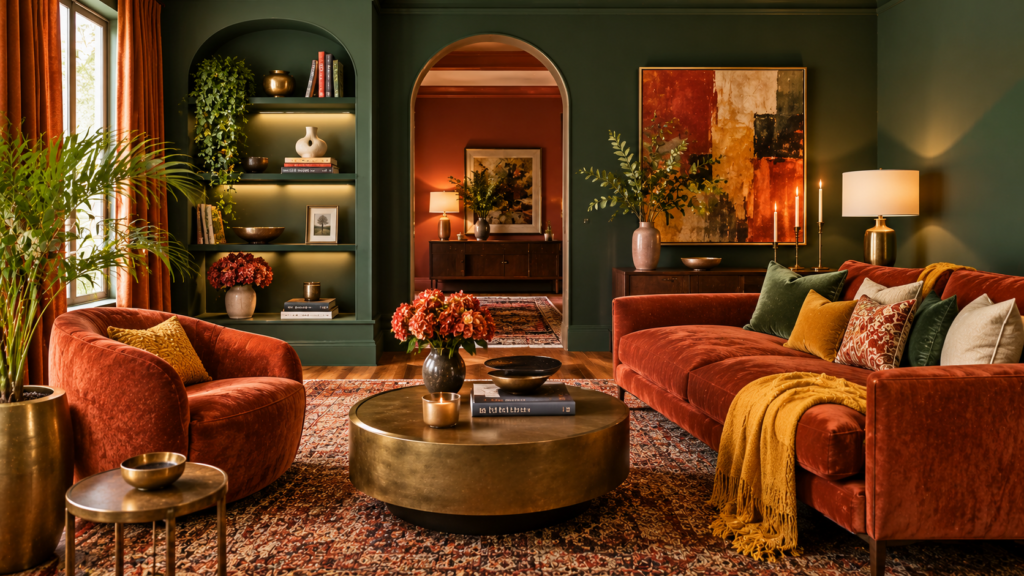
What Is Color Drenching?
Color drenching is an interior design technique where one color or a closely related range of shades is used throughout an entire room. Walls, ceiling, trim, doors, moldings, and sometimes cabinetry or built-in furniture can all receive the same color treatment.
Unlike a traditional accent wall, color drenching eliminates many of the visual breaks between architectural surfaces. The result is a more cohesive, enveloping appearance.
The technique can feel dramatic when you use a saturated jewel tone, or soft and sophisticated when you choose a muted neutral.
One of the biggest advantages is that the eye moves more smoothly around the room. Matching the ceiling and walls can reduce strong visual interruptions and can sometimes make a room feel more unified and even more spacious.
1. Create a Dramatic Navy Blue Living Room
Navy is an excellent choice if you want your living room to feel sophisticated and slightly dramatic.
Paint the walls, ceiling, trim, and doors in a rich navy shade. Then balance the intensity with warm wood furniture, cream upholstery, brass accents, and soft textiles.
A large neutral rug can ground the room while allowing the blue walls to remain the star.
For an elegant finish, add oversized artwork with lighter tones and warm ambient lighting. The contrast will keep the room from feeling too dark.
2. Try an Earthy Green Color-Drenched Bedroom
Green works beautifully in bedrooms because it connects the room with nature while creating a cozy atmosphere.
Consider shades such as forest green, olive, moss, or deep sage. Carry the color across the walls, ceiling, trim, and doors for a fully immersive effect.
Layer the room with natural wood, linen bedding, woven baskets, and cream-colored accessories.
For a more luxurious bedroom, introduce velvet furniture, antique brass lighting, or a sculptural chandelier.
3. Make a Small Powder Room Bold
A powder room is one of the easiest places to experiment with color drenching because its small size makes a strong color feel intentional rather than overwhelming.
Try deep burgundy, plum, charcoal, emerald, or chocolate brown.
Paint the walls and ceiling in the same shade and coordinate the trim and door. Then introduce a contrasting mirror, decorative sconces, and metallic hardware.
Because powder rooms are typically used for shorter periods, they’re also a great place to experiment with a color you might not want throughout a larger living space.
4. Warm Up Your Home With Terracotta
Terracotta creates a warm, earthy appearance that works particularly well with natural materials.
Use a muted terracotta or clay shade on the walls, ceiling, trim, and doors.
Then add:
- Natural wood furniture
- Cream upholstery
- Woven baskets
- Linen curtains
- Ceramic accessories
- Handmade-looking pottery
- Green plants
This combination creates a relaxed Mediterranean-inspired atmosphere without requiring excessive decoration.
5. Go Sophisticated With Chocolate Brown
Brown has become a powerful choice for interiors that want warmth and depth.
A chocolate-brown color-drenched room can feel sophisticated, cozy, and surprisingly luxurious.
Pair it with lighter furniture and warm metallic details. Cream boucle chairs, natural oak, ivory textiles, and aged brass lighting can create beautiful contrast.
Brown also works particularly well in dining rooms, libraries, home offices, and bedrooms where you want an intimate atmosphere.
6. Create a Soft Blush Retreat
Color drenching doesn’t have to mean extremely dark or saturated colors.
A muted blush pink can create a soft and elegant room without feeling overly sweet.
Use the same blush family across walls, ceiling, trim, and doors. Then introduce cream, warm beige, light wood, and subtle brass accents.
This approach works especially well in bedrooms, dressing rooms, reading corners, and feminine home offices.
The key is choosing a sophisticated dusty or muted pink instead of a highly bright shade.
7. Use Deep Blue in the Dining Room
Dining rooms are perfect for bold color because they naturally benefit from an intimate atmosphere.
A deep blue color-drenched dining room can feel elegant and dramatic, particularly when paired with a wooden dining table and sculptural lighting.
Keep the table styling relatively simple. A vase of greenery, neutral tableware, and a few candles can provide enough contrast.
If your dining room has architectural molding, painting it the same blue can make the details feel more integrated and sophisticated.
8. Create a Moody Home Office
A home office can benefit from a deeper, enveloping color.
Consider charcoal, deep green, navy, or warm brown for the entire room.
Color drenching can help the office feel separate from the rest of the house, especially when the room is located near a busy living area.
Add a wooden desk, comfortable chair, warm desk lamp, framed artwork, and a few shelves.
Keep the accessories relatively restrained so the room feels sophisticated rather than visually cluttered.
9. Try a Soft Neutral Color Drench
If bold colors feel intimidating, start with a warm neutral.
Soft beige, taupe, greige, warm white, and creamy ivory can all create a subtle color-drenched effect.
This approach is especially useful if you want a timeless home rather than a dramatic trend-focused look.
Use slightly different textures to prevent the room from looking flat. Combine linen, wood, wool, boucle, ceramic, and woven materials.
A monochromatic room becomes much more interesting when the materials have noticeable differences in texture and finish.
10. Color Drench the Ceiling Too
The ceiling is one of the most important elements of a true color-drenched room.
Leaving the ceiling white can create a strong visual break. Painting it the same color as the walls allows the color to continue uninterrupted across the room.
This can make architectural boundaries less obvious and create a more enveloping appearance.
If you’re nervous about painting your ceiling a strong color, begin with a lighter shade such as warm beige, muted sage, dusty blue, or creamy white.
11. Match the Trim and Doors
For the most seamless color-drenched effect, don’t stop at the walls and ceiling.
Paint the baseboards, window trim, door frames, and doors in the same color family.
This approach removes the traditional contrast between colorful walls and white architectural details.
It can also make doors and trim feel more integrated into the overall room rather than appearing as separate elements.
For a subtle variation, use the same color in different finishes. A matte or low-sheen wall finish can be paired with a slightly more durable finish on trim and doors while maintaining the same visual color.
12. Add Furniture in Similar Shades
You don’t have to stop color drenching at the architecture.
For a more dramatic monochromatic interior, bring the chosen color into your furniture and accessories.
For example, a green room could include a green sofa, olive cushions, botanical artwork, and dark green ceramics.
The trick is to use different tones and textures rather than trying to make every item an identical shade.
This creates depth while maintaining the cohesive effect.
13. Balance Bold Color With Natural Materials
A room covered in a strong color needs visual balance.
Natural materials are particularly effective because they soften saturated shades without competing with them.
Try combining bold paint with:
- Light oak
- Natural stone
- Rattan
- Linen
- Wool
- Woven fibers
- Ceramic
- Aged brass
For example, deep green walls paired with pale oak furniture can feel sophisticated and organic rather than heavy.
14. Use Artwork to Break Up the Color
Artwork can provide an important visual pause in a color-drenched room.
A large neutral painting can stand out beautifully against a dark wall. Alternatively, colorful artwork can create an intentionally layered look.
Oversized artwork is particularly effective because it provides contrast without requiring lots of small decorative objects.
Choose frames that complement the room. Natural wood works well in earthy spaces, while brass or black frames can create a more sophisticated appearance.
How to Make Color Drenching Work Without Feeling Overwhelming
The secret to successful color drenching is balance.
Start by choosing one dominant color and then introduce variations through furniture, materials, lighting, and accessories.
If you’re using a very saturated shade, keep some furnishings lighter. If you’re using a soft neutral, add stronger textures or darker accents.
You can also experiment with a partial color drench if you’re not ready to cover every surface. For example, use the same shade on the walls and trim while keeping the ceiling a complementary light tone.
The important thing is that the color feels intentional throughout the space.
Final Thoughts
Color-drenched rooms are a powerful way to create bold, cohesive, and memorable interiors. By extending one color across the walls, ceiling, trim, doors, and sometimes furniture, you can turn an ordinary room into an immersive design statement.
Whether you choose deep navy, forest green, warm terracotta, chocolate brown, dusty pink, or a soft neutral, the best results come from considering natural light, texture, furniture, and overall balance.