Biophilic design is all about creating a stronger connection between your home and the natural world. It goes far beyond placing a few houseplants in the corner. Natural light, greenery, wood, stone, organic textures, fresh air, nature-inspired colors, outdoor views, and natural patterns can all help create a home that feels warmer, calmer, and more connected to nature.
The best part is that you don’t need a huge house, a garden, or an expensive renovation to bring biophilic interior design into your space. Even small changes—such as replacing heavy curtains with light-filtering ones, adding a statement plant, introducing wooden accents, or creating a cozy nature-inspired corner—can make a noticeable difference in how a room looks and feels.
What Is Biophilic Design?
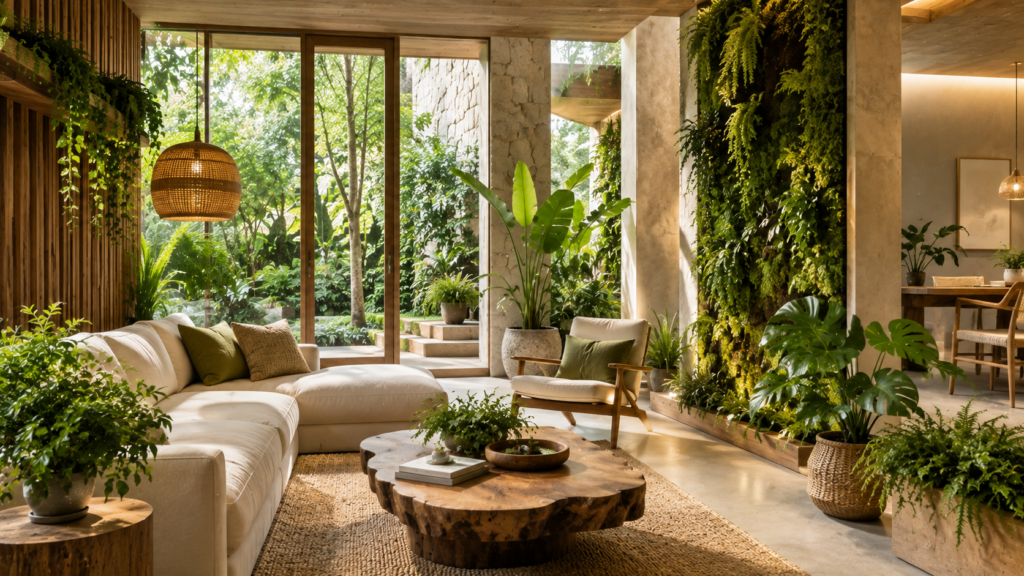
Biophilic design is an interior design approach that incorporates elements of nature into the built environment. It can include direct connections to nature, such as plants, daylight, fresh air, water, and outdoor views, as well as indirect connections through natural materials, organic shapes, botanical patterns, and earthy colors.
Instead of making your home feel completely separate from the outdoors, biophilic design creates visual and sensory connections between the two.
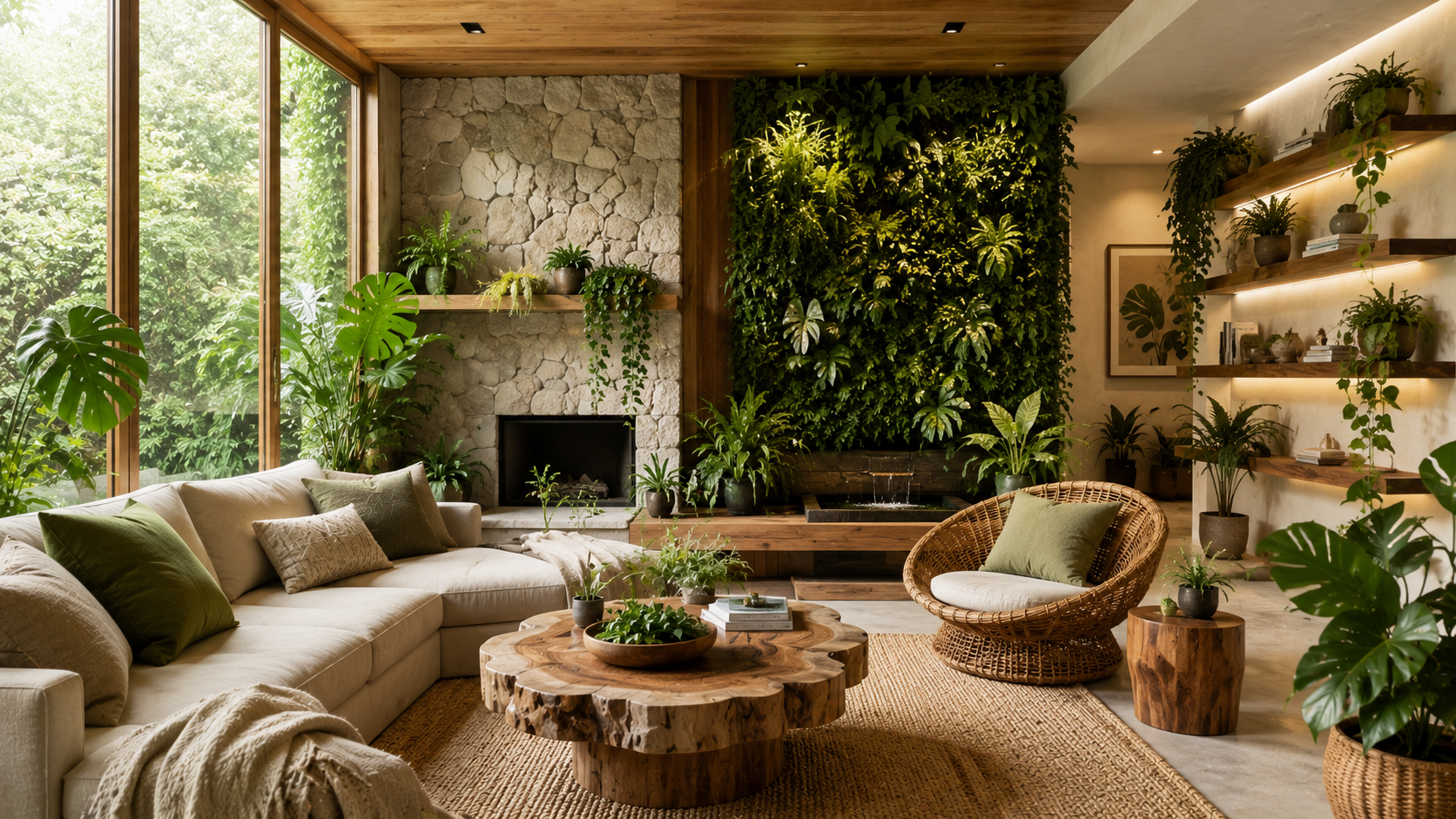
For example, a living room with large windows overlooking trees, wooden furniture, linen curtains, stone accessories, and several carefully placed plants can feel much more connected to nature than a room filled entirely with synthetic finishes.
1. Bring in Plenty of Natural Light
Natural light is one of the simplest and most effective ways to introduce a biophilic feeling into your home.
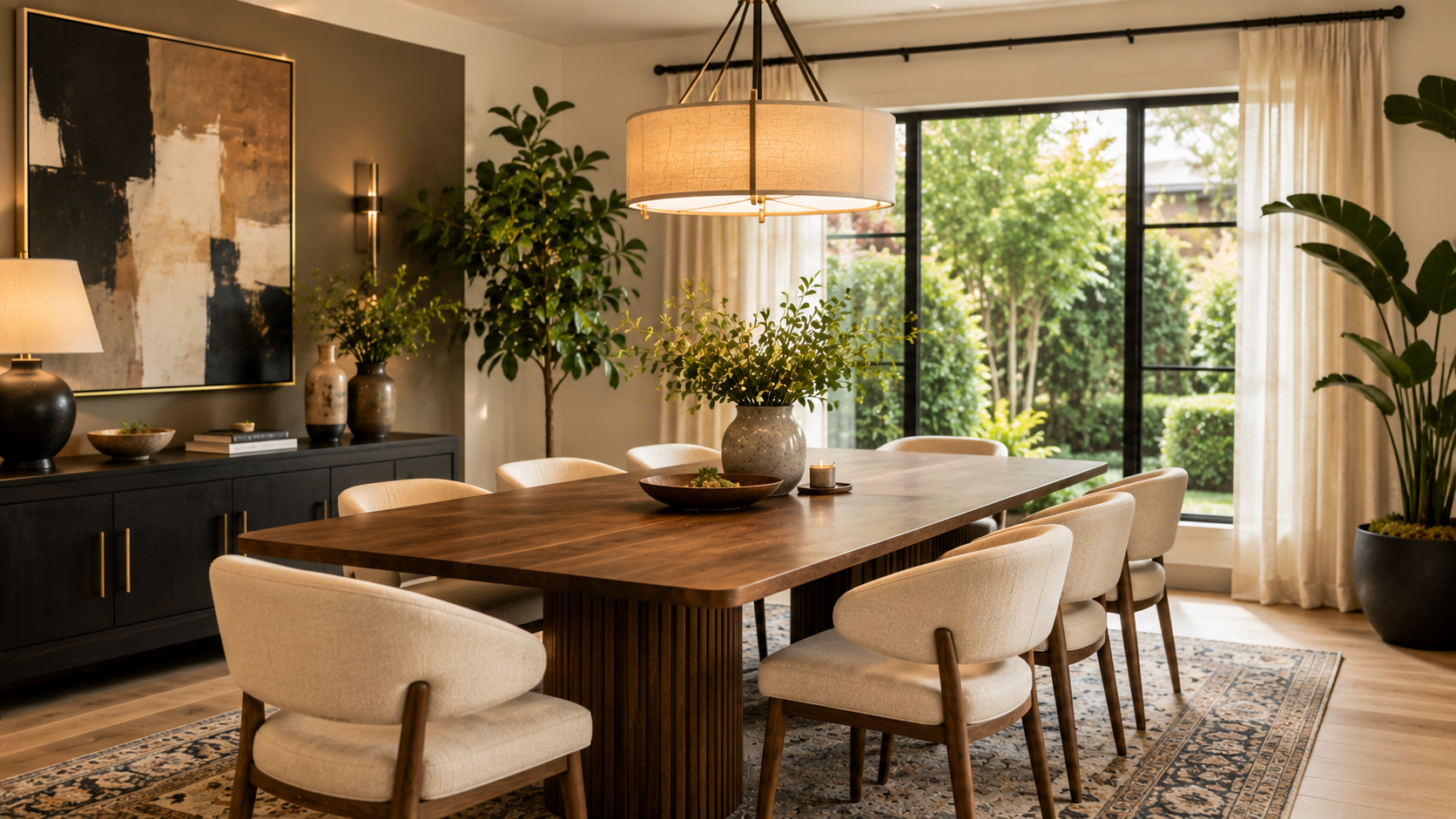
Start by keeping windows as open and unobstructed as possible. Replace heavy curtains with sheer or lightweight linen-style curtains that allow daylight to filter through while still providing some privacy.
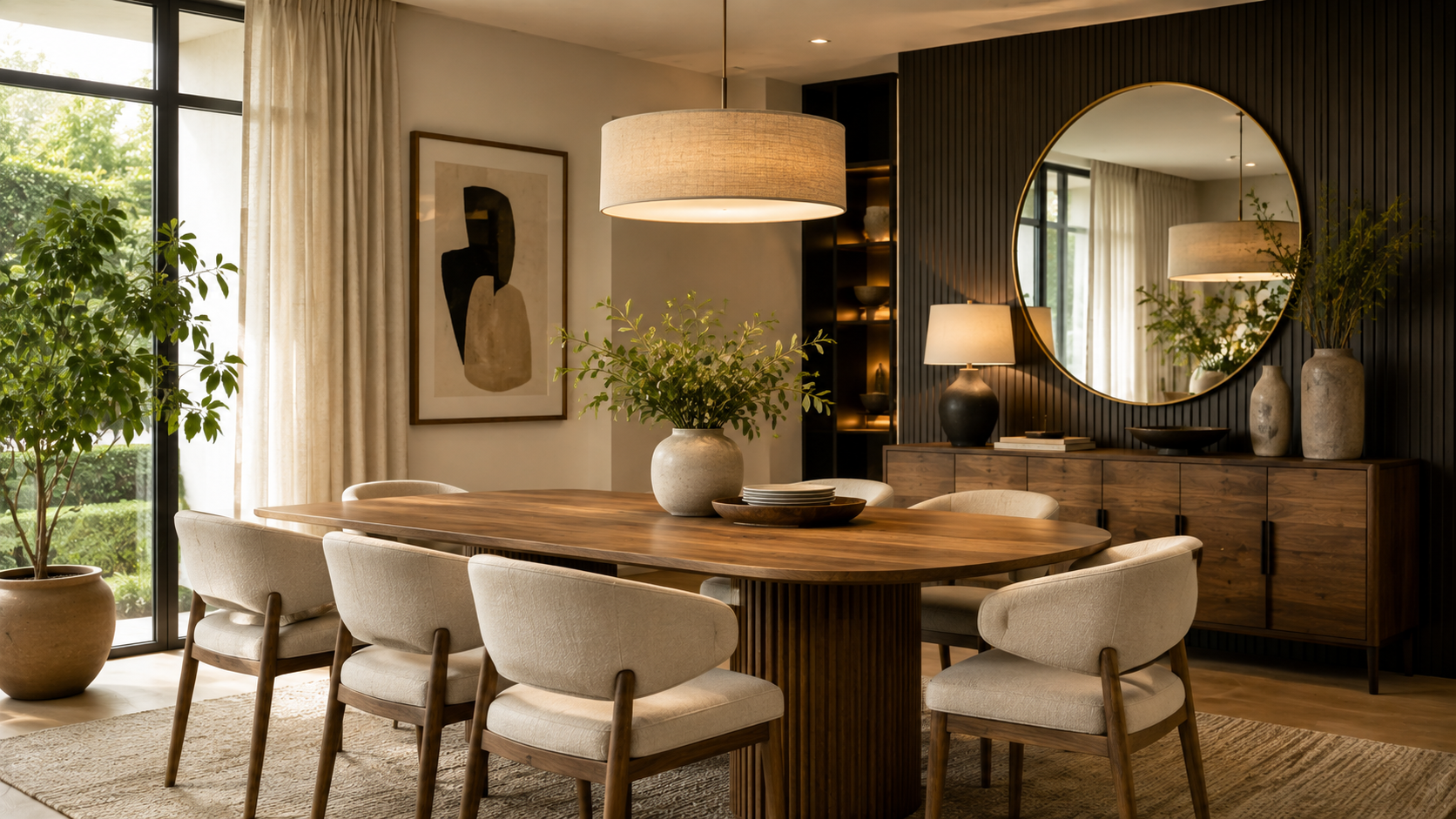
You can also position mirrors opposite or near windows to reflect daylight deeper into the room.
When arranging furniture, avoid blocking your best windows with tall cabinets or oversized furniture. Let your main seating areas benefit from the available outdoor views and daylight.
Natural light is a foundational element of biophilic interiors because it visually connects indoor spaces with changing outdoor conditions throughout the day.
2. Create a Layered Indoor Plant Collection
Plants are probably the most recognizable feature of biophilic home decor, but you don’t need to turn your home into a jungle.
Instead, create layers of greenery at different heights.
Try combining:
- A tall floor plant
- Medium-sized plants on furniture
- Small plants on shelves
- Hanging plants
- Trailing vines
- Herbs near a kitchen window
Plants such as pothos, snake plants, peace lilies, rubber plants, and areca palms are commonly used in home interiors, although the best choice always depends on your home’s light, temperature, humidity, and how much care you can provide.
Group plants naturally rather than spacing them perfectly apart. Different heights and leaf shapes can create a more organic appearance.
3. Use Natural Wood Throughout the Home
Wood instantly adds warmth and an organic quality to an interior.
You don’t have to install expensive hardwood floors or completely redesign your kitchen. Small additions can work just as well.
Consider:
- Wooden coffee tables
- Oak or walnut shelves
- Wood-framed mirrors
- Bamboo furniture
- Wooden wall panels
- Cane cabinets
- Timber stools
- Natural wood picture frames
Whenever possible, allow the grain and natural variation of the material to remain visible.
Natural wood is frequently recommended in biophilic interiors because its texture and visual character create an indirect connection to nature.
4. Add Stone, Clay, and Other Organic Materials
Biophilic design isn’t only about greenery.
Natural materials such as stone, clay, terracotta, rattan, bamboo, jute, linen, and cotton can add subtle connections to the outdoors.
For example, a living room could combine a wooden coffee table with a stone tray, jute rug, linen cushions, and handmade ceramic accessories.
In a kitchen, terracotta planters and wooden cutting boards can bring natural texture into an otherwise sleek space.
These materials also work particularly well with neutral and earthy color palettes.
5. Use Earthy Colors Inspired by Nature
A nature-inspired color palette can transform a room without adding a single plant.
Think about colors you would naturally find outdoors:
- Sage green
- Olive
- Moss
- Sand
- Warm beige
- Terracotta
- Clay
- Soft brown
- Stone gray
- Muted blue
You don’t have to paint every wall green. Instead, use nature-inspired shades through cushions, artwork, rugs, curtains, furniture, or one accent wall.
For a sophisticated look, combine a warm neutral foundation with two or three muted natural colors.
For example, cream + olive green + warm wood creates a calm and timeless combination.
6. Design Around Outdoor Views
If your home has a view of trees, plants, a garden, balcony, courtyard, or even an open sky, make the most of it.
Arrange your most frequently used seating so you can see outside comfortably.
Keep window areas relatively uncluttered and choose window treatments that don’t completely hide the view.
If you’re renovating, larger windows, glass doors, or carefully positioned openings can strengthen the connection between indoor and outdoor spaces. Biophilic design guidance commonly emphasizes views of greenery and landscape as an important part of connecting interiors with nature.
Even a small balcony can become an important visual extension of your living room.
7. Introduce Botanical Prints and Nature-Inspired Art
What if you don’t have enough space for lots of plants?
Bring nature into your walls instead.
Botanical wallpaper, leaf-inspired artwork, landscape photography, floral prints, and nature-inspired murals can create an indirect connection with the outdoors.
For a modern home, avoid making every wall botanical. One large botanical print above a sofa or bed can create enough visual impact.
You can also choose abstract artwork inspired by:
- Leaves
- Water
- Mountains
- Clouds
- Sand
- Forests
- Flowers
The result can feel natural without becoming overly themed.
8. Add Natural Textures for a More Organic Feel
Nature isn’t perfectly smooth, symmetrical, or uniform. Introducing different textures can make your interior feel more organic.
Try layering:
Linen + wool + jute + wood + ceramic + greenery
For example, a bedroom could feature linen bedding, a woven rug, wooden bedside tables, a ceramic lamp, and a large leafy plant.
This combination creates visual depth without relying on lots of color.
Natural textures are especially useful in minimalist homes where a simple color palette might otherwise feel flat.
9. Create a Small Indoor Garden or Green Corner
You don’t need an entire room for plants.
Choose one underused corner and turn it into a dedicated nature-inspired zone.
A simple setup could include:
- One tall plant
- Two smaller plants
- A wooden stool
- A woven basket
- A small ceramic planter
- A natural-fiber rug
This works beautifully beside a window, near a reading chair, in an entryway, or in an empty living-room corner.
If floor space is limited, consider vertical gardening or wall-mounted planters. Living walls and vertical gardens are increasingly being used as space-efficient ways to bring greenery into compact interiors.
10. Bring Nature Into the Bedroom
The bedroom is one of the best spaces for a calm biophilic approach.
Start with soft natural colors and breathable-looking fabrics. Add wooden furniture, a few plants, natural textures, and soft lighting.
Instead of overcrowding the room with greenery, choose one or two plants that suit the available light and maintenance level.
A bedroom with linen bedding + warm wood + soft beige walls + greenery + natural daylight can feel relaxed and inviting without requiring a dramatic makeover.
Keep the styling simple so the room still feels restful.
11. Make Your Kitchen Feel More Natural
The kitchen is often dominated by hard surfaces, appliances, and cabinetry, so natural materials can make a particularly strong impact.
Consider:
- Wooden cutting boards
- Open wood shelving
- Terracotta pots
- Herb planters
- Bamboo accessories
- Natural stone countertops
- Woven storage baskets
A small herb garden near a bright kitchen window is especially practical because it adds greenery while also giving you fresh ingredients.
Even if your kitchen has modern cabinetry, adding warm wood and plants can soften the overall appearance.
12. Use Organic Shapes Instead of Perfect Geometry
Biophilic design can also influence the shape of your furniture and accessories.
Instead of filling every room with sharp rectangular forms, introduce a few curved or irregular pieces.
Try:
- Round coffee tables
- Arched mirrors
- Curved chairs
- Organic-shaped rugs
- Rounded ceramic vases
- Sculptural lighting
These shapes can subtly echo forms found in nature and make a contemporary room feel softer.
This works particularly well when combined with natural materials and earthy colors.
13. Let Fresh Air Become Part of the Design
Biophilic design isn’t only visual.
When weather and indoor conditions allow, opening windows and allowing fresh air into the home can strengthen the connection between your interior and outdoor environment.
If you have a balcony, courtyard, or garden, think of it as an extension of the living space.
Use comfortable outdoor seating, plants, natural materials, and soft lighting to create a transition between inside and outside.
14. Create a Cozy Nature-Inspired Reading Nook
A small reading corner can become one of the most beautiful biophilic features in your home.
Place a comfortable chair beside a window and add a small wooden side table, a soft throw, a floor lamp, and one leafy plant.
If possible, orient the chair toward a garden, balcony, trees, or open sky.
This creates a refuge-and-prospect effect—a cozy personal space that feels sheltered while maintaining a connection to a wider view, an idea associated with biophilic spatial design.
How to Create Biophilic Design on a Budget
You don’t need an expensive renovation to achieve the look.
Start with the easiest changes:
Under $25
- Small houseplants
- Terracotta pots
- Botanical prints
- Natural baskets
- Wooden trays
Around $50–$100
- A larger floor plant
- Jute or woven rug
- Linen-look curtains
- Wooden side table
- Handmade ceramic pieces
Bigger Investments
- Wood flooring
- Natural stone surfaces
- Larger windows
- Glass doors
- Built-in planters
- Vertical gardens
The smartest approach is to improve one layer at a time rather than trying to transform the entire home at once.
Common Biophilic Design Mistakes to Avoid
Biophilic design should feel natural, not forced.
Avoid filling every available surface with plants. Too much greenery can make a room difficult to maintain and visually cluttered.
Also avoid using artificial materials that simply imitate nature without adding meaningful texture or character.
Another common mistake is choosing plants based only on appearance. A beautiful plant that cannot survive in your home’s lighting conditions will quickly become more work than enjoyment.
Instead, select plants based on light, humidity, available space, and maintenance requirements. Current biophilic design guidance also emphasizes choosing greenery that fits the actual conditions of the space rather than simply adding plants for decoration.
Final Thoughts
The best biophilic design ideas don’t make your home look like a greenhouse. They create a subtle and thoughtful relationship between your interior and the natural world.
Start with natural light, then introduce greenery, wood, stone, organic textures, earthy colors, and nature-inspired artwork. If you have access to outdoor views, make them part of your interior design rather than hiding them behind heavy curtains.
Most importantly, choose natural elements that work with your lifestyle. A few healthy plants, beautiful wood grain, soft linen, natural light, and a comfortable connection to the outdoors can be more effective than filling an entire room with decorative greenery.






Leave a Reply