
Choosing the perfect color combo for a kids’ bedroom can completely change the way the space looks and feels. The right colors can make a small room feel brighter, create a cozy environment for bedtime, or give children a fun space where they can play, read, and express their personality. While traditional kids’ rooms often rely on bright primary colors, today’s bedrooms are moving toward more sophisticated combinations that can grow with your child.
One particularly versatile approach is black and white paired with playful accent colors. Black and white create a timeless foundation, while colorful accessories, artwork, bedding, rugs, and toys bring energy into the room. Design sources also highlight monochrome black-and-white as a flexible choice for children’s bedrooms, especially when balanced with warmer or brighter details.
Whether you’re designing a toddler’s room, a shared kids’ bedroom, or a stylish space for a preteen, these kids’ bedroom color combination ideas can help you create a room that looks beautiful while still feeling playful and personal.
1. Black and White With Warm Wood
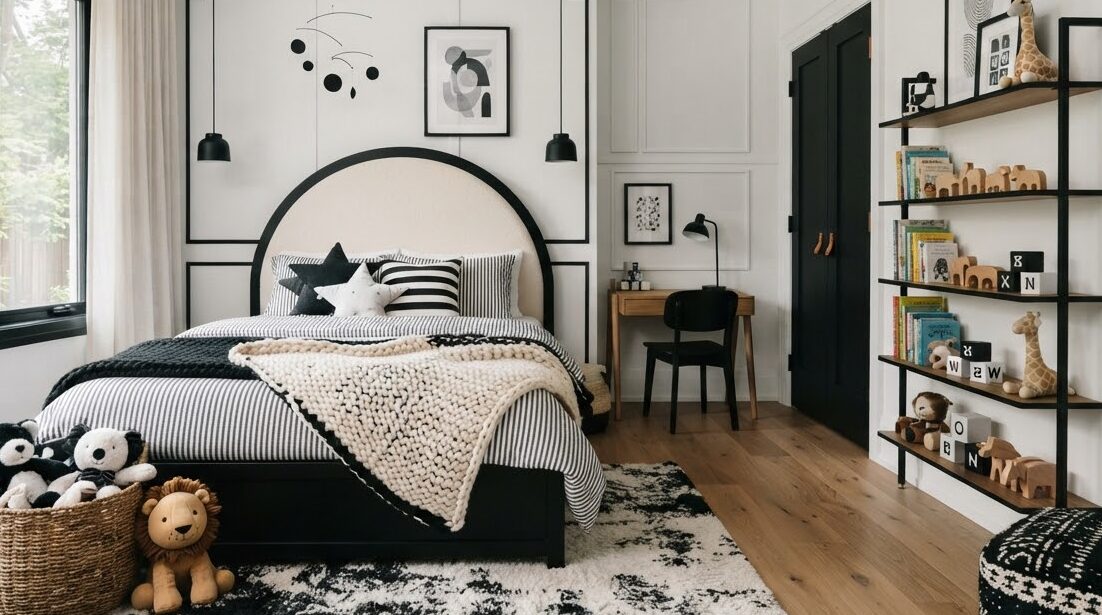
Black and white can sometimes feel too formal for a child’s bedroom, but adding natural wood immediately makes the combination warmer.
Use soft white walls as the main background and introduce black through furniture, picture frames, lighting, or shelving. Then add a wooden bed, nightstand, flooring, or storage baskets.
The natural texture of wood softens the contrast and gives the room a cozy, modern look.
This combination is especially useful if you want a kids’ bedroom that can transition easily from childhood to the teenage years.
2. Black, White, and Mustard Yellow
If you want a monochrome room with a cheerful personality, mustard yellow is an excellent accent color.
Keep most of the room white, add black details for contrast, and use mustard yellow in:
- Throw pillows
- Bedding
- Curtains
- Wall art
- Rugs
- Desk accessories
- Decorative storage
The yellow adds warmth without requiring an entire yellow wall. This makes it easy to update the room when your child’s preferences change.
3. Soft Green and White
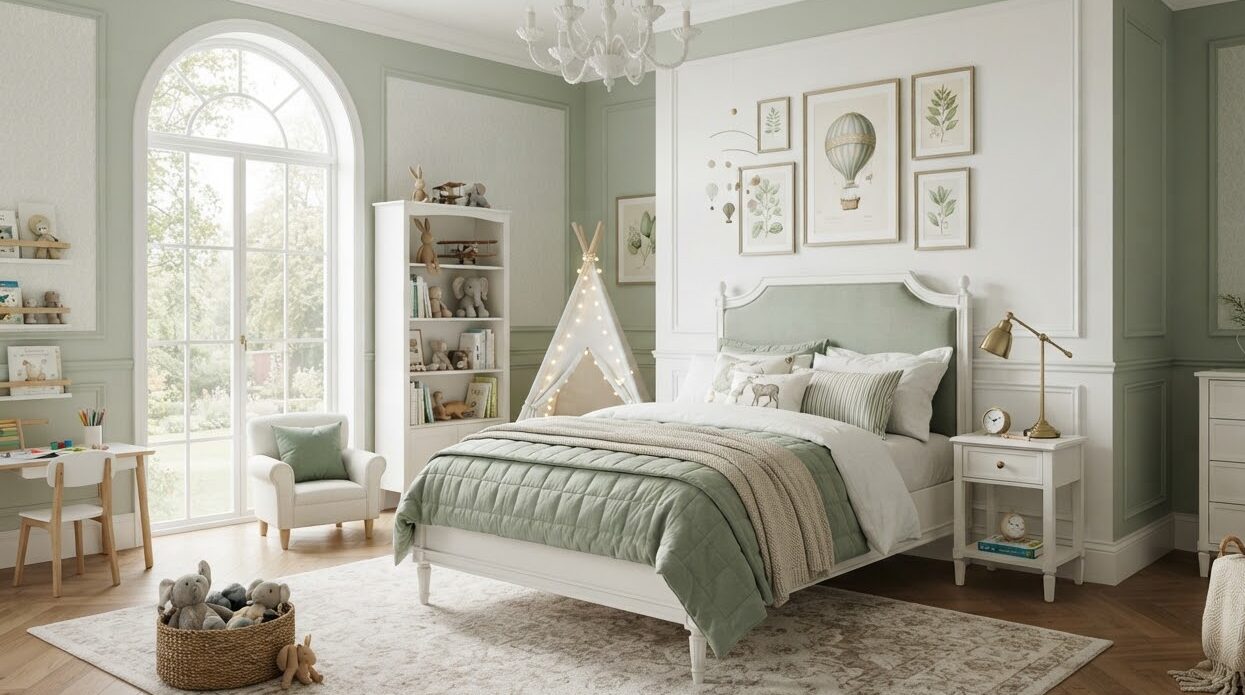
Green and white create a fresh, nature-inspired kids’ bedroom that feels calming without looking boring.
Try a soft sage green on one wall with warm white on the remaining walls. Natural wood furniture, woven baskets, and leafy artwork can reinforce the nature-inspired theme.
Current kids’ room design ideas increasingly favor muted, nature-based shades and warm neutrals because they offer flexibility while avoiding an overly stimulating appearance.
4. Navy Blue and Warm White
Navy blue is another timeless choice for a child’s bedroom.
Instead of covering every wall with dark blue, consider using navy as an accent. A navy upholstered headboard, striped bedding, curtains, or built-in storage can provide depth while keeping the room bright.
Pair it with warm white rather than an extremely cool white for a softer appearance.
Add light wood furniture and a few playful accessories to keep the bedroom youthful.
5. Blush Pink and Cream
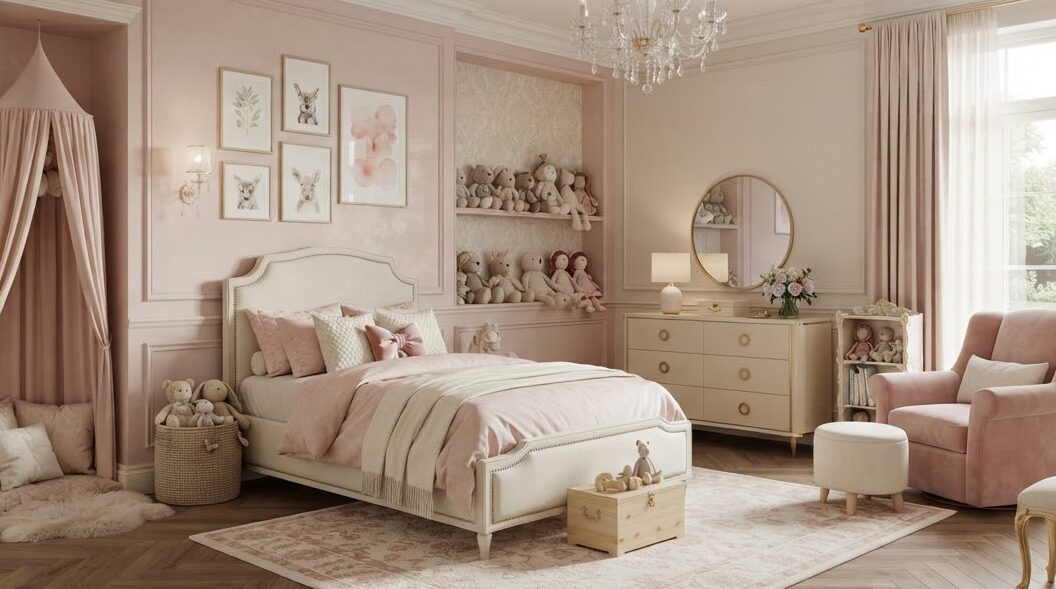
For a soft and elegant kids’ bedroom, blush pink and cream make a beautiful combination.
Cream creates a warm foundation while blush pink introduces personality without overwhelming the room.
You can use blush pink through:
- Bedding
- Cushions
- Artwork
- Curtains
- Small furniture
- Decorative accessories
The advantage of using a muted pink instead of a very bright shade is that the room can remain stylish as your child grows.
6. Terracotta, Beige, and White
Terracotta is a fantastic choice for parents who want something warmer and more unexpected.
Combine beige walls with white furniture and terracotta accents. A terracotta rug, bedding pattern, wall art, or decorative lamp can add warmth and character.
This palette works particularly well with natural materials such as rattan, wood, cotton, and linen.
7. Lavender and Soft Gray
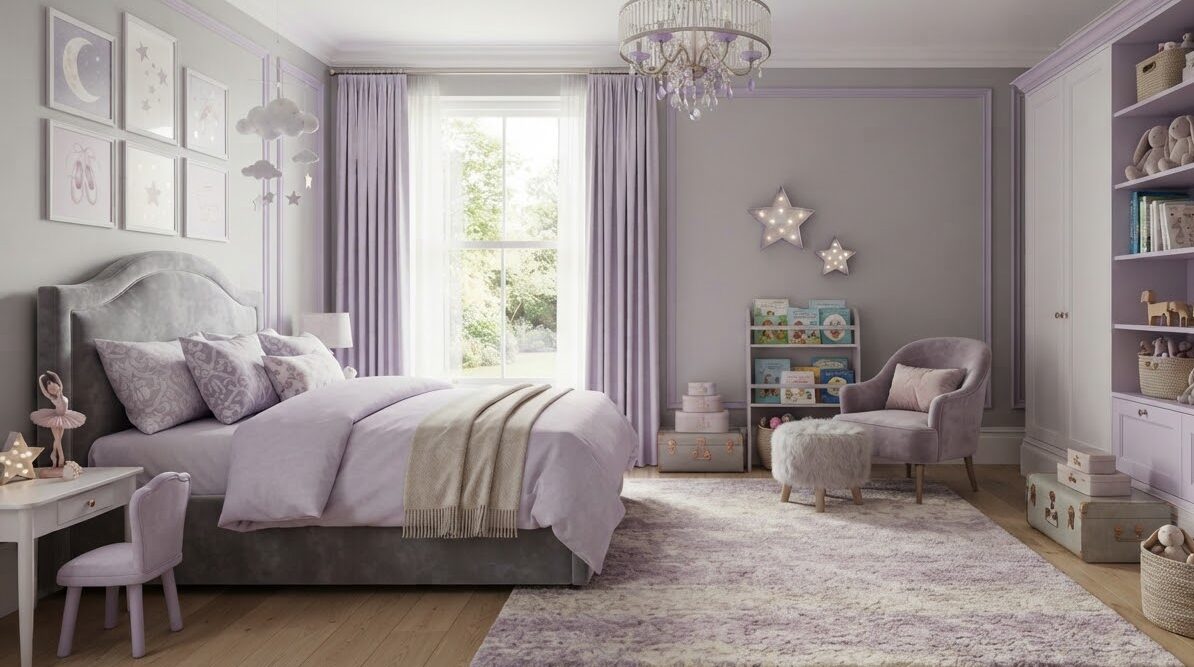
Lavender can create a dreamy bedroom without relying on an overly colorful design.
Pair a soft lavender accent wall with pale gray furniture and white bedding. Add silver or natural wood details for additional texture.
Keep the lavender relatively muted if you want the bedroom to feel relaxing rather than intensely colorful.
8. Sky Blue and White
Sky blue and white remain classic choices for children’s bedrooms.
Light blue walls can make a bedroom feel airy and open, while white furniture keeps the space clean and bright.
For a modern look, avoid matching every item in the room. Instead, introduce blue through a combination of bedding, artwork, curtains, and small accessories.
Blue-and-white is also frequently recommended as a calming and classic kids’ room combination.
9. Peach and Sage Green
Peach and sage green create a surprisingly sophisticated combination.
The warm undertone of peach balances the cooler, natural feeling of sage. Use one as the primary accent and the other in smaller decorative details.
For example, try:
Warm white walls + sage furniture + peach bedding + natural wood accents.
This creates a cheerful room without making it look overly themed.
10. Black, White, and Bright Orange
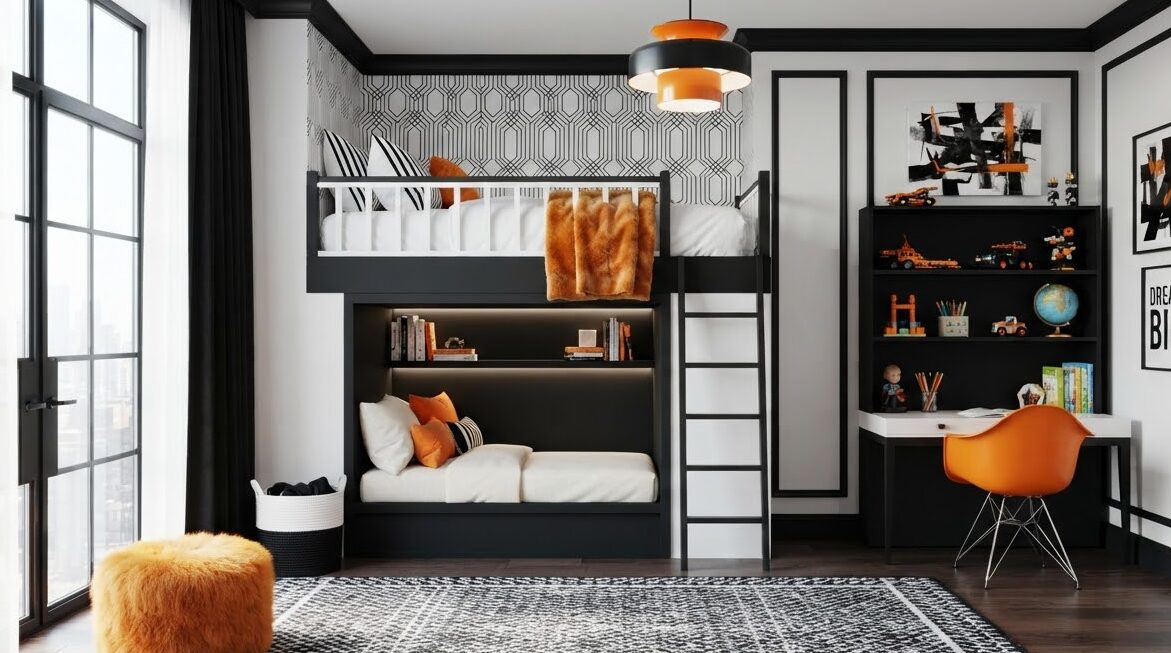
Want a more energetic bedroom? Add orange.
Black and white provide the structure, while orange creates the playful element. Use orange selectively through a chair, rug, bedding, artwork, or storage containers.
A black-and-white foundation is particularly useful because colorful accessories can be replaced easily as your child’s interests change. HGTV similarly highlights black and white as a flexible backdrop that can be refreshed with bold accessories.
Final Thoughts
The perfect color combo for a kids’ bedroom doesn’t have to mean using lots of bright colors. Some of the most stylish children’s bedrooms use a simple foundation of white, beige, black, soft green, blue, or other muted shades and then add personality through colorful accessories.
For a timeless option, try black and white with one playful accent color. For a softer atmosphere, consider sage green and white, beige and blue, blush and cream, or lavender and gray. The most important thing is to create balance between playfulness, comfort, and practicality.
A well-planned kids’ bedroom should feel like a place where children can sleep, play, learn, imagine, and grow. By choosing a flexible color palette and layering personality through accessories, you can create a room that looks beautiful today and still works years from now.