If you’re looking for a breakfast that’s creamy, filling, and packed with protein, Cottage Cheese Scrambled Eggs deserve a spot on your menu. This simple recipe has become a favorite among home cooks, fitness enthusiasts, and busy families because it transforms ordinary scrambled eggs into a richer, fluffier, and more nutritious meal.
Adding cottage cheese to eggs creates a soft, velvety texture while boosting the protein content without requiring extra cooking time. Whether you’re trying to fuel a workout, enjoy a healthier breakfast, or simply make your scrambled eggs taste even better, this recipe is an easy upgrade you’ll want to make again and again.
The best part? It comes together in less than 10 minutes using ingredients you probably already have in your refrigerator.
Why Add Cottage Cheese to Scrambled Eggs?
At first, adding cottage cheese to eggs might sound unusual. But once you try it, you’ll understand why so many people swear by this combination.
Cottage cheese melts slightly as the eggs cook, creating incredibly soft and creamy curds while adding extra protein and a mild, tangy flavor.
Benefits of Adding Cottage Cheese
- Boosts protein content
- Creates creamier scrambled eggs
- Helps keep eggs moist
- Adds calcium and other nutrients
- Makes breakfast more filling
- Uses simple, affordable ingredients
- Easy enough for beginners
- Ready in just minutes
It’s a small change that makes a noticeable difference in both texture and nutrition.
What Do Cottage Cheese Scrambled Eggs Taste Like?
Many people worry that cottage cheese will overpower the eggs.
It doesn’t.
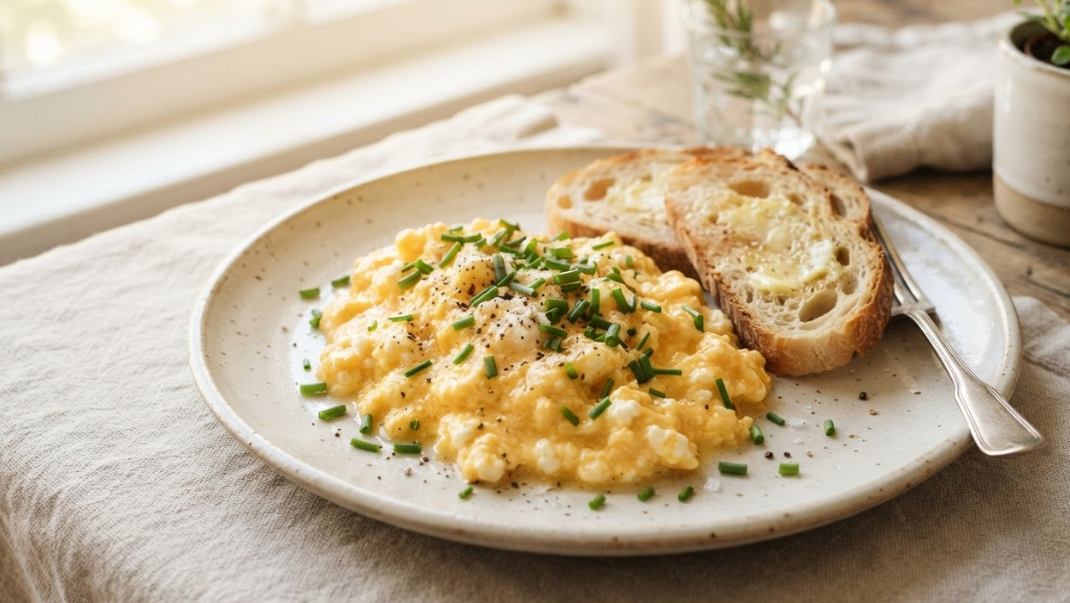
Instead, it melts into the eggs, creating a rich, creamy consistency with a subtle tang that’s balanced by the natural flavor of the eggs.
The result is:
- Soft
- Fluffy
- Creamy
- Mildly cheesy
- Rich without feeling heavy
Even people who aren’t fans of eating cottage cheese on its own often enjoy it in scrambled eggs.
Ingredients You’ll Need
This recipe serves 2 people.
Main Ingredients
- 4 large eggs
- ½ cup cottage cheese
- 1 tablespoon butter or olive oil
- Salt, to taste
- Freshly ground black pepper
Optional Add-Ins
- Chopped chives
- Fresh parsley
- Dill
- Green onions
- Spinach
- Cherry tomatoes
- Mushrooms
- Bell peppers
- Shredded cheddar cheese
- Red pepper flakes
Choosing the Best Cottage Cheese
Different types of cottage cheese can slightly change the texture of your eggs.
| Type | Best For |
|---|---|
| Small-curd | Smoothest texture |
| Large-curd | More noticeable cheese pockets |
| Full-fat | Richest and creamiest flavor |
| Low-fat | Lighter option with plenty of protein |
| Lactose-free | Suitable for lactose-sensitive eaters |
For the creamiest results, many cooks prefer full-fat, small-curd cottage cheese.
Step-by-Step Recipe
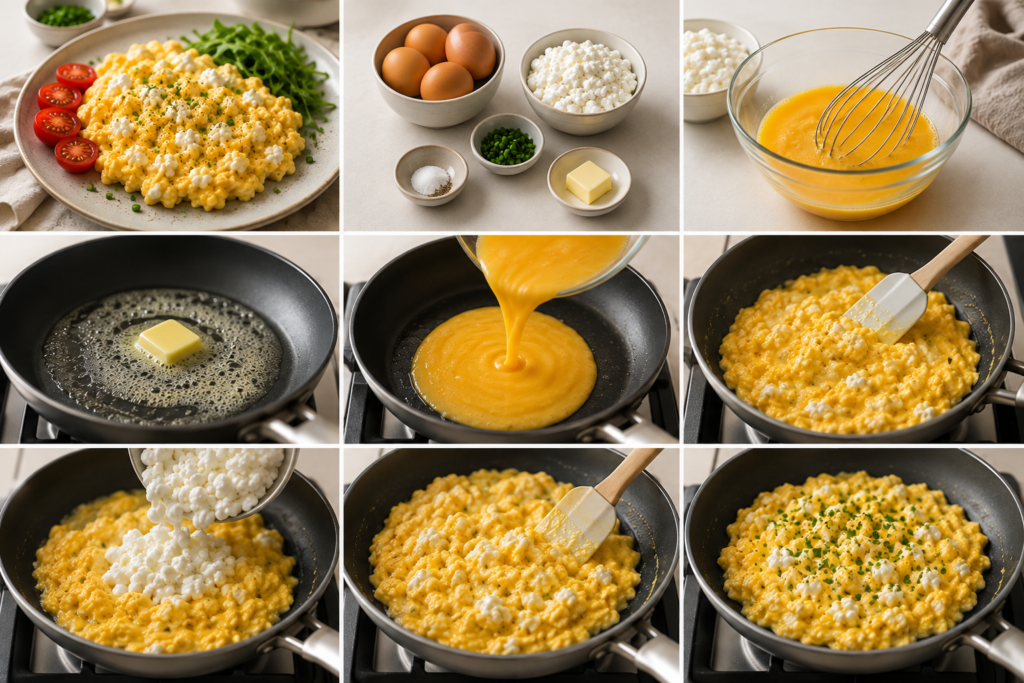
Step 1: Whisk the Eggs
Crack the eggs into a bowl.
Whisk until the yolks and whites are fully combined.
Step 2: Add Cottage Cheese
Stir the cottage cheese into the eggs.
Don’t worry if the mixture looks slightly lumpy—that’s completely normal.
Step 3: Heat the Pan
Warm a non-stick skillet over low to medium-low heat.
Add the butter or olive oil.
Allow it to melt without browning.
Step 4: Cook Slowly
Pour the egg mixture into the skillet.
Let it sit for about 20 seconds before gently stirring with a silicone spatula.
Push the eggs slowly from the edges toward the center, allowing uncooked egg to flow into the empty spaces.
Step 5: Remove Before Fully Set
When the eggs are mostly cooked but still look slightly glossy, remove the pan from the heat.
The residual heat will finish cooking them without drying them out.
Season with salt and freshly ground black pepper before serving.
Tips for Perfect Cottage Cheese Scrambled Eggs
Cook Over Low Heat
Low heat produces softer, creamier eggs.
High heat can make them rubbery.
Don’t Overcook
The eggs should remain slightly soft when removed from the pan.
They’ll continue cooking for another minute.
Whisk Well
Properly whisked eggs create lighter, fluffier curds.
Season at the End
Adding salt after cooking helps preserve the eggs’ tender texture.
Use Fresh Eggs
Fresh eggs provide better flavor and a softer consistency.
Nutrition Comparison
Here’s how cottage cheese boosts your breakfast.
| Nutrient | Regular Scrambled Eggs | Cottage Cheese Scrambled Eggs |
|---|---|---|
| Protein | ~12g | ~20–24g |
| Calcium | Low | Higher |
| Creaminess | Moderate | Excellent |
| Fullness | Good | Excellent |
Values are approximate and depend on the ingredients used.
Delicious Variations
Spinach Cottage Cheese Eggs
Stir in a handful of baby spinach during the last minute of cooking.
Mediterranean Style
Add:
- Cherry tomatoes
- Fresh basil
- Crumbled feta
- Olives
Veggie-Packed Version
Mix in sautéed:
- Mushrooms
- Bell peppers
- Onions
- Zucchini
Spicy Breakfast
Top with:
- Chili flakes
- Hot sauce
- Jalapeños
Herb Lover’s Eggs
Finish with:
- Chives
- Dill
- Parsley
- Fresh thyme
Smoked Salmon Breakfast
Serve the eggs alongside smoked salmon and whole-grain toast for an elegant brunch.
What to Serve With Cottage Cheese Scrambled Eggs
These eggs pair well with a variety of breakfast favorites.
Toasts
- Sourdough
- Whole wheat toast
- Rye bread
- English muffins
Healthy Sides
- Avocado slices
- Fresh berries
- Fruit salad
- Tomato slices
- Mixed greens
Heartier Options
- Roasted potatoes
- Turkey sausage
- Chicken sausage
- Breakfast hash
Drinks
- Coffee
- Green tea
- Orange juice
- Smoothies
Meal Prep Tips
Although scrambled eggs are best fresh, you can make meal prep easier.
Prep Ahead
- Crack and whisk the eggs the night before.
- Chop vegetables in advance.
- Measure the cottage cheese ahead of time.
Storage
Store leftover scrambled eggs in an airtight container in the refrigerator for up to 2 days.
Reheat gently over low heat or in the microwave using short intervals to help maintain their creamy texture.
Common Mistakes to Avoid
Avoid these common errors for the best results.
- Cooking over high heat
- Overcooking the eggs
- Using too much cottage cheese
- Forgetting to whisk the eggs thoroughly
- Adding too many vegetables without cooking them first
Approximate Nutrition (Per Serving)
| Nutrient | Amount |
|---|---|
| Calories | 240 |
| Protein | 21g |
| Carbohydrates | 4g |
| Fat | 15g |
| Calcium | High |
| Fiber | 0g |
Nutrition will vary depending on the brand of cottage cheese and any added ingredients.
Frequently Asked Questions
Does cottage cheese melt completely?
Not entirely. It softens and blends into the eggs, creating small creamy pockets that enhance the texture.
Can I use low-fat cottage cheese?
Yes. Low-fat cottage cheese still provides plenty of protein and works well in this recipe.
Can I make this recipe without butter?
Absolutely. Olive oil or avocado oil are great alternatives.
Is this recipe good for meal prep?
It’s best enjoyed fresh, but leftovers can be refrigerated for up to two days and reheated gently.
Can I add cheese too?
Yes. Cheddar, mozzarella, Parmesan, or feta all pair well with cottage cheese, though you may want to reduce the added salt.
Why This Recipe Is Popular
High-protein breakfasts continue to grow in popularity because they can help keep you satisfied throughout the morning. Cottage cheese scrambled eggs fit that trend perfectly by offering a balanced combination of protein, healthy fats, and versatility.
They also adapt well to different eating styles. Whether you enjoy them plain, loaded with vegetables, paired with whole-grain toast, or served alongside fresh fruit, they’re easy to customize and quick enough for even the busiest mornings.
Final Thoughts
Cottage Cheese Scrambled Eggs are proof that a small ingredient can make a big difference. By stirring cottage cheese into your eggs, you get a breakfast that’s noticeably creamier, higher in protein, and incredibly satisfying without adding much extra effort.
Whether you’re cooking for yourself, feeding your family, or looking for a nutritious meal after a workout, this recipe is simple, adaptable, and delicious. Try different herbs, vegetables, or cheeses to make it your own, and you may find that ordinary scrambled eggs never quite compare again.