
Cancer screening can feel confusing. You may wonder, What age should I start cancer screenings? Should you wait until 40, 45, 50, or start even earlier?
The answer depends on the type of cancer. There isn’t one age when everyone should begin every cancer screening. Different cancers have different screening recommendations, and your personal risk can change when screening should begin.
The good news is that several important cancers have established screening guidelines that can help detect cancer—or precancerous changes—before symptoms develop. Regular screening can sometimes find cancer earlier, when treatment may be more successful.
Here’s a simple age-by-age guide to help you understand when common cancer screenings may become important.
What Is Cancer Screening?
Cancer screening means testing for certain cancers before you have symptoms. It is different from a diagnostic test, which is usually performed when you already have symptoms or an abnormal finding.
Screening may detect cancer at an earlier stage or, in some cases, identify precancerous changes that can be treated before cancer develops.
However, not every cancer has a recommended routine screening test for people at average risk. That’s why it’s important to focus on the cancers for which evidence supports screening.
Cancer Screening in Your 20s

For many average-risk adults, your 20s are less about routine screening for multiple cancers and more about establishing preventive healthcare habits.
Cervical Cancer Screening
For people with a cervix who are at average risk, the American Cancer Society recommends starting cervical cancer screening at age 25 and continuing until at least age 65. The preferred option is primary HPV testing every five years, while other approved testing approaches may be used depending on availability and individual circumstances.
Cervical screening is important because HPV infection can cause cellular changes that may eventually lead to cervical cancer.
Even if you’ve received the HPV vaccine, you should still follow recommended cervical cancer screening guidelines.
Cancer Screening in Your 30s

Your 30s are a good time to make sure you’re staying current with recommended cervical screening and to discuss your personal cancer risk with a healthcare professional.
Routine screening for colorectal and breast cancer generally begins later for people at average risk. However, family history, inherited genetic conditions, previous abnormal test results, or other risk factors may mean you need screening earlier.
If a close family member developed cancer at a young age, don’t wait until the standard screening age to mention it to your doctor.
Cancer Screening in Your 40s
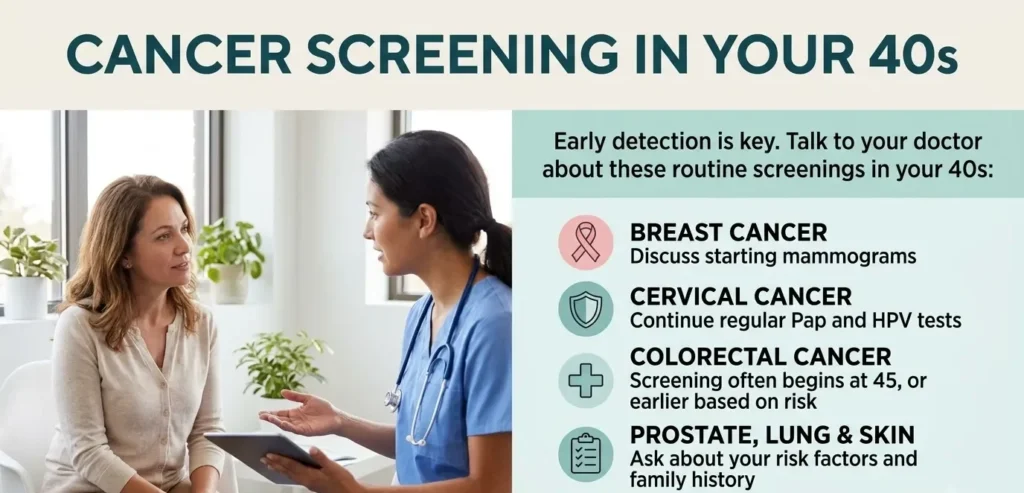
Your 40s are an important decade for cancer screening because several major screening programs begin or become especially relevant.
Breast Cancer Screening
According to the American Cancer Society, women ages 40 to 44 should have the option to begin annual mammograms, while women ages 45 to 54 should have yearly mammograms. Beginning at age 55, women can transition to mammograms every two years or continue yearly screening, depending on their preferences and health.
If you’re at higher-than-average risk for breast cancer, you may need a different screening plan, potentially including earlier screening or additional imaging.
Colorectal Cancer Screening
One of the biggest changes in modern cancer prevention is that average-risk adults should begin colorectal cancer screening at age 45.
Screening options include stool-based tests and visual examinations such as colonoscopy. The appropriate test and schedule depend on the method used. The American Cancer Society’s updated 2026 guidance continues to recommend regular screening beginning at 45 for average-risk adults.
Don’t assume colorectal cancer screening is only important for older adults. Starting at 45 can help detect colorectal cancer early and can also identify precancerous polyps that may be removed before they develop into cancer.
Cancer Screening in Your 50s

By your 50s, several screening recommendations may apply depending on your sex, smoking history, and individual risk.
Lung Cancer Screening
Lung cancer screening isn’t recommended for everyone. It is specifically intended for people with a significant smoking history.
Current guidance recommends annual low-dose CT screening for eligible adults ages 50 to 80 who currently smoke or formerly smoked and have at least a 20 pack-year smoking history. A pack-year is calculated based on how much and how long someone has smoked.
For example, smoking approximately one pack a day for 20 years equals 20 pack-years.
If you smoke or used to smoke, ask your healthcare professional whether you qualify for lung cancer screening.
Prostate Cancer Screening
There isn’t a universal recommendation that every man should automatically have a prostate cancer screening test at a particular age.
The American Cancer Society recommends discussing prostate cancer screening with a healthcare professional so men can make an informed decision about the potential benefits and risks. For men at average risk, this discussion generally begins around age 50. Men at higher risk may need to discuss screening earlier.
Prostate screening commonly involves a PSA blood test, with decisions about further testing based on the results and individual circumstances.
Cancer Screening in Your 60s

Your 60s are not a time to stop thinking about cancer screening. Instead, staying consistent with recommended screening becomes increasingly important.
Continue Colorectal Cancer Screening
Average-risk adults in good health should generally continue colorectal cancer screening through age 75. Adults ages 76 to 85 should discuss whether continued screening makes sense based on overall health, life expectancy, previous screening, and personal preferences. People over 85 generally should no longer receive routine colorectal cancer screening.
Continue Breast Cancer Screening
Women in their 60s generally continue mammography. After age 55, the American Cancer Society recommends mammograms every two years or the option to continue annual screening, as long as overall health remains good and life expectancy is at least 10 years.
Continue Cervical Screening When Appropriate
People with a cervix who are at average risk generally continue cervical cancer screening through at least age 65. Whether screening can stop after 65 depends on previous screening results and medical history.
What About Cancer Screening After Age 65?
Age 65 does not automatically mean you should stop every cancer screening test.
Instead, decisions increasingly depend on your overall health, previous screening history, life expectancy, and personal preferences.
For example, cervical cancer screening may be stopped after 65 for some people who have had adequate previous negative screening and do not have certain high-risk circumstances. Colorectal screening may continue beyond 75 for selected adults, while screening generally stops after 85.
Your healthcare provider can help determine which screenings remain beneficial for you.
Who May Need Cancer Screening Earlier?
Standard screening ages apply mainly to people considered average risk.
You may need earlier or more frequent screening if you have:
- A strong family history of cancer
- A known inherited cancer-related genetic mutation
- A personal history of cancer
- Certain precancerous conditions
- Previous abnormal screening results
- A significant smoking history
- Certain medical conditions that increase cancer risk
- Previous radiation treatment involving areas associated with cancer risk
For example, people with a strong family history of colorectal cancer may need to begin screening earlier than age 45. People at increased breast cancer risk may also require a different screening strategy.
This is why your personal medical and family history matters just as much as your age.
Don’t Wait for Symptoms to Start Thinking About Screening
One of the biggest misconceptions about cancer screening is that you should wait until you notice something unusual.
Screening is specifically designed for people who do not have symptoms. If you already have concerning symptoms—such as unexplained bleeding, a new lump, persistent changes in bowel habits, unexplained weight loss, or another unusual change—you should contact a healthcare professional rather than waiting for your next routine screening appointment.
Screening and diagnostic testing serve different purposes.
A Simple Cancer Screening Timeline
For average-risk adults, this simplified timeline can help:
Age 20s: Focus on preventive healthcare and follow recommended cervical screening when applicable.
Age 25: Average-risk people with a cervix should begin cervical cancer screening under current ACS guidance.
Age 40: Discuss whether to begin mammograms, particularly for breast cancer screening.
Age 45: Begin regular colorectal cancer screening if you’re at average risk.
Age 50: Discuss prostate cancer screening for average-risk men and determine whether you qualify for lung cancer screening based on smoking history.
Age 55–64: Continue recommended breast, colorectal, cervical, and eligible lung cancer screening.
Age 65+: Review your screening schedule with your healthcare provider based on your health, history, and previous results.
These ages are a helpful starting point—not a substitute for personalized medical advice.
The Bottom Line
So, what age should you start cancer screenings?
There isn’t one universal answer. Cervical cancer screening can begin in the mid-20s for average-risk individuals with a cervix, breast cancer screening becomes an important discussion around age 40, colorectal cancer screening generally begins at 45, and certain people may qualify for lung or prostate cancer screening around age 50 or later.
The most important step is to know your personal risk and stay on schedule with recommended screenings.
If you’re unsure which cancer screenings you should have at your current age, make a preventive-care appointment and bring your family cancer history with you. Finding cancer early—or detecting changes before cancer develops—can make screening a powerful part of preventive health care.